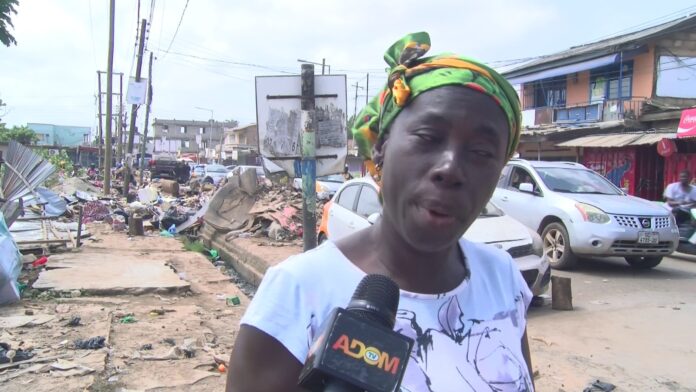

A week after the devastating floods swept through parts of Accra, 53-year-old Yaa Kyekye is still struggling to come to terms with the tragedy that has turned her family’s life upside down.
Standing in what remains of her flood-ravaged home at Alajo, she says the nightmare feels far from over. While the floodwaters have receded, the emotional and financial scars remain.
“Our lives changed in just a few hours,” she says, fighting back tears.
For years, Yaa relied on a refrigerator to sell sachet water and provide a steady source of income for her family. Today, that refrigerator lies damaged beyond repair after being submerged in the floodwaters.
“That refrigerator was our livelihood. It was how we fed our children. Now it is gone,” she says. The family’s hardship did not end there.
Her husband, who depends on his vehicle to earn a living, also lost his only source of income after the flood severely damaged the vehicle.
“Now both of us are unemployed. We don’t know where our next income will come from,” she laments.
With four children looking up to them for food, school, and daily necessities, every passing day brings fresh anxiety. The family is now uncertain about how they will rebuild their lives after losing the little they had worked so hard to acquire.
Yaa says the emotional burden has been overwhelming.
“You work for years to build something, and in one night, everything is taken away.”
As recovery efforts continue across flood-hit communities, she is appealing to the government, humanitarian organizations, and kind-hearted Ghanaians not to forget families like hers, who are still counting their losses long after the waters have disappeared.
“We are pleading for help. We want to work again. We just need support to stand on our feet and take care of our children,” she says.
For Yaa Kyekye and many other flood victims, the disaster did not end when the rain stopped. Their struggle to rebuild their lives is only just beginning.
ALSO READ: