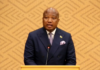

Chairman of Parliament’s Health Committee, Dr Mark Kurt Nawaane, has called for accountability in the handling of emergency health cases, following the death of engineer Charles Amissah.
Speaking in an interview on Adom FM’s Dwaso Nsem, Dr Nawaane said responsibility for failures in the health system should not be limited to junior staff alone, but must also include leaders who were on duty at the time of such incidents.
“If we want things to work well, then we have to do it well,” he said.
He stressed that any leader who fails in their duty to ensure proper functioning of a facility must also be held accountable, adding that in some cases, resignation may be the appropriate course of action.
“Not only the doctor who was on duty, but any leader who was there when the issue happened and refused to help,” he said. “Sometimes our leaders have to resign voluntarily. If you can’t lead a place properly, then you have to resign. It’s as simple as that.”
Dr Nawaane, however, cautioned against unfairly blaming all health workers for isolated incidents, noting that many professionals in the sector are committed and hardworking.
“There are so many health professionals in this country, but the majority of them are very good and committed to their work,” he said. “So if you don’t say it well, you end up punishing the good ones.”
He called for proper investigations to identify those directly responsible for failures rather than generalising the issue.
“We have to look for what is wrong, name and shame, and pursue the person who caused the damage,” he stated. “But let’s not generalise and attack all health professionals.”
Drawing on his experience as a medical professional for over three decades, Dr Nawaane said many health workers sacrifice their time and energy to save lives, and should not be lumped together with those who act negligently.
“I have worked for 33 good years as a medical professional and I have met many good people in the field who don’t joke with their work and even sacrifice their own lives for patients,” he said.
He also criticised the tendency to focus on government infrastructure challenges after such incidents, arguing that attention should first be on whether available resources were properly used.
“The mistake we make as a country is that after such incidents, we start talking about government and equipment,” he said. “Even the little we have, did they use it properly for the patient?”
Dr Nawaane added that while long-term improvements in health infrastructure are important, they should not distract from addressing immediate failures in care delivery.
“These are long-term measures government can work on,” he said. “But even as health professionals, when you meet an accident case, you are expected to act. So why was nothing done?”
He concluded by urging a shift in national conversation away from blaming infrastructure alone.
“Let’s stop the narrative that we only need more hospitals and equipment, because it makes us lose focus on the real issue,” he said.
Charles Amissah died on February 6, 2026, following a hit-and-run incident at the Circle Overpass after he was reportedly denied admission at multiple health facilities before his death.
The incident led to the formation of an investigative committee to examine the circumstances surrounding his death, particularly concerns about delays in treatment and gaps in emergency care.
ALSO READ: