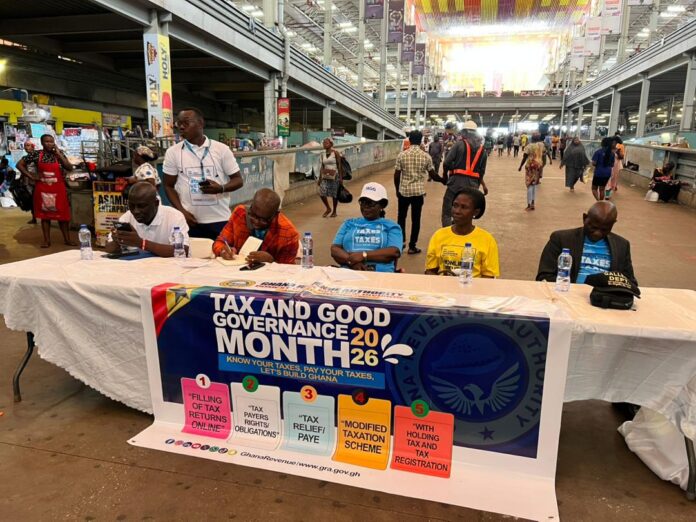

The Ghana Revenue Authority (GRA) has intensified efforts to broaden tax mobilisation in the informal sector in the Ashanti Region, following the introduction of a mobile shortcode for revenue collection under the Modified Taxation System (MTS).
The digital system is aimed at simplifying compliance for the informal sector and improving revenue mobilisation through the shortcode *880#.
The informal sector contributes about 27.4% to the country’s GDP, yet its contribution to total tax revenue is less than 5%.
The GRA in the region extended its campaign to educate players in the informal sector at the Kejetia Market in Kumasi on the need to pay their taxes for national development.
The event forms part of its Tax and Good Governance Month, an annual return filing period aimed at educating business owners and individuals on their obligation to file returns and comply with tax regulations.
Ashanti Regional Area Director of the GRA, Agnes Adu Gyamfi Adjei, underscored that taxpayer education is a continuous process, particularly for the informal sector.
She noted that the GRA has established permanent points of presence within the market to ensure sustained engagement with traders.
“We have a point of presence here at the Kejetia ‘Dubai’ Market. Our team moves from shop to shop daily to ensure that once you are earning income and selling taxable products, you are duly registered,” she explained.
Under existing regulations, businesses that meet a turnover threshold are required to register for Value Added Tax (VAT), which is administered in accordance with the law, including provisions for exempt goods and services.
Failure to comply attracts sanctions, including daily penalties added to outstanding tax liabilities.
As part of efforts to improve accessibility, the Authority has expanded its operational footprint in the region, upgrading facilities such as Tafo-Pankrono and Bekwai into fully functional taxpayer service centres.
The new centres bring the total number of tax outlets in the region to ten.
Mrs Adu Gyamfi Adjei emphasised that while enforcement remains necessary, the primary focus is on education and voluntary compliance, especially among small-scale enterprises.
She reiterated that taxes remain the backbone of national development.
“Taxes are what the government uses to run the machinery of the country. Roads, schools, hospitals, and markets are all funded through tax revenue. That is why we are committed to educating the public,” she asserted.
The exercise also provided an opportunity for on-the-spot tax payments, particularly for individuals with outstanding VAT and personal income tax obligations for the first quarter.
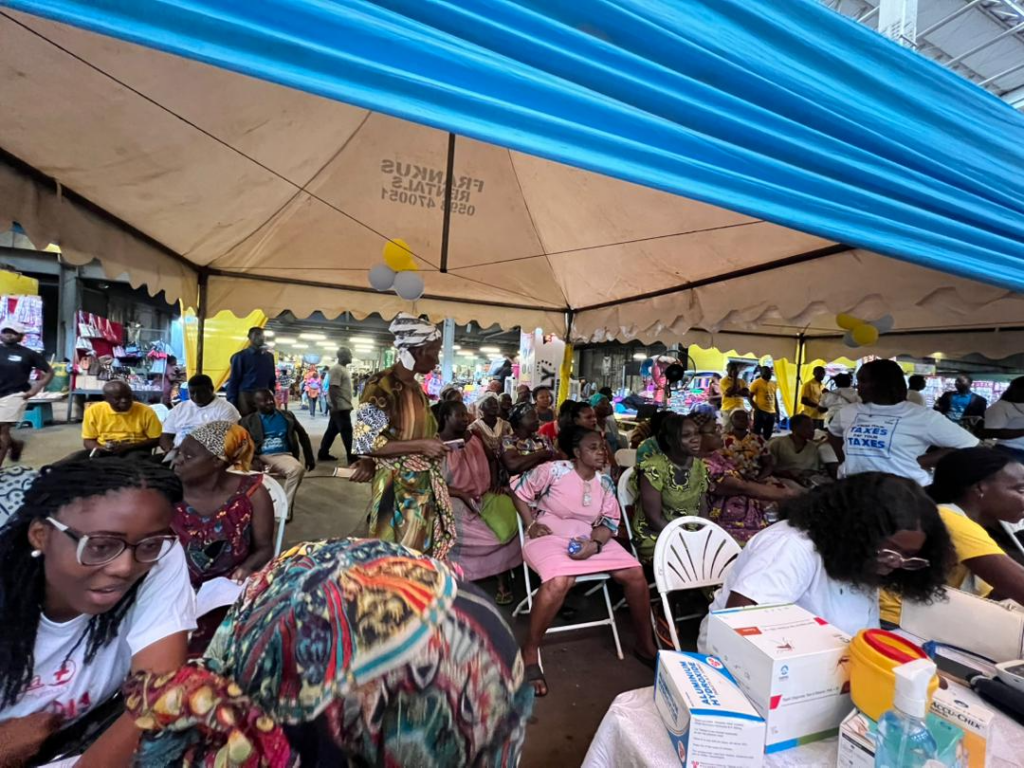
Free Health Screening
In a move to give back to taxpayers, the GRA incorporated a free health screening into the programme, deploying a medical team from Accra to attend to participants.
According to Mrs. Adu Gyamfi, the gesture reflects the Authority’s recognition of the link between citizens’ wellbeing and their economic productivity.
“We are always taking from taxpayers. This time, we have brought healthcare services to them. When they are in good health, they can work and contribute meaningfully through taxes for national development,” she noted.
READ ALSO:
Gov’t to purchase power generation plant to boost energy supply – Deputy Energy Minister
Auditor General recovers GH¢57.2m unearned salaries, supervisors to be surcharged