
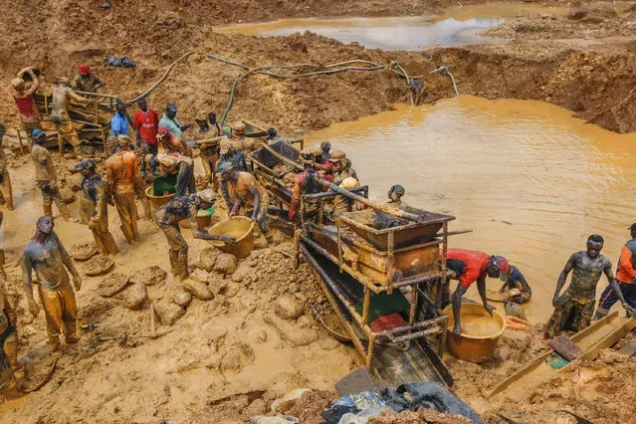

The Church of Pentecost says rising pollution of Ghana’s water bodies, largely driven by illegal mining activities, is increasingly disrupting its traditional river baptism practices, forcing the church to adopt alternative methods, including the use of synthetic rubber pools.
The Chairman of the worldwide church, Apostle Dr Eric Nyamekye, made this known in his State of the Church Address at the 48th General Conference of the Church of Pentecost, noting that environmental degradation in mining communities is now affecting core religious ordinances.
He explained that the contamination of rivers has made them unsafe for baptisms in several mining-affected areas across the country.
“The extensive pollution of water bodies due to illegal mining has hampered traditional water baptism in some mining communities, necessitating a shift to synthetic rubber pools in several districts to carry out the ordinance,” he said.
Apostle Nyamekye further pointed to the wider socio-economic consequences of climate variability, saying shifting rainfall patterns and the decline of cocoa production are affecting livelihoods, especially among church members engaged in farming and fishing.
Despite these challenges, he stressed that the Church continues to expand its evangelistic and social outreach programmes nationwide.
He revealed that by the end of 2025, the Church had established skills development centres in Bolgatanga in the Upper East Region and Essam in the Western North Region to equip young people with employable skills.
According to him, the Church has also engaged master craftsmen to train additional apprentices as part of efforts to tackle unemployment.
He added that several projects, including health facilities, prison camps and other infrastructure, have been initiated, completed, and handed over to the state under the Church’s social responsibility agenda.
Apostle Nyamekye, however, reaffirmed the Church’s commitment to its mission, saying it remains focused on soul-winning and community development despite the environmental and economic challenges confronting communities.
