
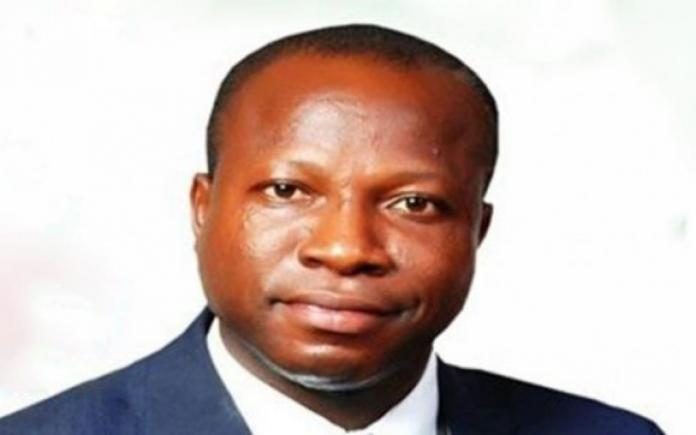

Lecturer at the University of Professional Studies, Accra (UPSA) and Chief Executive Officer of the Centre for Constitutional and Electoral Studies (CenCES), Dr J. Kwabena Bomfeh Jnr, has criticised the conduct of key actors in Ghana’s recent prosecutorial controversy, describing it as “unprincipled” during his appearance on JoyNews’ Newsfile programme on Saturday, April 18.
His comments followed a landmark ruling by the Accra High Court on April 15, 2026, which held that the Office of the Special Prosecutor (OSP) does not possess the constitutional authority to independently prosecute criminal cases without authorisation from the Attorney-General’s Department.
The court clarified that, under Article 88 of the 1992 Constitution, the power to initiate criminal prosecutions is vested exclusively in the Attorney-General unless formally delegated.
The High Court directed that all ongoing prosecutions being handled by the OSP be transferred to the Attorney-General’s Department, placing several corruption-related cases in legal limbo. The ruling arose from a case filed by private citizen Peter Achibold Hyde, who questioned the OSP’s independent prosecutorial powers.
The decision comes amid a separate constitutional challenge before the Supreme Court, filed by Noah Ephraem Tetteh Adamtey, which seeks to have portions of the Office of the Special Prosecutor Act, 2017 (Act 959) declared unconstitutional.
The plaintiff argues that Parliament exceeded its mandate in granting the OSP independent prosecutorial authority, citing Articles 88(3) and 88(4) of the Constitution.
Dr Bomfeh characterised the situation as symptomatic of broader issues within the Ghanaian state, highlighting five critical areas: the law and Parliament, the conduct of officeholders, the Constitution as the parent law, the citizenry, and the guiding principles that often see inconsistent application.
He cited Benjamin Franklin’s advice on humility and consensus from the 1787 US Constitutional Convention, Maya Angelou’s reflections on the impact of actions on others, and Hubert Humphrey’s assertion that “the law is as good as we, the people”.
Reflecting on Ghana’s longstanding debate over the separation of the Attorney-General’s office from the Ministry of Justice, Dr Bomfeh drew on AKP Kluge’s 2010 J.B. Dankwa Memorial Lecture.
He argued that Ghana often blames systems rather than focusing on the character and commitment of officials.
“What matters are the personalities of the main officials and their dedication to good governance, the rule of law, and protection of fundamental rights,” he emphasised.
Dr Bomfeh also drew parallels with the 1993 establishment of the Serious Fraud Office, noting that the late Justice J.N.K. Taylor had questioned its constitutionality — a discussion he said mirrors the present situation with the OSP.
He did not hold back criticism of the Attorney-General, Dr Dominic Ayine, describing his involvement in the passage of the OSP Act as troubling.
“What I find strange is the unprincipled nature of some of the key actors in this matter, particularly the Attorney-General,” Dr Bomfeh stated.
He questioned the scrutiny of parliamentary records and the absence of a referendum, warning that the law, in its strictest interpretation, could be seen as amending entrenched Article 88 of the Constitution.
