
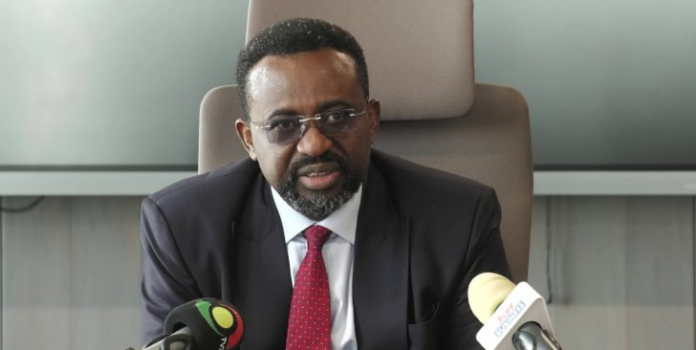

The Bank of Ghana (BoG) says Ghana’s banking sector recorded notable improvements in 2025, with stronger capital levels, improved liquidity, and a decline in non-performing loans.
The BoG Governor Dr. Johnson Pundit Asiama, said the sector has shown resilience despite earlier pressures linked to the Domestic Debt Exchange Programme.
Speaking before Parliament’s Finance and Development Committee, Dr. Asiama explained that reforms introduced by the central bank, together with prudent supervision, have helped stabilise the industry.
“The banking sector entered 2025, still adjusting to the effects of the Domestic Debt Exchange Programme. Capital buffers were under pressure; non-performing loans were elevated, and confidence required rebuilding,” he said.
According to him, sustained engagement with banks and recapitalisation measures have significantly strengthened the financial system.
“Through recapitalisation efforts and close supervisory engagement, the banking system has strengthened considerably. Capital adequacy improved to 17.5 percent, comfortably above the 13 percent regulatory minimum,” he added.
The governor noted that the sector is currently not only liquid but also profitable, placing banks in a better position to support economic activity and the country’s ongoing recovery efforts.
He highlighted that liquidity levels remain strong, with banks holding liquid assets equivalent to about 96 percent of total deposits.
“Liquidity remains strong, with liquid assets covering about 96 percent of deposits. Credit activity is also recovering,” Dr. Asiama stated.
Data presented by the central bank indicates that gross loans in the banking sector increased from GH¢95 billion to GH¢111 billion during the period under review.
Similarly, cumulative new loan disbursements rose from GH¢80.95 billion in October 2025 to GH¢104.17 billion by December of the same year.
The banking industry also recorded an improvement in loan performance. According to the governor, the ratio of non-performing loans dropped from 21.8 percent to 18.9 percent in 2025.
“The non-performing loan ratio declined from 21.8 percent to 18.9 percent, and banks now have a clear roadmap to reduce NPLs toward 10 percent by end-2026,” he explained.
Other indicators also showed growth within the sector. Total banking assets rose from GH¢368 billion to GH¢447 billion, while deposits increased by nearly 18 percent, climbing from GH¢276 billion to GH¢325 billion.
The central bank believes the strengthening of the sector will encourage increased lending to businesses and households, helping to stimulate economic activity, create jobs, and support livelihoods across the country.
