
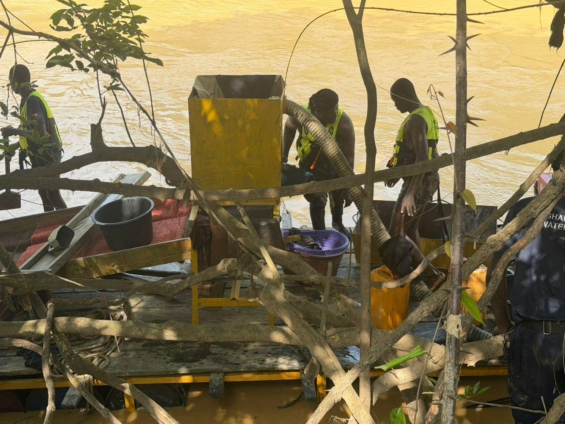

The National Anti-Illegal Mining Operations Secretariat (NAIMOS) disrupted multiple illegal mining sites, destroyed equipment, and arrested foreign nationals in the Eastern Region.
The operations, conducted between 16 and 17 January 2026, have altered the dynamics of illegal mining along the Birim River basin and its surrounding areas.
On Friday, 16 January, the NAIMOS task force, working alongside the Blue Water Guards, targeted Apoli Beposo in the Akim Oda Swedru District. Focusing on the Birim River, the team encountered illegal miners operating directly in the water. Upon sighting the operatives, the miners abandoned their activities, swimming across the river to escape.
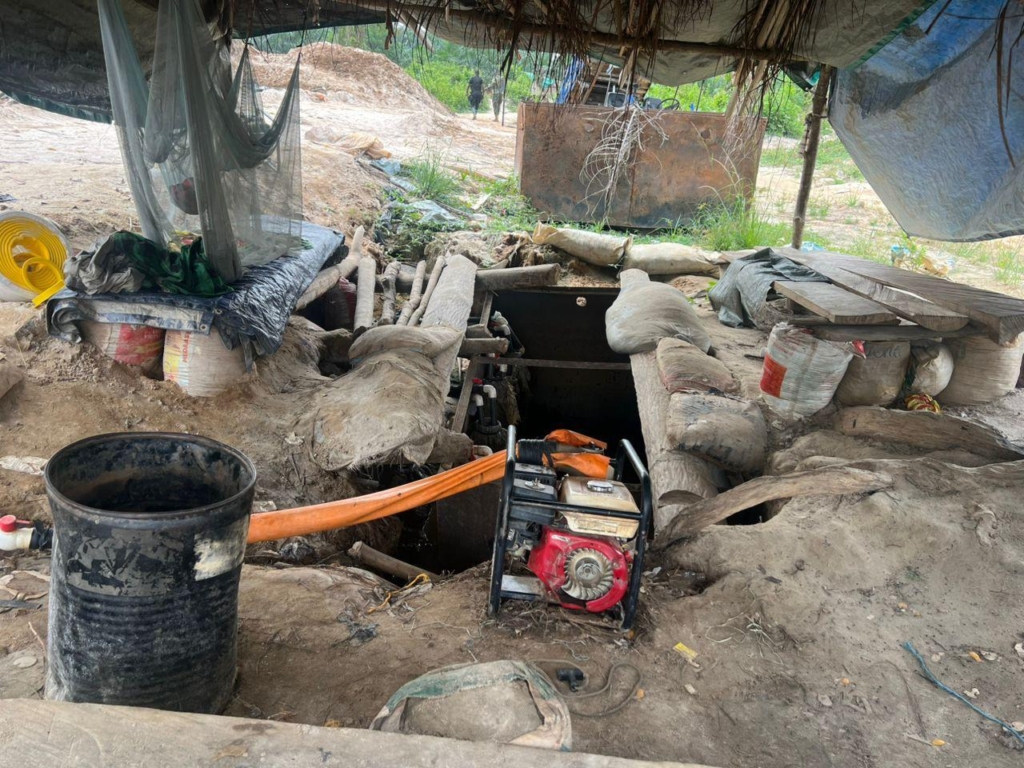
The task force retrieved four chanfan machines and burned them on the riverbank, halting the pollution of the river and providing local farmers and residents with a temporary respite from water contamination. Intelligence indicates that this operation has compelled many miners to cease working directly in the river.
Later the same day, NAIMOS moved to another site at Apoli, where three Chinese nationals—Yug Rucheng, Qin Can, and Yang G. Lane—were arrested for illegal mining. The task force seized a blue Zonda vehicle and destroyed all makeshift structures at the site. The arrested suspects were escorted to Accra under strong security detail for further investigation.
On Saturday morning, the task force targeted Nyafoman in the Birim North Municipality, a site notorious for hazardous mining practices. Most miners fled before the team could apprehend them.
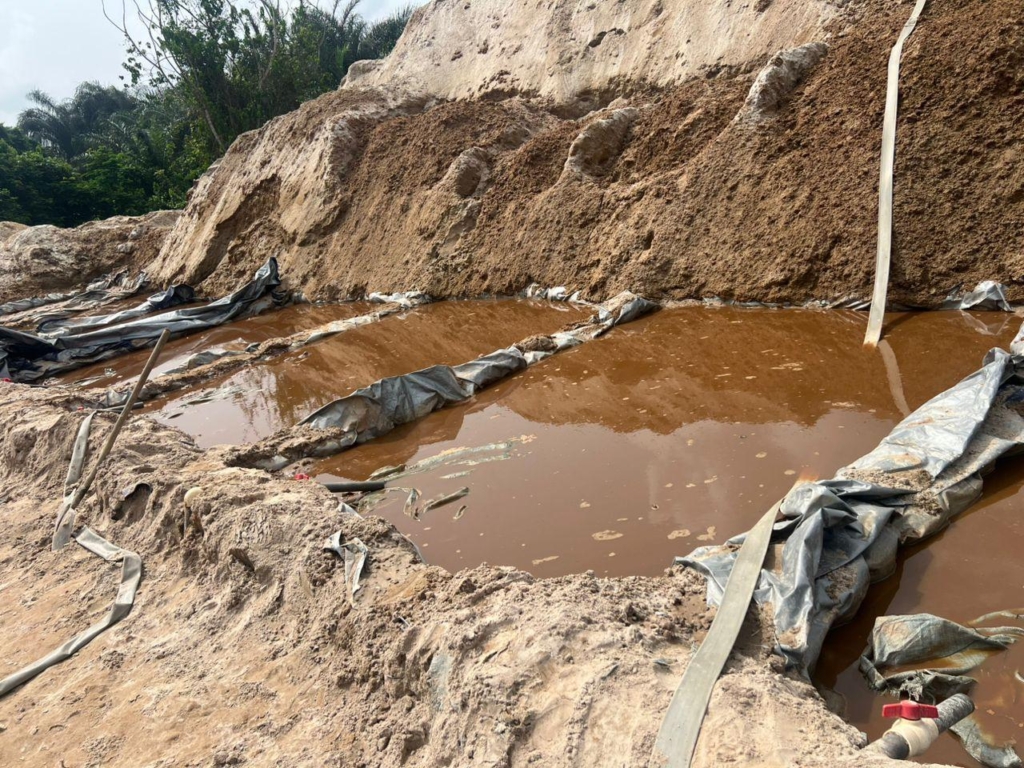
The operation resulted in the destruction of several chanfan machines, makeshift structures, and other equipment. Findings revealed that many of the miners were foreign nationals, primarily Burkinabe, who used dangerous chemicals like cyanide to extract gold, posing severe environmental and public health risks. The task force emphasized that this site requires constant patrols to prevent illegal mining from resuming.
Later in the day, at Domeabra in the same municipality, NAIMOS again forced illegal miners to abandon their operations. Two excavators were found on site: one had already been immobilized by the miners, and the other was partially stripped of essential components, rendering it inoperable.
The presence of the task force in the area has already discouraged several operators from returning, demonstrating the impact of sustained enforcement.
NAIMOS notes that these operations have inflicted financial losses on illegal miners, disrupted their logistics, and restored a measure of order to rivers and surrounding lands. Looking ahead, the Secretariat plans to enhance river patrol capabilities by providing life jackets, speed boats, and hardboard boats to field teams.
Furthermore, the permanent deployment of NAIMOS field operatives in hotspots across the Eastern Region is under consideration to ensure gains are sustained and illegal mining does not resume along the Birim River or in surrounding communities.
The Eastern Region crackdown reflects a clear shift in NAIMOS’s approach: combining intelligence, rapid response, and a permanent presence to make illegal mining a high-risk, low-reward activity while protecting the environment and livelihoods of local residents.
