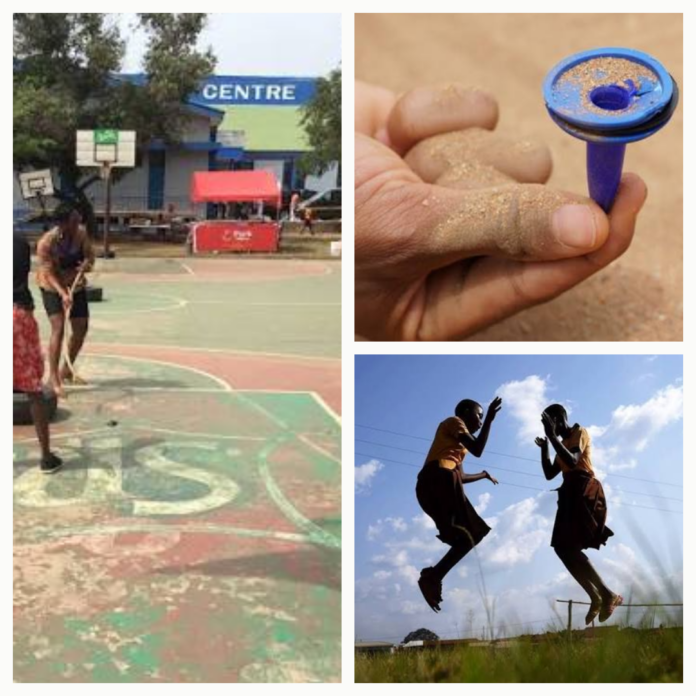

Long before mobile phone and computer games took over children’s free time, Ghanaian compounds and school playgrounds buzzed with a different kind of entertainment.
In the 1990s and early 2000s, all children needed was a stick, a bottle cap or a few friends to have the time of their lives.
Sadly, many of those games have vanished from many Ghanaian homes and neighbourhoods.
Here is a look back at some of games that children enjoyed playing in the 90s and early 2000s.
Ampe
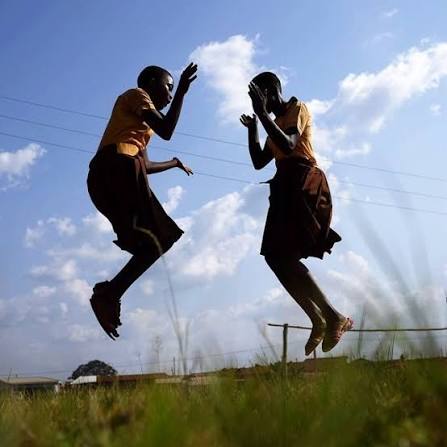
Played mostly by girls, Ampe was a jumping and clapping game that could be played in several forms, depending on how many people were involved.
In one version, a leader stood while the other players lined up to challenge her one at a time. The leader and the challenger jumped at the same time, clapping and thrusting one leg forward. If both landed on the same leg, the leader scored a point. If they landed on different legs, the challenger took over as leader, and the previous leader joined the back of the line to wait her turn again.
In another version, two teams of several players each took part. Before play began, each team chose whether they wanted legs to match or differ when they landed. The team that got the most of their chosen outcome won.
Ampe required sharp reflexes and quick thinking, and a good player earned real bragging rights in the neighbourhood.
Pilolo
Pilolo, a Ga word roughly meaning “time to search,” was Ghana’s own version of hide-and-seek crossed with a treasure hunt.
One child would hide small sticks or other objects while the rest covered their eyes. At the shout of “Piloloo!”, everyone scattered to find the hidden items and race back to a finishing point.
The person who found the missing objects then took a turn to do the hiding.
It was chaotic, loud and endlessly fun.
Oware
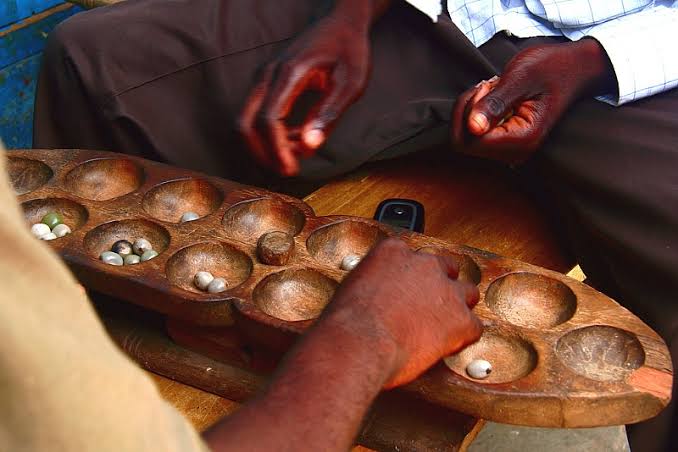
Unlike the high-energy outdoor games, Oware was a quieter test of the mind. Played on a wooden board with two rows of six pits, using seeds or small stones, the aim was to outmanoeuvre an opponent and capture more seeds than they did.
Before wooden boards became common, children simply dug pits into the ground and used palm kernels.
Oware taught patience, planning and basic arithmetic, and was often played under a tree or on a veranda during the hottest part of the day.
Though children are not seen playing this game anymore, some homes still gave the game and many adults still enjoy playing it.
You can also get the game to buy in markets or even by the roadside if you miss it.
Chaskele
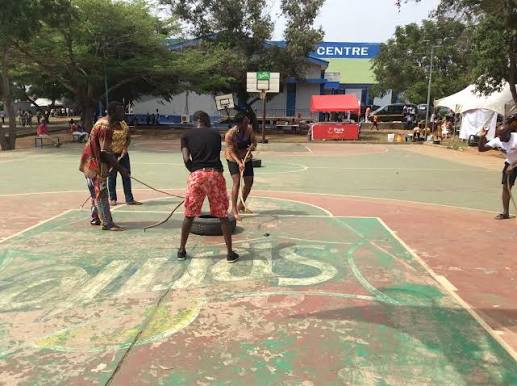
Chaskele is another game fondly remembered by many who grew up in the 90s. It involved discs made from flattened cans, sticks used as bats, and a target, usually a car tyre, bucket or basket, placed in an open field.
Players stood at a distance and threw their discs, trying to land them inside the target. Anyone whose disc missed had it knocked further away by the players who succeeded, and had to run after it and try again.
Meanwhile, players whose discs had already landed inside the target stood guard, trying to prevent the remaining discs from getting in. The game continued until every disc had made it into the target, at which point it reset and began again.
It was a game that rewarded rhythm, aim and patience, and took real skill to master.
Antoakyire
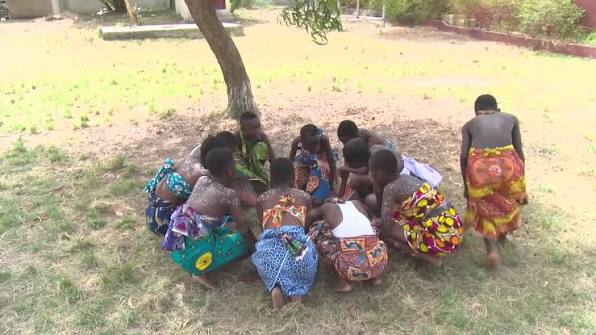
In Antoakyire, players sat in a circle, facing inward, while one person walked around the outside holding a knotted piece of cloth or stone, leading the group in song.
Those seated were not allowed to look back. At some point, the person walking would quietly drop the object behind a seated player.
If that player noticed in time, they had to grab it and chase the first player around the circle before a seat was taken. If they did not notice, the consequences were far less forgiving.
Alikoto
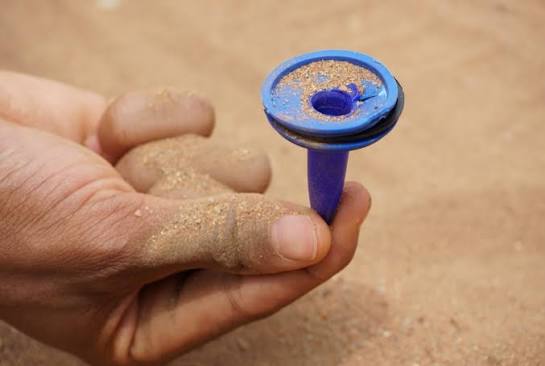
Alikoto was played using pen covers and battery caps combined to create a simple spinning toy.
Players took turns spinning the alikoto and trying to flip it onto its head by hitting its bottom with the side of the palm. Whoever failed to flip it was hit on the hand with the alikoto by the other players who had succeeded.
Kpitinge
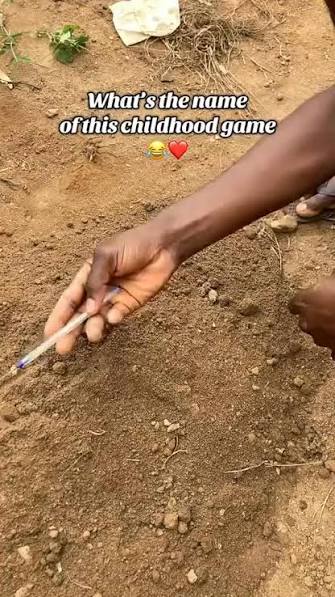
Kpitinge was a favourite among children who enjoyed a bit of skill and a bit of risk.
Children would dismantle a pen, removing the ink tube and tip, and replace it with a broom stick left to stick out further than the original tip. This modified pen became what they called the kpitinge.
Players then threw the kpitinge from different positions, aiming to get it to stick upright in a heap of sand.
It was a game that rewarded a steady hand and patience, and losing usually came with some good-natured teasing from the rest of the group.
Most of these games have quietly disappeared from Ghanaian childhoods, pushed aside by smartphones, video games and increasingly supervised, indoor play.
But for many who grew up in the 90s and early 2000s, the mention of Ampe or Pilolo is enough to bring back an afternoon spent laughing in a dusty compound with friends.