
Many Ghanaian parents proudly insist on one rule at home: “Speak English.” For some, hearing their child speak Twi, Ga, Ewe, Dagbani or any other Ghanaian language is seen as a setback rather than a strength.
But education research has revealed that this mindset may be doing more harm than good.
Far from delaying a child’s academic progress, allowing children to learn and communicate in their mother tongue during their early years helps build confidence, strengthens emotional development and even lays a stronger foundation for learning English later.
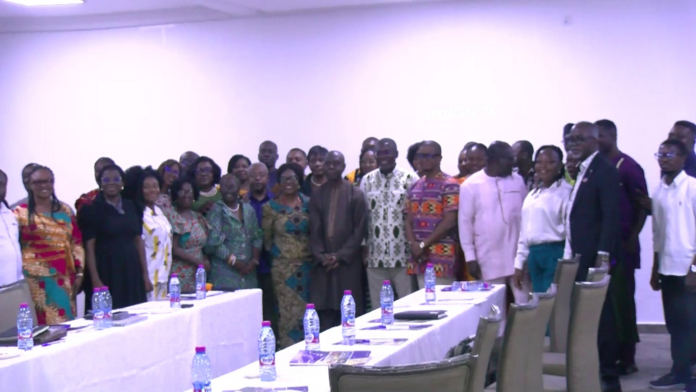
These were among the key findings presented at the National Dissemination and Policy Dialogue of the KNUST–IDRC/GPE-KIX Collaborative Research Project on The Impact of Culturally Responsive Teaching Practices on Social and Emotional Development in Diverse Early Childhood Classrooms in Ghana, held in Accra.
The two-year study is challenging long-held assumptions about language and learning in Ghana’s kindergartens.
Language is not a barrier—It is a bridge
Researchers found that children participate more actively, express themselves more confidently and develop stronger social and emotional skills when teachers deliberately incorporate their home language, local stories, songs, games and cultural experiences into classroom teaching.
Instead of viewing local languages as obstacles to learning, the study describes them as powerful tools for unlocking children’s potential.
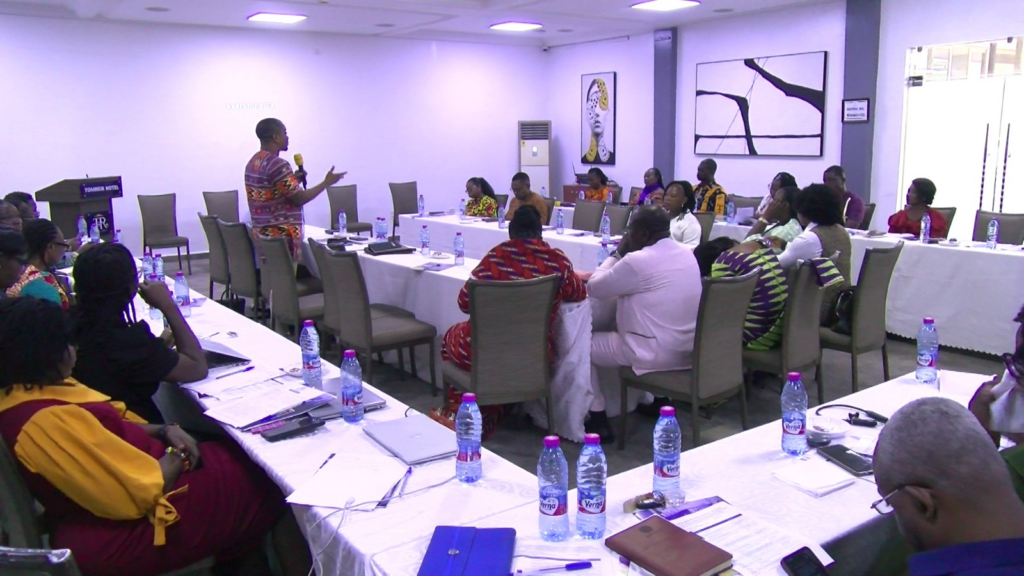
Professor Paul Sarfo-Mensah, the project’s lead researcher, said parents should not feel disappointed when their children are taught in Ghanaian languages during their formative years.
“Parents should not show disappointment when their children are taught in the local language. This is how we build identity and confidence from the foundation,” he said.
According to him, culturally responsive teaching is designed to make children feel connected to the classroom by recognising the language and culture they already know before introducing new concepts.
“English first” could be holding children back
One of the biggest challenges identified during the project was resistance from some parents who believe their children should focus exclusively on English.
Researchers disclosed that some teachers were even confronted by parents for using local languages in class.
Professor Kwame Abroampa said these concerns are understandable but misplaced.
The research, he explained, found no evidence that learning through local languages weakens English proficiency. Rather, children who first understand concepts in a familiar language are better prepared to acquire English as they grow.
He stressed that more public education is needed to help parents appreciate that mother-tongue instruction supports, rather than competes with, English language development.
The numbers tell the story
The findings are backed by rigorous evidence.
The project involved 676 learner observations covering 444 kindergarten pupils and 45 teachers across 16 schools in the Ashanti and Greater Accra regions.
Schools implementing culturally responsive teaching practices received structured training that encouraged teachers to integrate local languages, indigenous games, storytelling, songs and community knowledge into daily lessons.
The results were remarkable.
Within just a few months, the proportion of children with weak social and emotional skills dropped dramatically from 32% to just 2%.
At the same time, the proportion of children demonstrating strong social and emotional skills increased from 10% to 37%.
Children in schools implementing the culturally responsive approach performed significantly better than those in comparison schools, with 47% reaching strong social and emotional development compared with 33% in schools that continued using conventional teaching methods.
Researchers concluded that these improvements were directly linked to the intervention rather than normal child development.
More than academic success
The benefits extended well beyond classroom performance.
Teachers reported that children who were once quiet and withdrawn became more confident, volunteered answers in class and interacted more freely with their peers.
Some also observed a sharp decline in absenteeism.
“School has become more interesting to learners,” several teachers reported during the dissemination programme.
Parents noticed the changes too.
One teacher recounted how a parent expressed surprise that her child had started discussing classroom activities at home.
“Now the child can tell the parents what she learnt during the day. Before, she was quiet about school,” the teacher shared.
Researchers say this demonstrates how culturally responsive teaching strengthens not only classroom participation but also relationships between schools and families.
Parents themselves became active contributors by sharing traditional songs, stories, food, dress and cultural practices that enriched classroom learning.
Culture builds confidence
The study argues that social and emotional learning—skills such as confidence, empathy, cooperation and self-regulation—is most effective when children see their own culture reflected in what they are taught.
For many children, entering school can be intimidating.
When the classroom language, stories and examples are completely different from what they experience at home, they may struggle to participate despite being capable learners.
Using familiar languages and cultural references makes learning feel safe and meaningful.
Researchers believe this is particularly important in Ghana, where kindergarten classrooms often include children from different ethnic and linguistic backgrounds.
Urban schools face a different challenge
While the intervention proved successful across most schools, researchers noted that implementation was easier in rural communities where children generally shared one dominant language.
Urban schools presented a different reality.
Many classrooms include children from several language backgrounds, making it difficult for teachers to rely on a single Ghanaian language.
Researchers recommend adapting culturally responsive teaching for multilingual classrooms by strategically using two or three widely understood local languages alongside English, rather than abandoning the approach altogether.
A call to parents
The researchers say parents have a crucial role to play.
Rather than discouraging children from speaking their mother tongue, families should see local languages as the foundation upon which future learning is built.
Experts argue that preserving Ghanaian languages in early childhood education is not simply about protecting culture—it is about improving educational outcomes.
They are calling on the Ghana Education Service, teacher training institutions, school leaders and parents to embrace culturally responsive teaching practices as part of mainstream kindergarten education.
The message from the research is clear.
A child who proudly speaks their mother tongue is not falling behind.
They are building confidence, strengthening their identity and developing the social and emotional skills that will support learning for years to come.
For researchers, the evidence is no longer a matter of opinion.
When children are allowed to learn through the language and culture they know best, everyone benefits—including their future education.
ALSO READ:
‘There’s no date for Apostle Kwadwo Safo’s funeral’ — Family dismisses viral posters
Pastors, traditional healers urged to encourage sick people to visit hospitals