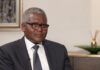

The Member of Parliament for Abuakwa South, Kingsley Agyemang, has stated that the New Patriotic Party (NPP) does not oppose the government’s Free Primary Healthcare policy, but insists its implementation must be supported by clear actuarial and scientific data.
His remarks follow the launch of the initiative by President John Dramani Mahama, which aims to strengthen primary healthcare delivery and expand access to preventive services nationwide.
Under the policy direction, the programme seeks to promote early detection and treatment of diseases at the community level, with an initial focus on about 150 underserved and less-endowed districts. The broader goal is to ease pressure on secondary and tertiary health facilities while improving outcomes at the primary care level.
The intervention is expected to be financed through the National Health Insurance Scheme (NHIS), with government projections estimating a cost of approximately GH¢1.5 billion in its initial phase.
Ghana’s primary healthcare system, however, is not new. It is built on longstanding frameworks such as the Community-based Health Planning and Services (CHPS) initiative and the National Health Insurance Act, 2012 (Act 852), both of which were designed to expand access to basic healthcare and advance the country toward universal health coverage.
Data from the National Health Insurance Authority (NHIA) indicates that more than 20 million people are currently enrolled in or benefiting from the NHIS—one of the highest coverage levels recorded in recent years.
Speaking on JoyNews’ Pulse, Dr Agyemang questioned the structure and basis of the new rollout, arguing that while the policy direction is commendable, its execution raises concerns.
“The NPP is not against the policy,” he said. “But we reject its arbitrary rollout. We need actuarial data to support it. A launch alone is not policy delivery.”
He also disputed claims that the initiative is entirely new, noting that primary healthcare has long been part of Ghana’s health system and was strengthened under previous administrations.
“Primary healthcare is not new in this country,” he stated. “It has existed for years, and we advanced it during our time in office. What we are seeing is not a new invention—it is an existing system being repackaged.”
Dr Agyemang, a public health expert, emphasised that Ghana’s pursuit of universal health coverage must be guided by evidence and proper structuring. He cautioned that politicising health interventions could undermine sustainable reforms.
He further highlighted existing challenges within the health sector, including limited domestic pharmaceutical production and weaknesses in the supply chain. According to him, addressing these issues is critical to achieving Sustainable Development Goal 3 by 2030.
“We cannot focus only on access without addressing supply, cost, and sustainability,” he added.
The discussion comes as the government positions primary healthcare expansion as a key pillar of its health agenda, while opposition voices continue to call for clearer costing, sustainability planning, and stronger technical backing.