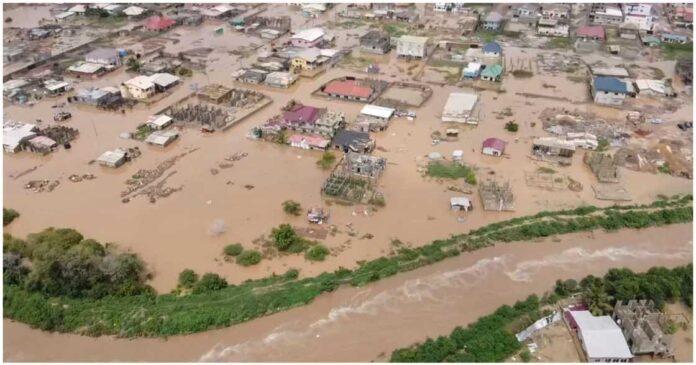

A resident of Adabraka has described the June 29 floods as the worst he has witnessed in more than four decades, citing the unprecedented volume of water that inundated the community, despite the disaster recording fewer deaths there than the devastating June 3, 2015 floods.
Speaking at a community forum organised by Citi FM, the resident said the amount of floodwater that swept through Adabraka exceeded that of previous major flooding incidents, including the October 1995 floods and the June 3, 2015 disaster.
Having lived in the area for about 40 years, he said the latest flooding was unlike anything he had experienced.
“The water volume for this Monday was more than we’ve ever seen before. I’m an old man, and I can tell you from history. For the past 40 years, we haven’t seen such a flood. I experienced the October 1995 floods, I was here during the June 3 disaster, and I was here on June 29. This is the worst volume of water I’ve ever seen,” he said.
Despite the unprecedented volume of water, he noted that the June 29 floods resulted in far fewer deaths in his community than the June 3 tragedy, largely because residents were better prepared and the flooding occurred during the day.
He explained that unlike the June 3, 2015 floods, which struck at night and caught many residents off guard, the latest floods unfolded in daylight, giving people enough time to move to safety while allowing emergency responders to carry out rescue operations more effectively.
He also credited increased public awareness, particularly on the need to switch off electricity during flooding, for helping to reduce electrocution-related deaths.
“June 3 happened at night, and many people couldn’t find their way because it was dark,” he recalled. “At the time, people did not know they had to switch off their electricity, and that contributed to the loss of lives. This time, people had learned from that experience, and because it happened during the day, many lives were saved.”
He further observed that although the June 29 floods brought far higher water levels than previous disasters, they carried relatively little debris through the community. While this reduced some of the dangers typically associated with flooding, he stressed that the sheer volume of water remained deeply concerning.
The June 29 floods affected more than 38,000 people across the Greater Accra Region, displaced over 7,700 households and claimed at least 15 lives, renewing concerns over Accra’s recurring flooding challenges and prompting fresh calls for improved drainage infrastructure, stronger flood prevention measures and better urban planning.