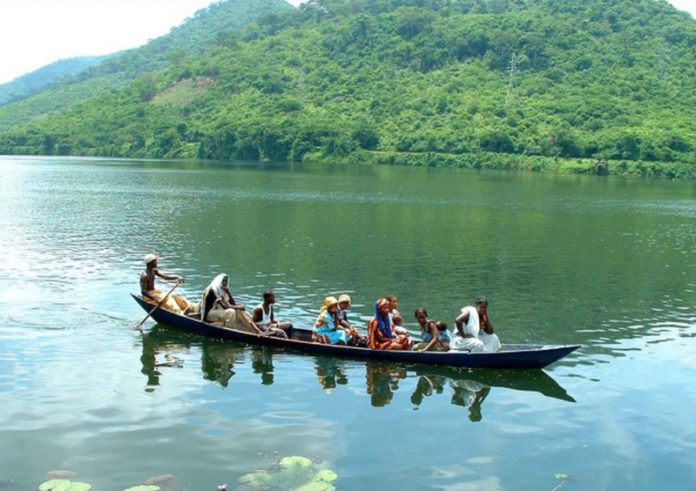

When 12-year-old Godwin Dogbey left his home in Hohoe for what he believed would be a visit to his hometown, he was excited. He had never been there before. Instead, Godwin was taken to an island on Lake Volta and left there.
For the next three years, he was forced to work in the fishing industry, beaten when he struggled and made to enter the water despite not knowing how to swim.
What began as a journey he thought would last days turned into years of forced labour.
“I felt happy that, finally, I could also boast and say I’ve been to my hometown before,” he recalls.
It was only after reaching the lake that Godwin realised something was wrong. The woman who had brought him there disappeared. The man he had been told was his uncle was, in fact, the boat master. And there was work waiting for him.
‘They would throw me into the lake,’ he says.
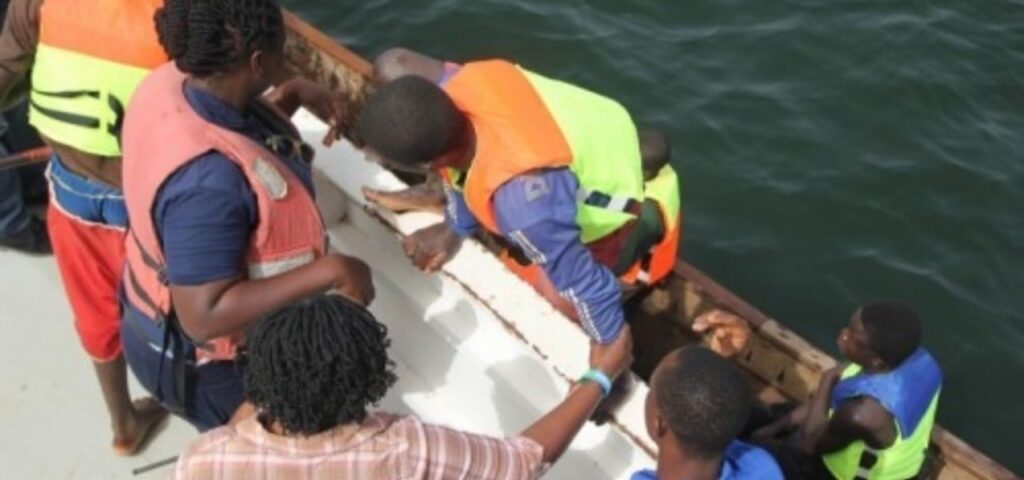
Godwin could not swim. But on the lake, that was not accepted as an excuse. He was also made to dive underwater to untangle fishing nets. Below the surface were hazards he could not control, including submerged tree stumps and, sometimes, electric fish.
“They will throw you inside the lake… so you need to swim, whatever the distance is.”
The lake became his world. From 2015 to 2018, he says he worked alongside other children, some of them younger than him. Some, he says, did not survive.
“Some do die. And it’s like it’s normal to them there, the boat masters themselves.”
Godwin’s account offers a glimpse into how children can become trapped in trafficking networks operating around Ghana’s fishing communities.
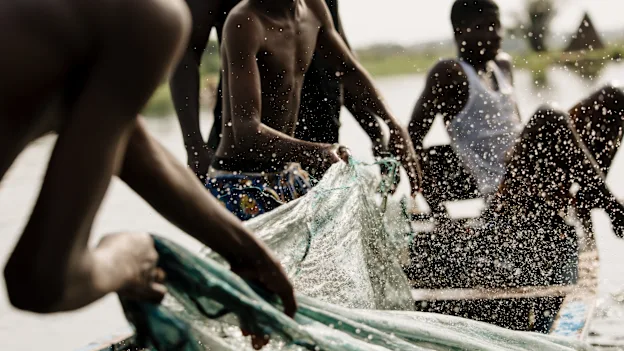
Superintendent William Ayaregah, Director of the Anti-Human Trafficking Unit of the Ghana Police Service, says traffickers often exploit relationships of trust. Parents may believe promises that their children will receive an education or find better opportunities. Children, meanwhile, may have little reason to distrust the adults taking them away.
Some traffickers deliberately target children with particular skills, including those who can swim, and use promises of education or opportunities in the city to lure them away before sending them into fishing communities where they are exploited.
For Godwin, the deception was particularly painful because it came through someone he believed was family.
After three years on the lake, a chance to escape came unexpectedly. Godwin managed to get a message out through the boat master’s son. The warning was clear: if a rescue team came, it should come with security personnel.
Eventually, police officers and staff from International Justice Mission arrived on the island. In the end, 24 children were rescued and taken to Kete Krachi.
Godwin had escaped. But he had also helped others escape with him. For the police, operations on the lake are rarely straightforward.
Superintendent Ayaregah says rescuers must first identify where children are being exploited, often through surveillance, before an operation can be launched.
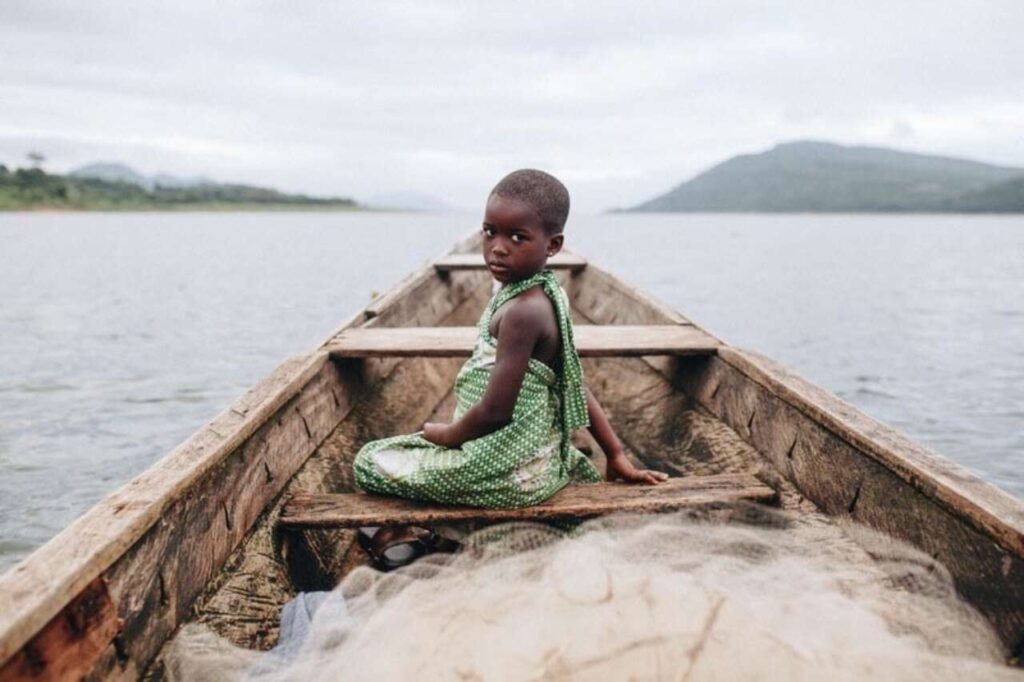
“Some children are afraid to testify against their traffickers, particularly when alleged perpetrators are believed to have influence within their communities. For prosecutors, the challenge extends beyond the rescue itself,” he says.
Senior State Attorney Andrew Dodzi Adugu, who handles human trafficking cases across the Volta and Oti Regions, says the situation has improved significantly through arrests, prosecutions and public education.
But he rates the overall response at about six out of 10.

That, he says, means considerable gaps remain. Among them is a shortage of shelters and logistical support for victims. The justice system also has its own limitations.
“The region faces difficulties providing transportation, food, healthcare and referrals. The Oti Region has one functioning circuit court at Jasikan, while another is under construction. Its first High Court has only recently become operational. The results? Repeated adjournments and lengthy delays in trafficking cases,” he tells us.
As Ghana marks World Day Against Trafficking in Persons, Godwin’s story is a reminder that behind the statistics are children whose lives can change in an instant, sometimes because an adult breaks their trust, and sometimes because another child refuses to leave them behind.
Also read: