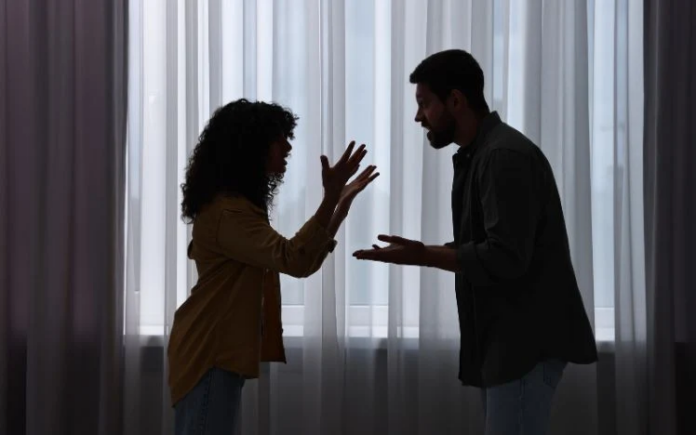

Sometimes, the person you fall in love with is not the person you eventually find yourself living with.
At the beginning, everything can feel almost perfect. They call often, pay attention to the little things, make you feel special and seem willing to do anything to keep you happy. Then, slowly, things begin to change.
The jokes become insults. Concern starts looking like control. Questions about where you are become demands to know your every move. Friends you once spoke to freely suddenly become “bad influences”, and before you realise it, you are spending more time explaining yourself than enjoying the relationship.
So how do you know when you are dealing with a toxic partner, and at what point should you stop hoping things will change and walk away?
Counsellor Adofoli, speaking on Joy Prime’s Changes, says one of the first things people should pay attention to is how a potential partner treats other people.
It is easy to be impressed by how someone treats you when they are trying to win your heart. But watch how they speak to the waiter who gets their order wrong, how they treat their friends, how they speak to their family and how they behave towards people they do not need anything from.
That, according to Adofoli, can tell you much more about a person’s character than the romantic treatment you are receiving in the early days.
Someone may be incredibly sweet to you because they want you to fall in love with them. But if they are routinely rude, insulting or cruel to everyone else, it is worth asking yourself why you believe you will always be the exception.
“I’m not saying my spouse is a bad person. He’s a good person,” is often how people in troubled relationships begin explaining their situation, Adofoli noted. They may genuinely love their partners and believe there is a good person underneath the behaviour that is hurting them.
That is what can make toxic relationships so complicated.
The person who hurts you may also be the person who makes you laugh, buys you gifts, apologises afterwards and promises that it will never happen again. Those good moments can make it difficult to accept that the relationship itself has become unhealthy.
Then there is manipulation.
One of the most damaging forms is gaslighting, where a partner makes you question your own feelings, memory or understanding of what happened. Instead of accepting responsibility for their behaviour, they turn the situation around until you begin wondering whether you were actually the problem.
You may start hearing things like, “You made me do this,” or “You are too sensitive,” until you begin doubting yourself. And when that happens repeatedly, something else can happen: you start losing your support system.
A controlling partner may gradually convince you that your closest friends and relatives do not really care about you. They may discourage certain friendships, create conflict between you and your family or make you feel guilty whenever you seek advice from people outside the relationship.
Eventually, you have fewer people to talk to, and that can make leaving feel almost impossible.
Adofoli explained that victims can become trapped by fear, asking themselves what will happen if they leave, where they will go and whether they will be able to cope on their own.
Sometimes, the question is not whether they know the relationship is hurting them. They know. The difficult part is finding the courage and support to do something about it.
And this is where the question of when to leave becomes complicated.
There is no magic number of months or years after which someone is expected to walk away. People stay for different reasons. There may be children involved. There may be financial dependence, emotional attachment, family pressure or simply the hope that the person they fell in love with will eventually return.
But there is a difference between going through a difficult period in a relationship and repeatedly being harmed by the person you are supposed to feel safe with.
If you are constantly walking on eggshells because you are afraid of your partner’s reaction, that is a warning sign.
If you are being insulted, humiliated, controlled or deliberately isolated from the people who care about you, that should not be dismissed as simply “relationship problems”.
And when physical violence enters the picture, it should never be normalised because the person apologised afterwards or promised to change.
A relationship does not become healthy simply because the abusive episode is followed by flowers, affection or an emotional apology.
For some people, the decision to leave may take years. Others may recognise the signs much earlier. What matters is understanding that there is no prize for enduring pain indefinitely in the hope that someone else will change.
Sometimes, the hardest part is accepting that the person you love may not be willing to become the person you need them to be.
Walking away is not always easy, and it is not always something that can be done overnight. But recognising the signs, talking to people you trust and rebuilding a support system can be the beginning of taking back control.
Because a healthy relationship should give you room to be yourself. You should not have to become smaller, quieter, more isolated or more afraid just to keep someone you love.
And perhaps one of the clearest signs that something is wrong is when you spend more time trying to survive the relationship than enjoying it.