
The government has announced plans to introduce a 20 per cent rural posting allowance for teachers serving in rural and deprived communities as part of efforts to improve teacher welfare and address staffing shortages in underserved areas.
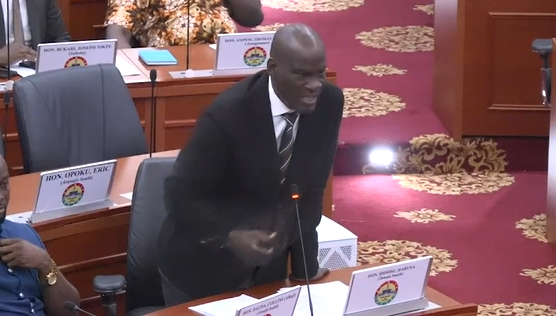
The Minister for Education, Haruna Iddrisu, disclosed the initiative while responding to questions in Parliament on Thursday, July 2, saying the allowance is intended to attract, motivate and retain teachers in hard-to-reach communities.
According to the Minister, the incentive forms part of the government’s broader commitment to improving teachers’ welfare, enhancing motivation and strengthening the quality of education across the country.
“Government is committed to roll out a 20 per cent rural posting allowance for teachers serving in rural and deprived areas, and the Ministry of Finance, the Ghana Education Service and the Ministry of Education are working on implementing that,” Mr. Iddrisu said.
He also announced that the qualifying period for study leave with pay for teachers posted to deprived communities has been reduced from three years to two years.
The Minister explained that teachers who voluntarily accept postings to rural and deprived areas will now be eligible to apply for study leave with pay after completing two years of service.
“Originally it was three years if you are in a deprived area. We have reduced it now to two years, so any person self-posting to a rural deprived area, after two years of service, can apply for study leave with pay,” he stated.
Mr. Iddrisu further revealed that the government is working to address accommodation challenges confronting teachers in rural communities through the implementation of President John Dramani Mahama’s proposed Teacher Dabre Initiative.
He said the programme, outlined in the National Democratic Congress (NDC) manifesto, seeks to provide housing for teachers in rural areas to improve deployment, motivation and retention.
“We are currently engaging in discussions to deploy the Teacher Dabre Initiative of President Mahama, which will provide accommodation for teachers in rural areas to address the housing challenges that often affect teacher deployment and retention in those areas,” he said.
The Education Minister added that the government has directed that all newly awarded contracts for school infrastructure should include residential accommodation for teachers.
He assured Parliament that the government would continue investing in the continuous professional development and capacity building of teachers to improve learning outcomes nationwide.
READ ALSO:
Education Minister directs GETFund to allocate GH¢100 million annually for special needs education