
Ghana has taken a major step toward strengthening values-based education with the launch of Project ETHICS, an initiative aimed at equipping young people with integrity, critical thinking skills and civic responsibility needed to navigate an increasingly complex world.
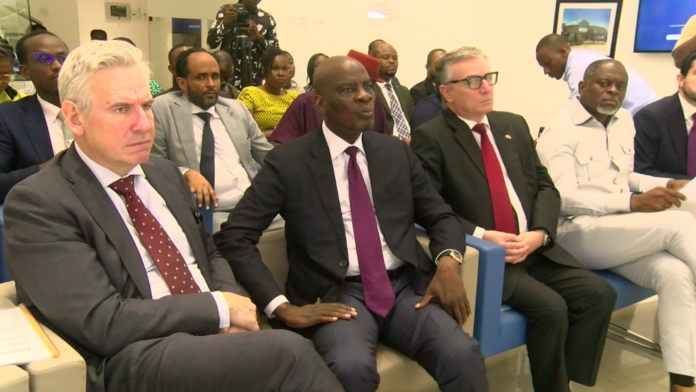
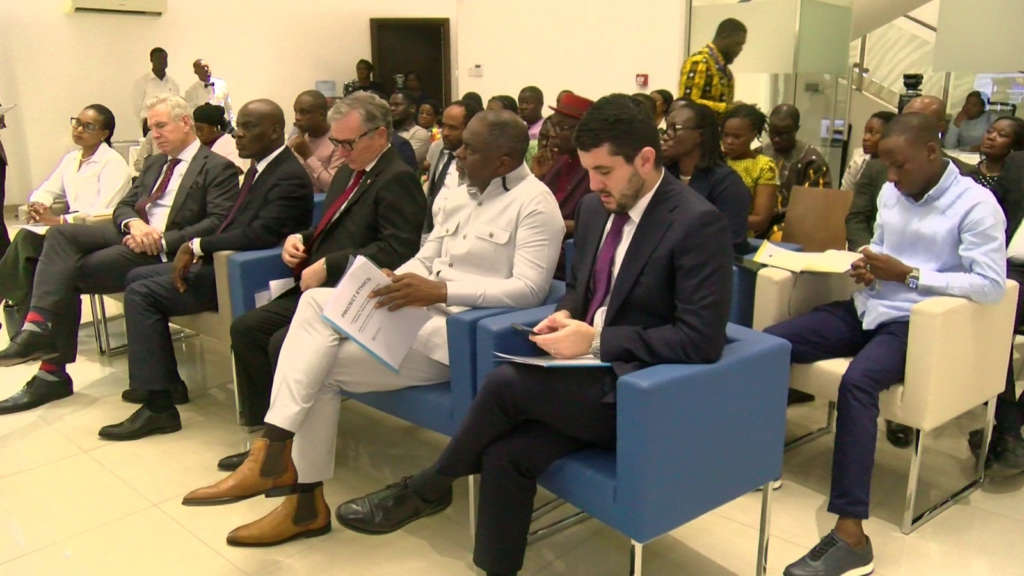
The project, officially known as Empowering Tomorrow’s Heroes with Integrity, Citizenship and Service (ETHICS), was launched in Accra on Thursday, July 9, 2026, bringing together government officials, education experts, civil society organisations, development partners, diplomats and teachers.
The initiative is a collaboration between Ghana and Malta, alongside Step Up Nigeria, the West African Civil Society Institute (WACSI) and Ghanaian education stakeholders. It seeks to strengthen ethics education through storytelling, digital learning, teacher training and interactive classroom resources.
Building character beyond academics
Unlike traditional classroom subjects that focus largely on academic achievement, Project ETHICS places character development at the centre of learning.
The programme seeks to promote honesty, integrity, empathy, responsibility and citizenship among young learners while developing their ability to think critically and make ethical decisions.
During its pilot phase, the initiative will be introduced in 30 schools across four districts in Accra. It will train 60 teachers and reach about 2,000 upper primary and junior high school students through animated films, storybooks, games, quizzes, workbooks and teacher guides.
The project will also create a platform for educators, policymakers and civil society organisations to explore ways of effectively integrating ethics education into Ghana’s education system.
Ethics in the age of artificial intelligence
Speaking at the launch, Malta’s High Commissioner to Ghana, Ronald Micallef, said the rapid growth of artificial intelligence and emerging technologies had made ethics education more critical than ever.
He noted that future societies would require citizens who could think critically and make responsible choices in a rapidly changing world.
According to him, the partnership demonstrates the shared commitment of Ghana and Malta to preparing young people to respond responsibly to global challenges.
He stressed that the initiative was not about exporting Malta’s education model but about both countries learning from each other to develop an approach rooted in Ghana’s culture and values.
Ghana’s curriculum embraces ethics
Minister of Education Haruna Iddrisu described Project ETHICS as an important contribution to Ghana’s efforts to build a society founded on strong moral values.
He said ethics remained essential to creating responsible communities and shaping citizens with integrity.
The Minister announced that Ghana’s revised curriculum would incorporate ethics education from kindergarten through primary and junior high school to strengthen character development alongside academic learning.
He added that the initiative supports Ghana’s broader vision of preserving shared values while preparing young people to contribute meaningfully to national development.
Lessons from Malta’s 14-year journey
Providing insight into Malta’s experience, Head of the Department of Ethics Education, Roger Tirazona, said the country introduced ethics education 14 years ago after identifying the need for a subject focused on holistic moral development.
From age five until the end of compulsory education, ethics has become a core values-based subject that helps children develop integrity, empathy and personal responsibility.
He said the goal was to raise young people who choose to do the right thing, not because they fear punishment or supervision, but because integrity becomes part of their identity.
“What we are trying to build is a generation that acts with care toward others and toward themselves, even when nobody is watching,” he explained.
Dialogue rather than dictation
Mr Tirazona said one of the strengths of the programme was its teaching approach.
Rather than relying on lectures and memorisation, ethics is taught through the Philosophy for Children approach, which encourages dialogue, questioning and collaborative problem-solving.
Students are guided to examine real-life situations, consider different perspectives and work together to find solutions to complex moral issues.
He said Ghana had an opportunity to develop its own ethics curriculum by drawing on indigenous wisdom, cultural values and community traditions rather than simply replicating Malta’s experience.
“Ghana should discover the wisdom that has shaped its people and build an ethics education programme that reflects its own identity while contributing to global conversations on values and citizenship,” he said.
Ghana ready for pilot
Director of Programmes at Step Up Nigeria, Feranmi Iyanda, expressed confidence that Ghana was well positioned to successfully implement the initiative.
She said Ghana already possessed many of the cultural values, political commitment and educational leadership needed to make the programme successful.
According to her, the enthusiasm from teachers, education officials and other stakeholders had been encouraging.
“Ghana is ready. The values already exist. What we are doing is providing structured tools and practical approaches to help schools nurture those values,” she said.
Rollout begins in August
Implementation of Project ETHICS will begin next month with intensive teacher training.
The first cohort of 60 teachers will undergo specialised training in August through a partnership involving Step Up Nigeria, Dynamic Works Foundation, Young Visionary Leaders Ghana and Malta’s ethics education experts.
The programme will move into classrooms in October, when learning materials will be distributed to the 30 participating schools and trained teachers begin delivering ethics lessons.
The pilot will be monitored and evaluated throughout the year to assess changes in students’ attitudes, behaviour and understanding of ethical issues.
Findings from the pilot will be presented to stakeholders before decisions are taken on expanding the initiative across Ghana and potentially to other African countries.
For Ghana, Project ETHICS represents more than an education programme; it is an investment in raising a generation equipped not only with knowledge but also with the character, integrity and sense of responsibility needed to lead communities and shape the country’s future.
GRA uncovers tax compliance breaches at China Mall operator, partially seals…