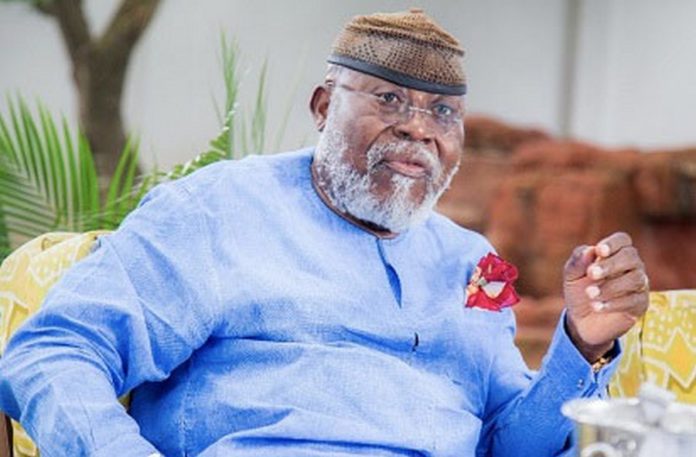

Former Ghana Football Association (GFA) President Nyaho Nyaho-Tamakloe has urged football authorities to prioritise grassroots development if Ghana is to regain its status as one of Africa’s football powerhouses.
His comments come in the wake of the Black Stars’ exit from the 2026 FIFA World Cup following a narrow 1-0 defeat to Colombia in the Round of 32.
Speaking to Graphic Sports, the Accra Hearts of Oak Sporting Club board member expressed concern about the current state of football development in the country, insisting that Ghana’s decline on the international stage stems from a lack of long-term planning and investment in young talent.
According to Dr Nyaho-Tamakloe, the country’s football revival must begin at the grassroots, where promising players can be identified early and developed through a structured system.
“If we want to achieve anything in football, we must plan and organise from the grassroots. We must identify and develop more local talent,” he said.
He also called on Ghana to emulate Morocco’s football development model, describing it as a blueprint for sustained success at both continental and global levels.
Dr Nyaho-Tamakloe said Morocco’s rise in world football was no accident but the result of years of strategic planning, with talented youngsters identified early and groomed through a well-organised development pathway.
“We must adopt the Moroccan strategy,” he said, adding that many of the teams excelling at the World Cup had youthful squads developed through deliberate long-term planning.
The veteran football administrator further lamented what he described as the disappearance of Ghana’s traditional playing style, urging the national team’s technical handlers to restore the aggressive brand of football that once defined the Black Stars.
“Our style of football has disappeared, and it must be brought back. We must be aggressive,” he said.
Ghana’s World Cup campaign ended in the Round of 32 despite reaching the knockout stage for the first time since 2010. The four-time African champions will now turn their attention to preparations for the 2027 Africa Cup of Nations qualification.
Former Ghana Football Association (GFA) President Nyaho Nyaho-Tamakloe has urged football authorities to prioritise grassroots development if Ghana is to regain its status as one of Africa’s football powerhouses.
His comments come in the wake of the Black Stars’ exit from the 2026 FIFA World Cup following a narrow 1-0 defeat to Colombia in the Round of 32.
Speaking to Graphic Sports, the Accra Hearts of Oak Sporting Club board member expressed concern about the current state of football development in the country, insisting that Ghana’s decline on the international stage stems from a lack of long-term planning and investment in young talent.
According to Dr Nyaho-Tamakloe, the country’s football revival must begin at the grassroots, where promising players can be identified early and developed through a structured system.
“If we want to achieve anything in football, we must plan and organise from the grassroots. We must identify and develop more local talent,” he said.
He also called on Ghana to emulate Morocco’s football development model, describing it as a blueprint for sustained success at both continental and global levels.
Dr Nyaho-Tamakloe said Morocco’s rise in world football was no accident but the result of years of strategic planning, with talented youngsters identified early and groomed through a well-organised development pathway.
“We must adopt the Moroccan strategy,” he said, adding that many of the teams excelling at the World Cup had youthful squads developed through deliberate long-term planning.
The veteran football administrator further lamented what he described as the disappearance of Ghana’s traditional playing style, urging the national team’s technical handlers to restore the aggressive brand of football that once defined the Black Stars.
“Our style of football has disappeared, and it must be brought back. We must be aggressive,” he said.
Ghana’s World Cup campaign ended in the Round of 32 despite reaching the knockout stage for the first time since 2010. The four-time African champions will now turn their attention to preparations for the 2027 Africa Cup of Nations qualification.