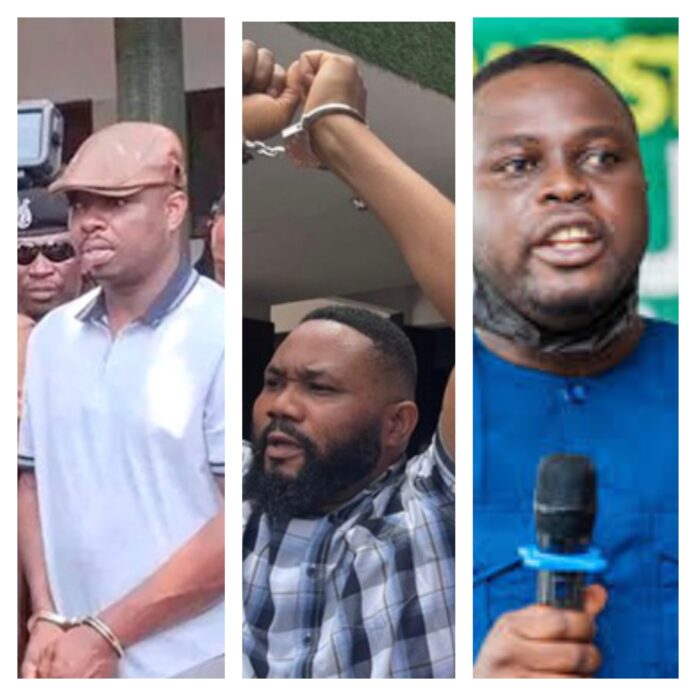

Ghana has witnessed a growing pattern of arrests, detentions, and criminal prosecutions of politicians, party activists, and communicators — largely from the opposition New Patriotic Party (NPP) — over allegations of publishing false news and offensive conduct since the National Democratic Congress (NDC) government took power in January 2025.
The arrests, carried out under colonial-era provisions of Ghana’s Criminal Offences Act, have ignited a fierce national debate about the limits of free speech, the independence of state security agencies, and the health of Ghana’s democracy.
Alhassan Abdul Rahaman – March 2025
Police in Tamale arrested Alhassan Abdul Rahaman, an NPP foot soldier, on March 22, 2025, after he made a Facebook post considered derogatory and embarrassing to the Yaa Naa, the Overlord of the Dagbon Kingdom. He was arraigned before a court two days later, charged with offensive conduct, and remanded. The case drew limited national attention at the time, but has now become the beginning of a broader trend.
Alfred Ababio Kumi, “Adenta Kumi” – May 2025
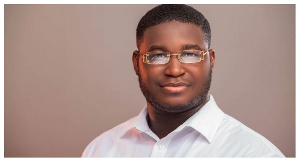
The arrest that first set alarm bells ringing came in May 2025 and it was that of Alfred Ababio Kumi, a youth activist of the NPP and former parliamentary aspirant for Adenta.
He was arrested at his home in the early hours of May 23, 2025, by armed operatives of the National Intelligence Bureau (NIB) and formally charged with publication of false news.
The charges stemmed from claims Kumi made on his X (formerly Twitter) account and during a radio interview in connection with a petition he had submitted to the President, calling for the dissolution of the committee investigating Chief Justice Gertrude Torkornoo.
In the petition, Kumi alleged that after the committee’s inaugural sitting, three Supreme Court Justices, two of whom are members of the committee — Justice Gabriel Scott Pwamang, Justice Samuel Kwame Adibu-Asiedu and Justice Yonny Kulendi — were seen dining with Thaddeus Sory, counsel for the petitioner, at Santoku Restaurant in Accra’s Airport Residential Area, and were overheard discussing matters related to the petition.
The NPP condemned the arrest in the sharpest terms, describing it as “barbaric and unlawful.” Following high-level engagements led by Minority Leader Alexander Afenyo-Markin, Kumi was released unconditionally the same evening.
Kwame Baffoe, “Abronye DC” (First Arrest) – September 2025
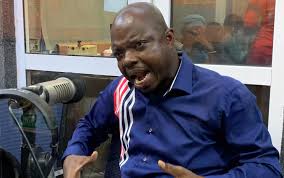
The most high-profile and continuing case belongs to the Bono Regional Chairman of the NPP, Kwame Baffoe, popularly known as Abronye DC. He was arrested on September 8, 2025, after attending a police invitation by the Criminal Investigations Department (CID).
During interrogation, police played a video of the NPP chairman allegedly referring to the Inspector General of Police, Christian Tetteh Yohonu, as “the most foolish IGP in the history of Ghana” and “the most corrupt IGP in the history of Ghana” during a live-stream programme on Ohia TV on September 3, 2025.
He was subsequently charged with two counts: offensive conduct conducive to a breach of the peace, and publication of false news — offences under Sections 207(1) and 208(1) of Ghana’s Criminal Offences Act, 1960 (Act 29).
The Accra Circuit Court denied bail to Abronye twice with the presiding judge, Samuel Bright Acquah, noting during proceedings that “society was polluted with insults” and urging all Ghanaians to work to “prevent politics of insults.”
Abronye was eventually granted bail of GH¢50,000 after spending a week in police custody, but the case continued. He faced further arrest in October 2025 over separate comments related to Kennedy Agyapong. The Minority Caucus in Parliament condemned his detention as political persecution.
Wendell Nana Yaw Yeboah – November 2025
On November 26, 2025, the CID arrested an activist with Democracy Hub, Wendell Nana Yaw Yeboah, following a petition by the “Ashanti Democrats” acting on behalf of three Regional Ministers — from the Ashanti, Eastern, and Western Regions.
Yeboah had accused the ministers of involvement in galamsey operations.
What made this case particularly striking was that Yeboah had already issued a formal retraction and public apology on November 18 — over a week before his arrest — admitting the claims were unsubstantiated. His arrest despite the apology deepened concerns that the process was being used as a tool for intimidation.
Abubakar Yakubu, “Baba Amando” – April 2026
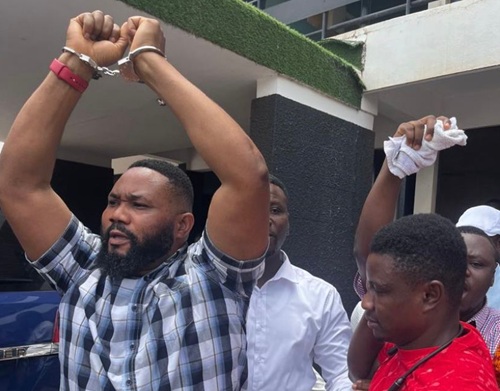
On April 13, 2026, the NPP’s Sunyani East Constituency Communications Officer, Abubakar Yakubu, popularly known as Baba Amando, was arrested in connection with allegations of offensive conduct, false publication, and the dissemination of statements considered likely to cause fear and panic.
Sources linked the arrest to alleged threats directed at a judge at the Adentan Circuit Court and the circulation of derogatory images involving the President.
The NPP stated that Baba Amando had honoured a police invitation at the Bono Regional Police Headquarters, only to be told there was no record of the invitation. He was then transported to Accra with police escort. The Member of Parliament for Manhyia South, Nana Agyei Baffour Awuah, publicly raised concerns over the manner in which he was handled and moved from Sunyani to the capital.
An Accra Circuit Court remanded Baba Amando for two weeks. He was eventually granted bail of GH¢30,000 with two sureties by the Accra High Court, with an order to report to police every two weeks as investigations continued.
Kwame Baffoe (Re-arrested again) – April 2026
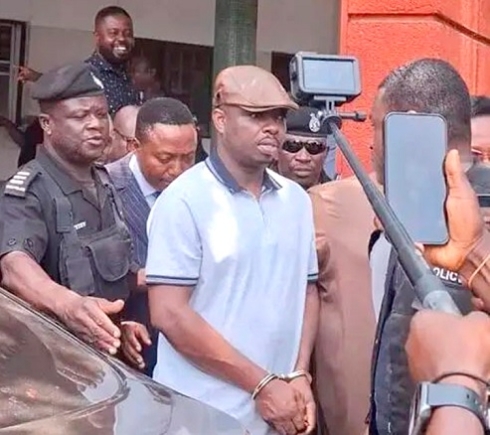
On the same day Baba Amando was arrested, April 13, 2026, Abronye DC was arrested again, this time over alleged threats directed at a judge presiding over a case at the Adenta Circuit Court. He was initially granted bail but was subsequently re-arraigned before Circuit Court 9 on May 13, 2026, and remanded into BNI custody. He was charged afresh with offensive conduct conducive to a breach of the peace and publication of false news, and pleaded not guilty. The court refused bail, citing concerns he would commit further offences, and adjourned the case to May 27, 2026.
The Accra High Court however granted bail to the Bono Regional Chairman in the sum of GH¢100,000 with two sureties on May 21, 2026.
David Essandoh, “Sam Toys” – May 2026
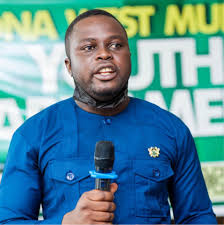
One of the most widely condemned arrests came on the evening of Monday, May 11, 2026 when a team of masked, heavily armed security personnel in what NPP members described as a “Rambo-style” operation descended on Agona Swedru in the Central Region and arrested the NPP’s Agona West Constituency Organiser, David Essandoh, over a Facebook post claiming that “dumsor” — Ghana’s widely used term for persistent power outages — had returned. The post was accompanied by an image of a billboard bearing President Mahama’s picture alongside the caption.
What followed was deeply alarming for the opposition. The NPP National Organiser, Henry Nana Boakye (Nana B), said that for an extended period after the arrest, neither the party, his family, nor his lawyers could trace his whereabouts. The CID, National Intelligence Bureau, and National Security all initially denied involvement. He was eventually found in BNI custody and later released on bail.
The NPP’s Reaction
The NPP has framed the arrests as a systematic campaign of political persecution, with Minority Leader Alexander Afenyo-Markin leading the charge.
Speaking at a press conference on May 17, 2026, he described the prosecutions as “state-sponsored political persecution” and a “profound constitutional wrong,” arguing that criticising public officials is protected under Article 21(1)(a) of the 1992 Constitution.
He further accused the Mahama administration of quietly rebuilding Ghana’s abolished criminal libel regime through the back door, and questioned why Abronye DC was remanded into BNI custody — “a state intelligence service, not a remand prison.”
Former Vice President Dr. Mahamudu Bawumia echoed these concerns, describing the arrests as part of “an unholy collaboration between the Executive, state investigative agencies, and some elements within the judiciary.”
The party escalated its campaign on May 19, 2026, by petitioning diplomatic missions and international development partners accredited to Ghana, accusing the government of weaponising state institutions to silence opposition voices.
Civil Society Organizations’ Reaction
The Media Foundation for West Africa (MFWA) and other civil society voices have been united in condemning the pattern of arrests, describing it as a dangerous erosion of Ghana’s democratic credentials.
The MFWA warned that state security agencies are increasingly being weaponised to settle reputational disputes on behalf of public officials, bypassing civil remedies in favour of criminal prosecution and custodial intimidation — effectively resurrecting the repressive logic of the criminal libel law Ghana famously repealed in 2001.
Legal practitioner, Samson Lardy Anyenini reinforced this position, describing Section 208 of the Criminal Offences Act as a colonial-era relic inconsistent with Ghana’s constitutional guarantee of free expression, and cautioning that even the government’s proposed MDHI Bill risks replicating the same abuses through overly broad definitions of “hate speech.”
Beyond the legal arguments, some civil society voices have also called out the political hypocrisy surrounding the issue.
Legal Framework at the Centre of the Storm
At the heart of the controversy is Section 208 of Ghana’s Criminal Offences Act, 1960 — a colonial-era law that criminalises the publication of false statements likely to cause fear or alarm, carrying a penalty of up to three years in prison.
Critics argue the provision is dangerously vague and has repeatedly been used to silence political opposition rather than address genuine public harm.
While the Mahama government’s 2025 Misinformation, Disinformation, Hate Speech and Publication of Other Information (MDHI) Bill proposes to repeal Section 208, civil society groups, including the MFWA warn that its replacement provisions are drafted so broadly — particularly around “hate speech” — that they risk perpetuating the very abuses the Bill claims to end.
A Nation at a Crossroads
Ghana has long prided itself as one of Africa’s most stable and vibrant democracies. Yet the string of arrests documented here has prompted serious questions about whether that reputation is holding.
What is clear is that the use of criminal law to address political speech — whoever governs and whoever is targeted — poses a fundamental threat to the freedoms that Ghanaians have built over decades. Whether the courts, civil society, and the international community can hold the line remains to be seen. The next hearing in the Abronye DC case on May 27, 2026, will be closely watched as a bellwether for what comes next.
ALSO READ:
Ghana defers evacuation of citizens from South Africa over logistics and screening processes
We’re happy justice has been served – Justin Kodua says after Abronye’s bail (Video)