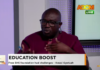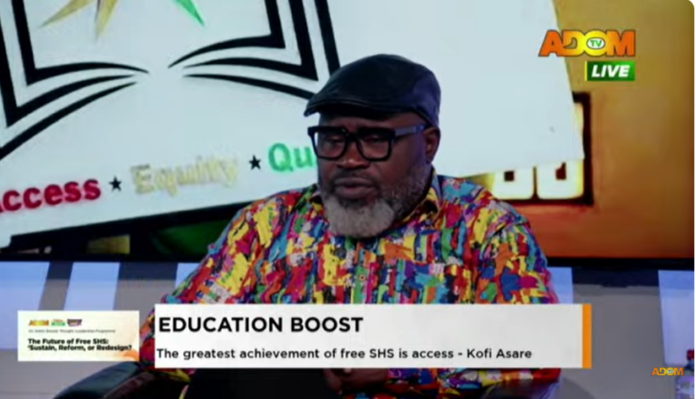

The Executive Director of Africa Education Watch (Eduwatch), Kofi Asare, has described expanded access to secondary education as the greatest success of Ghana’s Free Senior High School (Free SHS) policy, saying it has removed major barriers that previously prevented many students from progressing beyond basic education.
Speaking on Adom TV’s Thought Leadership discussion on the future of Free SHS, Mr. Asare said the policy has significantly increased opportunities for students by eliminating restrictive admission practices and easing the financial burden on parents.
He explained that, prior to the introduction of the programme, many qualified students were unable to enrol in senior high schools due to limited infrastructure and the inability of families to pay tuition and boarding fees.
According to him, the policy has brought substantial relief to households by covering tuition and accommodation costs, making secondary education more accessible to children from all backgrounds.
“Before the policy, we had a cut-off system mainly because there was no space in public secondary schools. Free SHS changed that,” he said.
Mr. Asare noted that official data shows that, on average, about 98 percent of Basic Education Certificate Examination (BECE) candidates who pass now qualify for placement under the Free SHS programme.
He stressed that secondary education is a right and argued that government financing of the policy has steadily increased in response to growing demand.
“In 2017, about GH¢400 million was allocated to Free SHS. Today, government is planning to spend GH¢4.2 billion on the programme. This shows the system has been responsive to the increasing demand for secondary education,” he stated.
He added that government currently spends an average of GH¢2,800 annually on each student under the policy.
Mr. Asare also pointed to Parliament’s amendment of the GETFund Act to support the financing of Free SHS, describing it as a significant step towards sustaining the programme.
However, he cautioned that while funding for the policy has improved, key challenges remain, particularly in expanding school infrastructure and recruiting more teachers to accommodate the growing student population.
“The real issue now is financing infrastructure expansion and ensuring we have enough teachers to meet the increased demand,” he said.
READ ALSO:
$300m World Bank loan not to fund Free SHS – Haruna Iddrisu
Free SHS should be funded with local revenue, not loans – Gideon Boako
Education Minister assures Free SHS suppliers of payment within one week