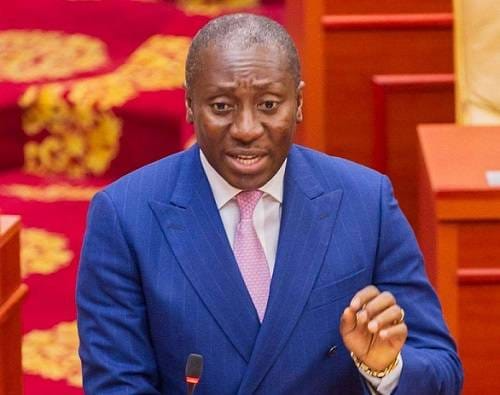

Minority Leader Alexander Afenyo-Markin has accused the government of using state security agencies against its political opponents while Ghana’s drug-trafficking problem grows, warning that the country’s honest exporters are the ones paying the price.
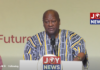
Speaking at the launch of the 30th Ghana Journalists Association (GJA) Media Awards, he reminded the media that Chapter 12 of the 1992 Constitution guarantees its freedom and independence, and that this carries a duty to hold the government to account.
“Over the past year our beloved country has witnessed a deeply disturbing resurgence in drug trafficking, organized illicit trade that threatens our national security and damages our standing in the international community,” he told the gathering.
Citing research by JoyNews, Mr Afenyo-Markin said 28 drug busts involving Ghana have been recorded, 11 of them major cocaine cases.
“The remaining 17 cases involve cannabis, methamphetamine, heroin and pharmaceutical opioids. The research team estimates the street value of the cocaine seized at between [US]$1.3 billion to US$1.7 billion,” he said.
The Member of Parliament for Effutu said the most damaging detail came from Belgium, where customs disclosures at the port of Antwerp ranked Ghana fifth among countries of origin.
The Minority Leader said the consequences are already being felt, with the country’s image severely damaged and law-abiding exporters bearing the economic cost.
“Legitimate shipment of Ghanaian timber, cocoa, cashew and agricultural produce now face intense vetting, prolonged cargo holds and exorbitant inspection fees at European and global ports due to the heightened risk profile assigned to our country,” he said.
Mr Afenyo-Markin accused the government of dodging these concerns.
“Yet whenever the minority caucus or concerned citizens demand accountability on these massive security failures, this government deploys a deliberate red herring to swerve public discourse,” he said.
He alleged that instead of tightening port surveillance, state security agencies are being used against opponents.
As an example, he pointed to the case of Salome Awuti Baffoe and Ghana Jollof, alleging that it was a government attempt to evade accountability after French authorities intercepted nearly four tons of cocaine in a container that had arrived from Ghana.