

The Centre for Executive Development (CED) has urged executive and administrative professionals to reposition themselves as strategic partners to organisational leadership as technology and artificial intelligence continue to transform the workplace.
Speaking at the Executive and Administrative Leaders Roundtable 2026 in Accra, the Executive Director of CED, Mrs. Abigail Ampontuah-Yeboah, said the traditional perception of Executive Assistants, Personal Assistants, Office Managers and other administrative professionals as merely task-oriented support staff must change if the profession is to remain relevant in the future.
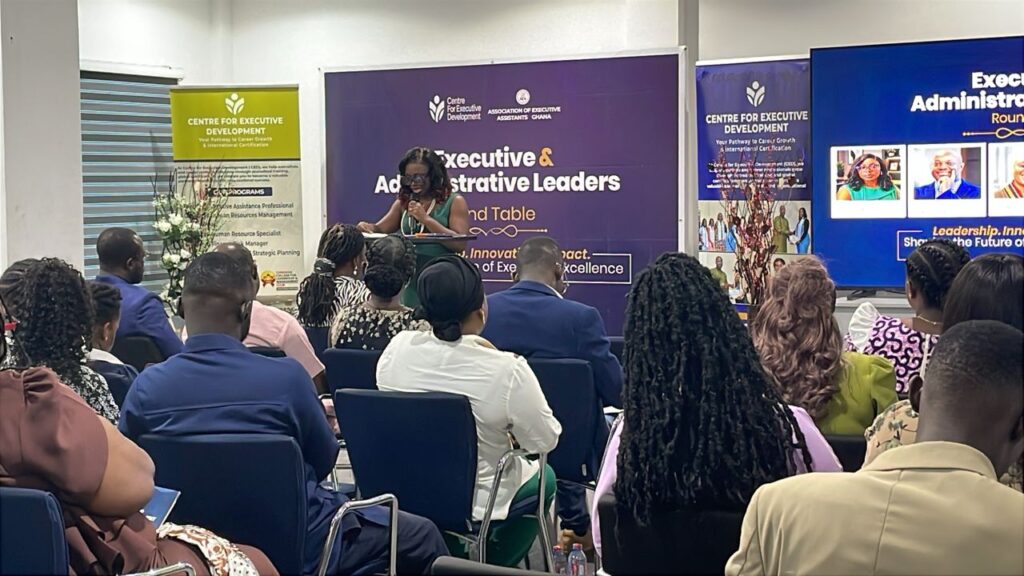
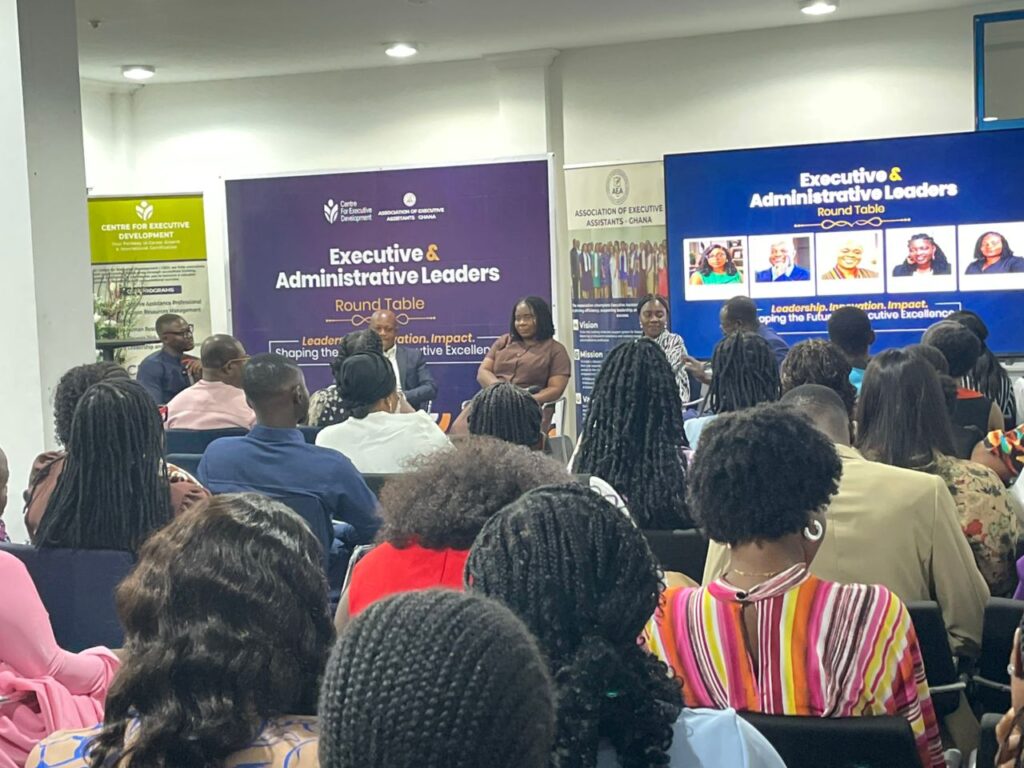
The Roundtable, held on the theme “Executive Support 2030: Leading Through Innovation, Influence and Impact,” brought together executive support professionals, human resource practitioners, governance experts, professional bodies, and organisational leaders to discuss the changing demands of the profession.
Mrs. Ampontuah-Yeboah said the executive support professional of the future must be prepared to think strategically, embrace innovation, exercise sound judgement, and demonstrate measurable value to the organisation.
“The future of executive support will belong to professionals who are prepared to think strategically, embrace innovation, exercise sound judgement, and demonstrate measurable impact. Executive and administrative professionals must recognise the value of their roles and intentionally prepare themselves for greater responsibility, influence, and leadership,” she said.
According to her, the rapid adoption of artificial intelligence and automation should not be viewed simply as a threat to administrative jobs but as an opportunity for professionals to move beyond routine duties and focus on higher-value responsibilities.
She explained that as technology takes over repetitive administrative tasks, executive support professionals would increasingly be expected to bring human capabilities such as emotional intelligence, discretion, critical thinking, communication, and relationship management to the workplace.
Mrs. Ampontuah-Yeboah said professionals must therefore invest in continuous learning and develop competencies in areas including digital technology, strategy, governance, project management, communication and organisational performance.
“The journey towards Executive Support 2030 has already begun. Professionals must take ownership of their development, embrace innovation, build credible influence, and demonstrate the impact of their work,” she said.
The executive director reaffirmed CED’s commitment to professionalising executive support through training, certification and continuous professional development.
The Centre has trained more than 200 professionals through international certification and executive development programmes.
Mrs. Ampontuah-Yeboah called on employers to prioritise the development of executive and administrative professionals, stressing that investing in their growth strengthens leadership and improves organisational performance.
She noted that when empowered beyond traditional administrative roles, executive support professionals help strengthen governance, improve communication, coordinate projects more effectively, reduce operational risks and enhance overall organisational productivity.
The Roundtable featured contributions from several leaders in human resources, governance and executive support, including the HR Certification Centre, National Association of Professional Secretaries and Administrative Professionals Ghana (NAPG), the West African branch of Chartered Governance Institute (CGI), Association of Executive Assistants-Ghana, and other professionals committed to advancing standards within the executive and administrative support profession.
The CED Executive Director said the participation of professional bodies, governance institutions, and human resource leaders demonstrated the growing recognition that executive support was an important component of organisational effectiveness.
She said CED would continue to create platforms for professional learning, networking, knowledge sharing, and career advancement to equip executive and administrative professionals with the competencies required to become trusted strategic partners within their organisations.