

Engage any retail store in Ghana; from the ‘table top’ vendors, to the bustling markets, air-conditioned aisles of a modern shopping mall or even online marketplaces and you will inevitably run into it.
Either on the walls, receipts or profile bios, a phrase will certainly read, “GOODS SOLD ARE NOT RETURNABLE.” When sellers feel generous, they hit you with “Sorry, we don’t refund. You can exchange it.”
For decades, Ghanaian shoppers have accepted this warning as gospel. If a purchased item fails to elicit satisfaction, many consumers chalk it up to bad luck. They accept the financial loss, assuming the shop’s sign is the final word.
But does the ‘No Return’ phrases settle the matter? Not necessarily. And this is where an ordinary shopping experience can quietly become a question of law.
The first thing to understand: What does Ghana’s law say about the goods you buy?
For ordinary sales of goods, one of the important pieces of legislation is Ghana’s Sale of Goods Act, 1962 (Act 137). Every single transaction carries implicit legal promises that no cardboard sign can erase. Sections 11, 12 and 13 of the Act state clearly that any goods sold must be of “merchantable quality” and “fit for purpose.”
In simple terms, this means that when you hand over your hard-earned money for a product, you are legally buying something that is guaranteed to work. You must receive what the seller promised to deliver. If a shop sells you a defective product, passes off a refurbished item as brand new, or misrepresents what an item can do, they have breached a legal contract.
In these instances, saying “goods sold are not returnable” is a direct violation of Ghanaian law.
Sections below:
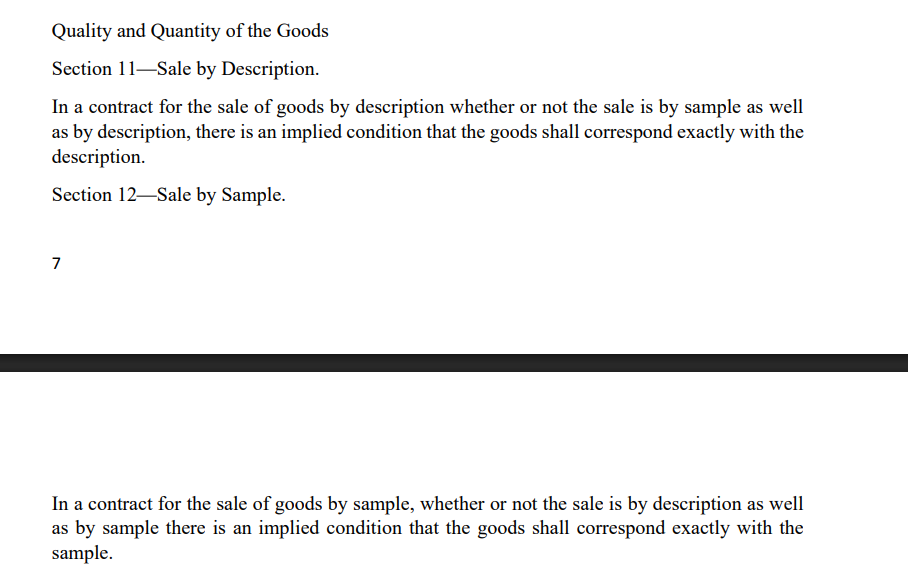
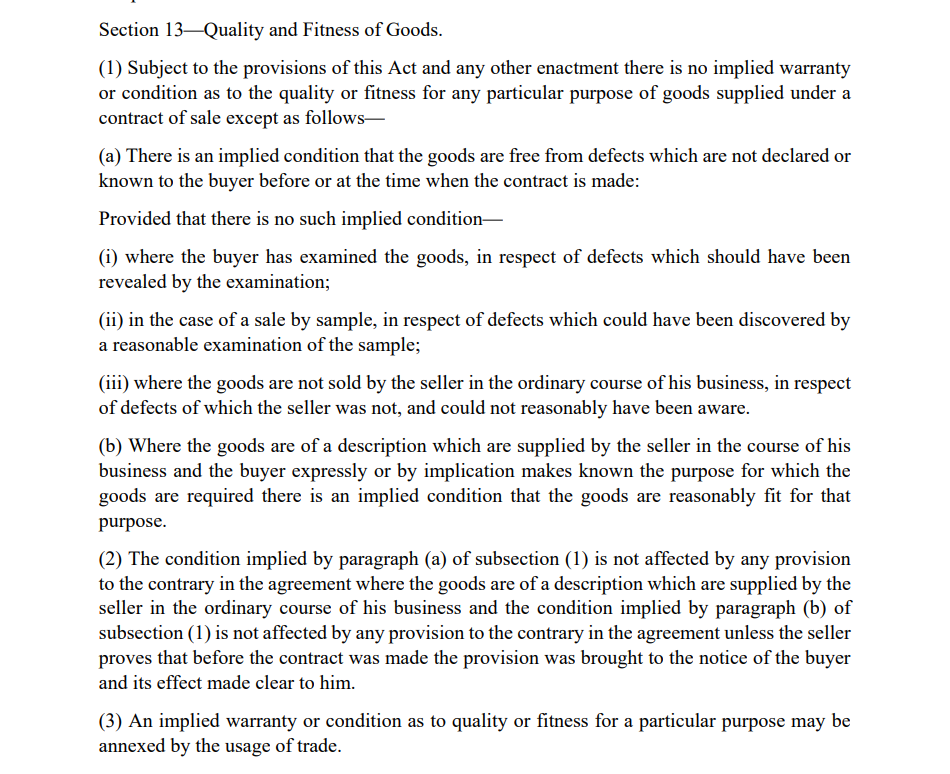
When a seller can say no to refunds?
One of the biggest misunderstandings around consumer purchases is the assumption that once you have bought something, you automatically have a legal right to take it back and demand your money.
That is not quite how it works.
There is an important difference between changing your mind and receiving something that is defective, wrongly described or otherwise not what you contracted to buy.
If you buy a black shirt and, after getting home, decide that you would rather have bought a blue one, that is one situation.
But if you buy a shirt advertised as 100% cotton and discover that it is not what it was represented to be, that is another.
If you buy a brand-new television and it does not work, that raises a different question again.
The law does not treat all three situations in exactly the same way.
The law protects consumers from faulty products, but it does not protect you from regret.
If you buy a pair of shoes, take them home, and simply change your mind about the color, the shop is under zero legal obligation to take them back. If you buy a dress and realize you picked the wrong size, or if you accidentally drop a new phone and crack the screen yourself, the law will not step in to force a refund.
In cases of buyer’s remorse or customer-inflicted damage, retailers have the full right to refuse a refund. Any exchange or store credit granted in these scenarios is purely out of the store’s goodwill, not legal obligation.
In some cases, a seller might be willing to exchange products for ‘peace sake or customer satisfaction’. Even so, both buyer and seller must be willing to follow the return or exchange policy, and the terms agreed at the time of purchase can become relevant.
What happens when seller didn’t know of defect of product before sale
When an item is bought completely new, and neither the buyer nor the seller knew it would malfunction, the law classifies this as a latent defect/ factory fault (a hidden flaw that was present at the time of manufacture).
The seller’s ignorance does not necessarily mean the buyer has no rights. So who takes the blame? To a larger extent, the seller. The seller, will in turn, deal with the intermediary and manufacturer, in that order.
However, the precise remedy depends on the circumstances of the transaction and whether the buyer has accepted the goods, among other considerations.
NB: The Sale of Goods Act provides rules on rejection, acceptance and remedies where there has been a breach of the seller’s obligations. The timing can therefore matter.
If you discover the problem almost immediately and promptly notify the seller that you are rejecting the goods, the legal position can be different from a situation where you continue using/keeping the product for a considerable period and only later complain.
Section below:
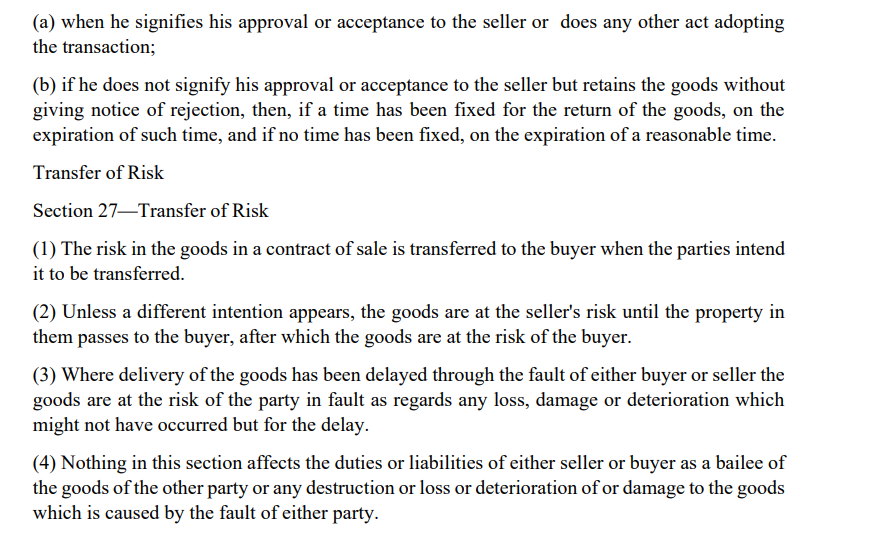
What should you do if a seller refuses to address a genuine problem/refund?
Some disputes can be resolved through negotiation or alternative dispute resolution, while others may ultimately require formal legal action.
If the disagreement cannot be resolved, here are the appropriate next routes:
Start with the simplest step: go back to the seller and explain the problem calmly and clearly.
Take the product and proof of purchase with you. Always demand and preserve your paper receipt or mobile money transaction details as proof of purchase.
Ask what remedy the seller is offering (refund, exchange, repair) and why.
If the store remains stubborn, complaints can be lodged with the standard enforcement bodies, or legal redress can be sought through the Legal Aid Commission or small claims courts.
So, can a shop refuse to refund your money?
The short answer is: Sometimes. A shop’s internal policy is not automatically a substitute for the law.
And for consumers, the lesson is equally important: Know what you are buying, ask about the return policy before paying. Read the terms where applicable. Keep your proof of purchase.
Because consumer protection is not simply about getting your money back. It is about ensuring that when money changes hands, both sides honour the bargain.