
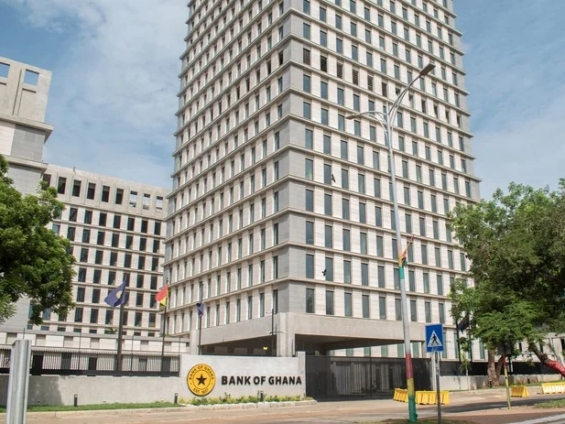

The International Monetary Fund (IMF) has defended the Bank of Ghana (BoG)’s massive financial losses, stating that its aggressive policy actions were necessary to stabilise the economy during Ghana’s crisis period.
Speaking on PM Express Business Edition on Thursday, IMF Mission Chief Ruben Atoyan rejected suggestions that the central bank acted too aggressively in tightening monetary policy.
“So, first, I would disagree with this view that the Bank of Ghana was too aggressive,” he stated.
“I think it was very prudent, and the achievement is, I think, manifested in the outcomes, and I think people on the ground actually recognise that.”
His comments come after the Bank of Ghana posted a GH¢15.6 billion loss in 2025, up sharply from GH¢9.49 billion in 2024.
The central bank’s audited accounts also showed negative equity worsening to GH¢93.82 billion from GH¢58.62 billion.
The losses have largely been linked to the high cost of liquidity sterilisation and tight monetary policy measures implemented to tame inflation and stabilise the cedi.
Addressing concerns about the financial strain on the central bank, Dr Atoyan said the public must understand that monetary policy operations entail high costs during periods of high inflation and elevated interest rates.
“Second, there is the cost of doing monetary policy, and this is something that people need to understand,” he explained.
“You know that the Bank of Ghana 2025 financial statement was just published, and it transparently presents the cost of doing policy.”
According to him, the difficult economic environment made the Bank of Ghana’s intervention expensive but unavoidable.
“With high inflation and high interest rates, absorbing liquidity from the market is costly, and that’s what we see as reflected in the statement,” he said.
Dr Atoyan acknowledged that the policy actions generated losses for the central bank but maintained that the measures were essential to restoring macroeconomic stability.
“Yes, so it did generate some costs for the Bank of Ghana, but it was a necessary cost for the stabilisation going forward,” he stressed.
The IMF has consistently backed Ghana’s tight monetary policy stance under the ongoing economic recovery programme, arguing that strong inflation control and exchange rate stability are critical to rebuilding investor confidence and sustaining growth.
ALSO READ:
