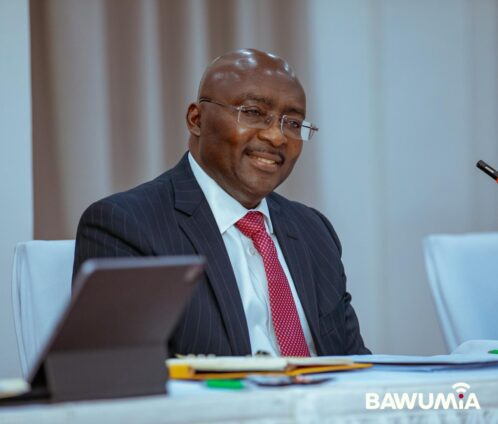

New Patriotic Party (NPP) flagbearer Dr Mahamudu Bawumia has defended the Gold-for-Reserves programme, describing it as an unconventional solution introduced to address Ghana’s foreign exchange challenges at a time when the country could no longer rely on international capital markets.
According to him, the policy became necessary following disruptions to global financial markets triggered by the Russia-Ukraine war, which affected Ghana’s ability to raise foreign currency.
Speaking at a public event in a video shared on his Facebook page, Dr Bawumia said Ghana had historically relied on international capital markets to raise about $3 billion annually to support the economy.
He said the loss of access to those markets created severe foreign exchange shortages and placed significant pressure on the cedi.
“We were really constricted in terms of availability of foreign exchange. At the same time, the cedi was depreciating almost on a daily basis. And we had to think about how to deal with this problem,” he said.
Dr Bawumia said the situation required policymakers to explore alternative ways of accumulating foreign exchange reserves.
He explained that Ghana’s position as a major gold-producing country presented an opportunity to strengthen the country’s reserves using a resource produced domestically.
He recalled that despite Ghana being Africa’s leading gold producer at the time, the Bank of Ghana had only about 8.7 tonnes of gold in its reserves in 2021.
“I said this cannot be right,” he recalled.
Dr Bawumia explained that Ghana had an advantage over countries that needed foreign currency to purchase gold because it could use the cedi to buy gold produced locally.
“The thing about gold for us is that because we produce gold, we can use our cedis to buy the gold. We don’t need to export cocoa or diamonds to get dollars to go out there and buy gold,” he said.
He described the policy as an example of unconventional economic thinking, arguing that Ghana’s circumstances required a solution beyond traditional approaches.
“There was no textbook in economics that would tell you about the gold and reserves problem. It was out-of-the-box thinking,” he said.
According to Dr Bawumia, the Bank of Ghana spent nearly a year assessing the proposal before determining that it was workable, paving the way for the implementation of the Domestic Gold Purchase Programme.
He said the programme resulted in the purchase of approximately $5 billion worth of gold over two years, which he argued helped strengthen Ghana’s reserve position.
Dr Bawumia further argued that the increased reserves enhanced the central bank’s capacity to supply foreign exchange to the market and support the cedi.
He said that by the end of 2024, the International Monetary Fund (IMF) had lifted a restriction that previously limited the Bank of Ghana’s monthly foreign exchange intervention to $80 million.
“Since then, the Bank of Ghana has been able to put at least $1 billion a month into the market,” he said.
Dr Bawumia said the increased supply of foreign exchange should ease pressure on the cedi, applying the basic economic principle that increased supply, all other things being equal, puts downward pressure on price.
“From $80 million maximum to $1 billion a month. What does economics tell you? When you have an increase in supply, what will happen to price? It comes down,” he said.
He maintained that both the Gold-for-Oil and Gold-for-Reserves programmes were developed in response to an extraordinary economic situation when Ghana’s conventional sources of foreign exchange had become severely constrained.
READ ALSO:
Finance Minister Dr. Ato Forson to lead inaugural post-BRT 2026 sessions
Mahama urges global investors to tap into Ghana’s opportunities