
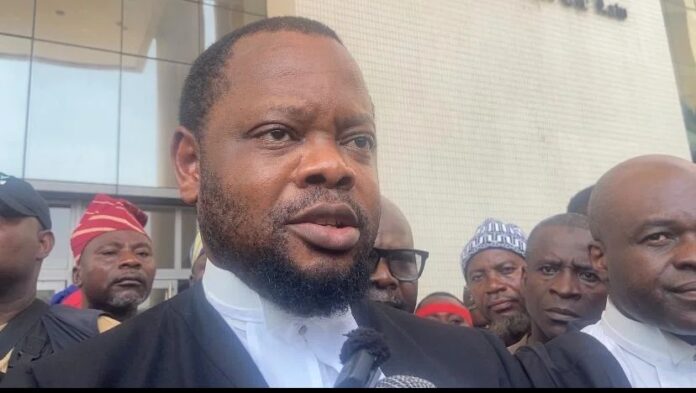

Deputy Attorney-General and Minister for Justice, Justice Srem Sai, has indicated that the Attorney-General’s Department is willing to grant the Office of the Special Prosecutor the necessary authorisation to prosecute cases if a formal request is made.
Speaking on the Super Morning Show on Joy FM on Friday, April 17, he dismissed suggestions of tension between the two institutions, insisting that the Attorney-General’s office remains open to collaboration in the fight against corruption.
“Why not, why won’t we grant them the authorisation when they apply for it,” he stated, underscoring what he described as a practical and cooperative approach to prosecutorial work under the Constitution.
Background: High Court ruling and pending Supreme Court case
The Deputy Attorney-General’s comments follow a recent ruling by an Accra High Court that significantly affected the prosecutorial mandate of the Office of the Special Prosecutor (OSP).
In its decision delivered on April 15, 2026, the court held that the OSP does not have the constitutional authority to independently prosecute criminal cases without authorisation from the Attorney-General’s Department. The court ruled that under Article 88 of the 1992 Constitution, the power to initiate criminal prosecutions is vested exclusively in the Attorney-General unless that authority is formally delegated.
As part of the ruling, the court directed that all ongoing prosecutions being handled by the OSP be transferred to the Attorney-General’s Department. The judgment has created uncertainty around several corruption-related cases previously initiated by the anti-corruption body, effectively placing them in abeyance pending further legal direction.
The ruling followed a legal action filed by private citizen Peter Achibold Hyde, who questioned the legal basis for the OSP’s independent prosecutorial authority.
Meanwhile, the High Court decision comes against the backdrop of a separate constitutional case already pending before the Supreme Court of Ghana, which could have far-reaching implications for the future of the OSP.
That suit was filed by private citizen Noah Ephraem Tetteh Adamtey, who is challenging the constitutionality of the law that established the OSP — the Office of the Special Prosecutor Act, 2017 (Act 959).
In the suit, the plaintiff argues that Parliament exceeded its constitutional mandate by creating an office with independent prosecutorial powers, contending that Articles 88(3) and 88(4) of the Constitution vest prosecutorial authority solely in the Attorney-General. The suit seeks to have portions of Act 959 declared unconstitutional, particularly provisions that grant the OSP authority to prosecute cases independently.
Legal proceedings in the Supreme Court have also established that the Attorney-General’s office is the proper defendant in the constitutional challenge, as Parliament — rather than the OSP itself — is responsible for the law establishing the office.
Legal analysts say the outcome of the Supreme Court case is expected to determine the long-term structure and authority of the OSP, including whether it can continue to function as an independent prosecutorial body or operate under the supervision of the Attorney-General.
Until the apex court delivers its final determination, the ongoing legal developments are likely to continue shaping the operational scope of anti-corruption prosecutions in Ghana.
READ ALSO:
OSP cannot prosecute independently under constitution – Twum-Barimah
GoldBod supports 6-year-old leukemia patient with $12,724 for life-saving surgery
