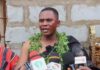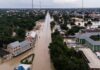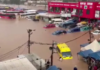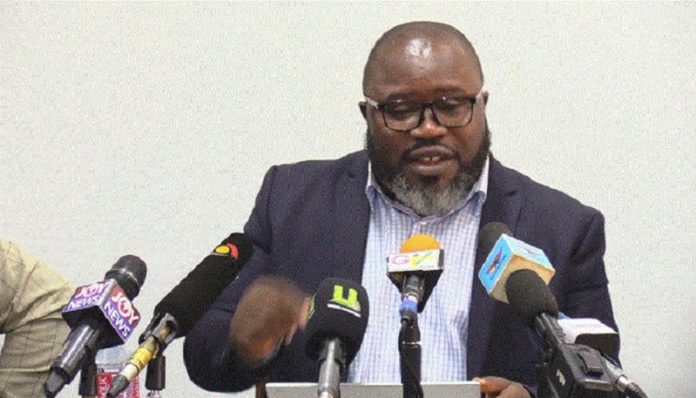

Kofi Asare, Executive Director of Africa Education Watch (Eduwatch), has questioned the impact of millions of dollars invested in flood mitigation projects in Accra, following the latest flooding that inundated parts of the capital.
In a Facebook post, Mr. Asare recalled that in 2019, the World Bank approved a US$92 million loan under the first component of the Greater Accra Resilient and Integrated Development Project (GARID) to improve drainage and reduce flooding within the Odaw River Basin by 2024.
According to him, the initial allocation formed part of a larger project that later increased to about US$350 million following an extension in 2023.
He noted that the project was expected to benefit flood-prone communities including Caprice, Nima, Kaneshie, Circle/Kwame Nkrumah Interchange, the Korle Lagoon and surrounding communities along the Odaw drain.
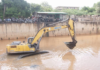
Mr. Asare said the intervention was designed to finance dredging of the Odaw drain, repairs to damaged drains, construction of sand traps, bridge reconstruction, rehabilitation of the Korle Lagoon weir, flood detention basins and the installation of flood early warning systems.
He questioned whether the investment had achieved its intended objective.
“The key accountability question is simple: after five years, how much of this US$92 million flood mitigation promise has actually translated into reduced flooding for these communities?”
The education policy advocate further pointed out that between 2019 and 2024, the sanitation sector was overseen by former Ministers for Sanitation and Water Resources, including Cecilia Abena Dapaah, Freda Prempeh and Lydia Seyram Alhassan.
He argued that the former ministers should account for the implementation of the project, questioning why the Odaw area continues to experience severe flooding despite the significant investment.