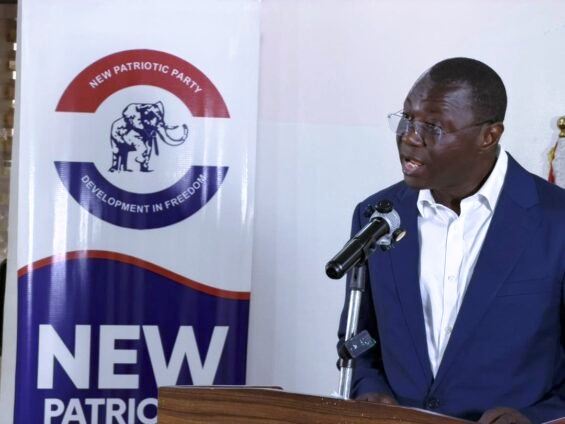

Former Finance Minister and Ranking Member of Parliament’s Finance Committee, Dr Mohammed Amin Adam, has criticised the governing National Democratic Congress (NDC) over its response to rising fuel prices, arguing that similar international market pressures were cited differently when the New Patriotic Party (NPP) was in office.
In a Facebook post on Sunday, September 27, Dr Amin Adam said the factors currently being used to explain increases at the fuel pumps, including global petroleum prices, exchange-rate movements and international market conditions, were also present during the NPP administration.
He recalled the political debate over fuel prices in 2021, when the NDC, then in opposition, attributed increases to what it described as poor economic management, taxes and the depreciation of the cedi.
According to him, Ghana was at the time also experiencing the effects of a global energy shock following the reopening of economies after the COVID-19 pandemic.
He cited data from the US Energy Information Administration indicating that Brent crude rose from about US$50 per barrel at the beginning of 2021 to approximately US$86 by late October that year.
Dr Amin Adam also referenced the International Monetary Fund, which reported in October 2021 that Brent crude had crossed US$85 per barrel amid tight energy supplies and rising global energy costs.
He argued that Ghana, as a net importer of refined petroleum products, is exposed to international price movements and exchange-rate changes.
“The economics has always been straightforward: International product price × Exchange rate + Taxes/Levies + Margins = Domestic Pump Price,” he stated.
He said the mechanism through which international prices and exchange rates influence domestic fuel costs existed under the previous NPP administration and remains applicable under the current NDC government.
Dr Amin Adam further defended measures implemented by the NPP administration to cushion consumers from rising fuel costs.
He cited the abolition of the excise tax on fuel, reductions in the Special Petroleum Tax, changes to the tax structure and the Gold for Oil programme as interventions that, in his view, provided relief to consumers.
He contrasted those measures with the current government’s intervention on diesel, describing the GH¢2 per litre support as temporary.
He also argued that a GH¢1 per litre levy introduced by the government had offset part of the relief, while increases in levies on fuel oil had added costs for industries and power producers.
The former Finance Minister further attributed part of the current pressure at the pumps to movements in the exchange rate.
He called for broader measures to address fuel prices, including a review or suspension of recent increases in petroleum-related taxes.
His comments come amid continued increases in fuel prices. In the second pricing window of September, COPEC projected petrol at GH¢16.26 per litre and diesel at GH¢19.07 per litre, citing increases in international crude and refined petroleum product prices.
Current pump prices vary among Oil Marketing Companies, with GOIL, for example, listing petrol at GH¢16.64 and diesel at GH¢18.46 per litre from September 17.
See the post below: