
The New Patriotic Party (NPP) has rejected the government’s proposed implementation framework for amending Ghana’s 1992 Constitution, calling instead for the establishment of a Constituent Assembly to deliberate on the proposed changes.
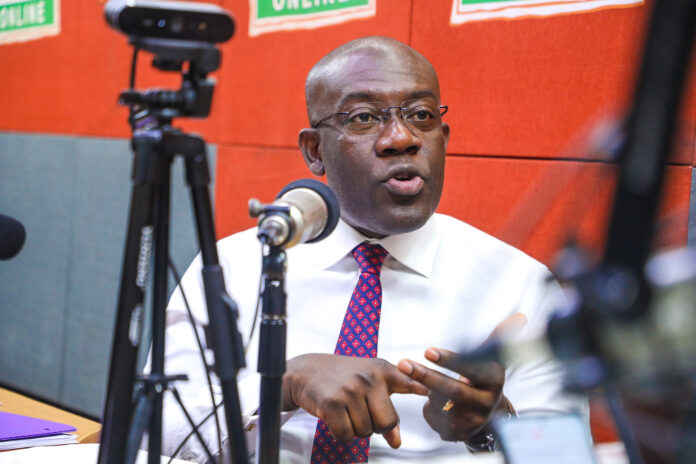
Chairman of the NPP’s Policy Coordinating Committee, Kojo Oppong Nkrumah, made the call at a media briefing, where he criticised what the party considers a rushed approach to the constitutional review process.
According to him, government appears to be seeking to have some of the proposed amendments approved by Parliament before November, while proceeding with a national referendum on entrenched provisions next year.
He argued that the process should involve broader public consultations before the proposals are taken through the formal amendment procedures.
Mr Oppong Nkrumah said the NPP’s position was also informed by concerns raised by some stakeholders, including the Ghana Bar Association and organised labour, over aspects of the government’s approach.
He maintained that the government should take the concerns of stakeholders into account and allow for wider national deliberations through a Constituent Assembly.
The call comes after the government established an 11-member Constitution Review Implementation Committee (CRIC), chaired by Presidential Legal Counsel Marietta Agyeiwaa Brew, to examine the government’s position paper and the recommendations of the Constitution Review Committee and develop a framework for implementing the proposed reforms.
Government has said the proposed amendments will be divided into two categories: non-entrenched and entrenched provisions. Amendments to non-entrenched provisions require parliamentary approval, while amendments to entrenched provisions must go through a national referendum after satisfying the constitutional requirements.
Under Article 290 of the 1992 Constitution, a bill seeking to amend an entrenched provision must be referred to the Council of State, published in the Gazette for at least six months and subsequently subjected to a national referendum. At least 40 per cent of registered voters must participate, with at least 75 per cent of those voting supporting the proposal.
Government has announced plans to hold the referendum alongside the District Assembly elections next year.
The debate over the process has intensified as stakeholders call for broader public participation. On September 13, 2026, President of the Ghana Bar Association, Efua Ghartey, also called for the establishment of a Constituent Assembly, arguing that the scale and scope of the proposed amendments warrant extensive national deliberation.
The proposed constitutional reforms follow the work of the Constitution Review Committee chaired by Professor H. Kwesi Prempeh, which submitted recommendations on possible changes to Ghana’s constitutional framework. Government subsequently issued its position on the recommendations and began the process of developing an implementation roadmap.