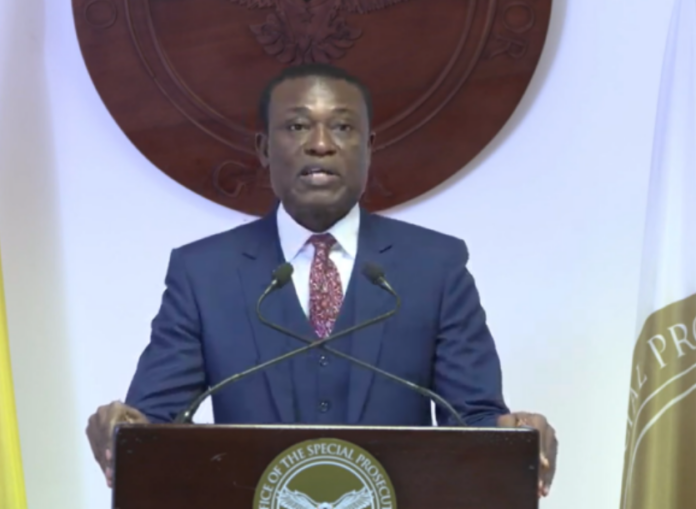

Special Prosecutor Kissi Agyebeng has alleged that some public officers are behind coordinated efforts to undermine the Office of the Special Prosecutor (OSP), with the ultimate aim of weakening the institution or having it scrapped altogether.
Mr Agyebeng said the resistance to the OSP was largely linked to the institution’s mandate and its ability to independently investigate suspected corruption and decide which individuals or matters fall within its investigative remit.
Speaking at a press conference, the Special Prosecutor said the OSP had undertaken an internal review of criticisms directed at the institution and admitted that it had made mistakes in the performance of its duties.
He, however, maintained that the errors did not justify calls for the institution to be dismantled.
“We acknowledge that we have made mistakes. We do not claim to be a perfect institution,” he said.
According to Mr Agyebeng, the mistakes identified were part of the ordinary challenges that public institutions could encounter and had been addressed through corrective measures.
He questioned whether making mistakes in the course of official duties could reasonably be used as grounds to abolish a public institution.
He argued that if that standard were applied consistently, virtually every public agency in Ghana would face calls for dissolution.
The Special Prosecutor said the OSP’s internal assessment had led the institution to a different conclusion about the nature of the sustained criticism it has faced.
He said the attacks appeared to be connected more to the powers and responsibilities assigned to the OSP than to the mistakes the institution had acknowledged.
According to him, some public officers were uncomfortable with the OSP’s independence, particularly its authority to determine who should be investigated and which corruption-related matters should be pursued.
Mr Agyebeng said these powers had created resistance among certain individuals who would prefer to see the OSP either abolished or stripped of its effectiveness.
He stressed that the OSP remained willing to accept legitimate criticism and scrutiny of its work.
However, he cautioned against attempts to use criticism of the institution’s shortcomings as a basis for weakening its core mandate or undermining its ability to independently fight corruption.
READ ALSO:
Mahama signs 10 Bills into law including Customs, VAT and Cocoa Board Bills
Bosome Freho MP demands full disclosure of costs in South Africa evacuation exercise