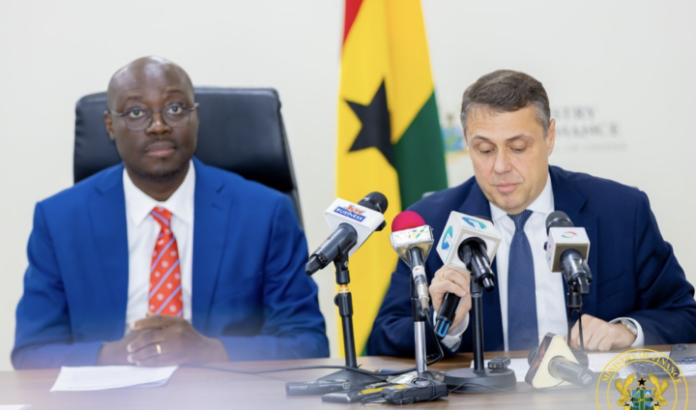

The International Monetary Fund (IMF) has revealed that the Government of Ghana has cancelled nearly 1,800 public investment projects following a nationwide review aimed at improving public spending efficiency and strengthening fiscal discipline.
According to the IMF, the exercise forms part of ongoing public financial management reforms under Ghana’s economic programme and is intended to eliminate low-priority and non-performing projects while redirecting limited public resources to more viable investments.
In its latest Article IV Consultation and proposed Policy Coordination Instrument (PCI) report, the Fund said the government carried out a comprehensive assessment of the country’s public investment portfolio, leading to the cancellation of approximately 1,800 projects deemed unfeasible or no longer consistent with national development priorities.
The review also resulted in about 2,000 additional projects being rephased or rescoped to better reflect available financing and the government’s implementation capacity.
“The authorities have undertaken a comprehensive review of the public investment portfolio, resulting in the cancellation of about 1,800 projects and the rephasing or rescoping of around 2,000 others,” the IMF stated.
The Fund noted that the rationalisation exercise is expected to improve the quality of public investment by ensuring that scarce fiscal resources are directed towards projects with greater economic and social impact.
According to the report, the review is designed to align the country’s project pipeline with available fiscal resources while enhancing the efficiency of public investment management.
The IMF said the initiative forms part of broader reforms aimed at restoring fiscal sustainability following Ghana’s debt restructuring programme.
It added that the government is also introducing measures to strengthen procurement processes, improve commitment controls and tighten oversight of public expenditure to prevent the accumulation of arrears and enhance budget execution.
The Fund believes these reforms will promote more efficient capital spending, create fiscal space for priority infrastructure and development projects under the proposed PCI programme, and reinforce broader efforts to improve governance, strengthen public financial management and safeguard Ghana’s long-term debt sustainability.
READ ALSO:
COCOBOD to introduce law to protect cocoa farms from destruction