
Every day in Accra, thousands of pedestrians make a choice that could determine whether they return home safely or become another road accident statistic.
While footbridges have been constructed at strategic locations across the capital to provide safe passage over busy highways, many people continue to ignore them, opting instead to dash across speeding traffic.
This seemingly ordinary decision has become one of Ghana’s persistent road safety challenges, raising questions about public attitudes, law enforcement and the effectiveness of communication campaigns aimed at changing behaviour.
Road traffic crashes remain one of the leading causes of injury and death worldwide, and pedestrians are among the most vulnerable road users.
In Ghana, accidents involving pedestrians continue to account for a significant proportion of road fatalities, despite investments in road safety infrastructure.
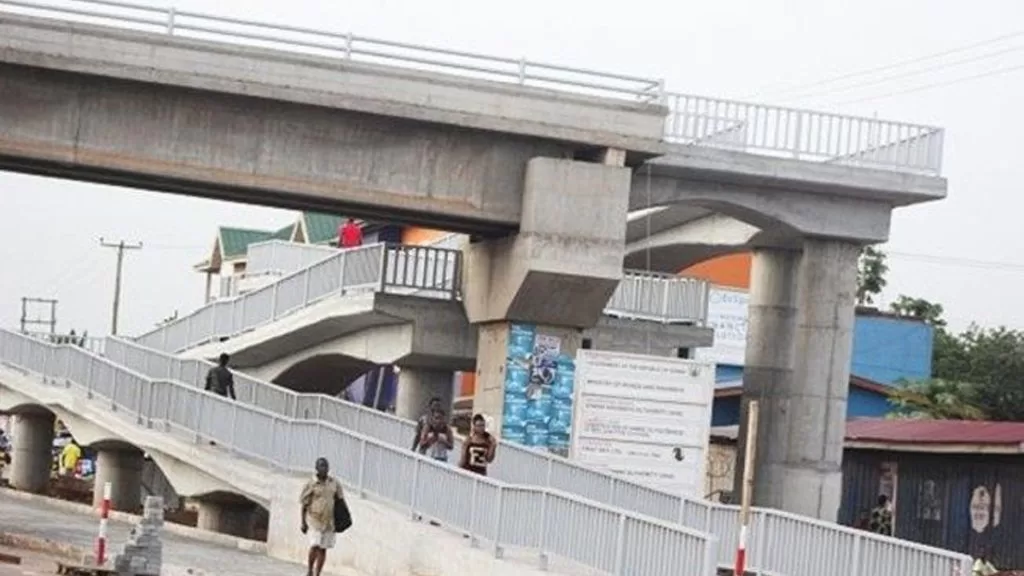
Across major highways such as the George Walker Bush Highway, the Accra-Tema Motorway and other busy roads, footbridges stand as visible reminders of government efforts to improve pedestrian safety.
Yet, at many of these locations, it is common to witness people climbing over barriers or weaving through moving vehicles rather than taking a few extra steps to use the bridges built specifically to protect them.
Experts say the problem goes beyond infrastructure. It is fundamentally about human behaviour.
Many pedestrians cite the inconvenience of climbing stairs, time constraints, fatigue or simply habit as reasons for avoiding footbridges.
Others complain that some bridges are inaccessible to elderly persons, pregnant women and people living with disabilities.
Weak enforcement of road safety regulations has also contributed to the widespread disregard for designated crossing facilities.
These behaviours come at a heavy cost.
Every pedestrian knocked down represents not only a personal tragedy but also emotional trauma for families, increased pressure on hospitals and avoidable economic losses to society.
Road crashes often lead to traffic congestion, emergency response costs and lost productivity, while public funds invested in road safety infrastructure fail to achieve their intended impact when the facilities are ignored.
Recognising that changing behaviour requires more than constructing infrastructure, development communication practitioners are increasingly advocating social and behavioural change communication approaches that place people at the centre of the solution.
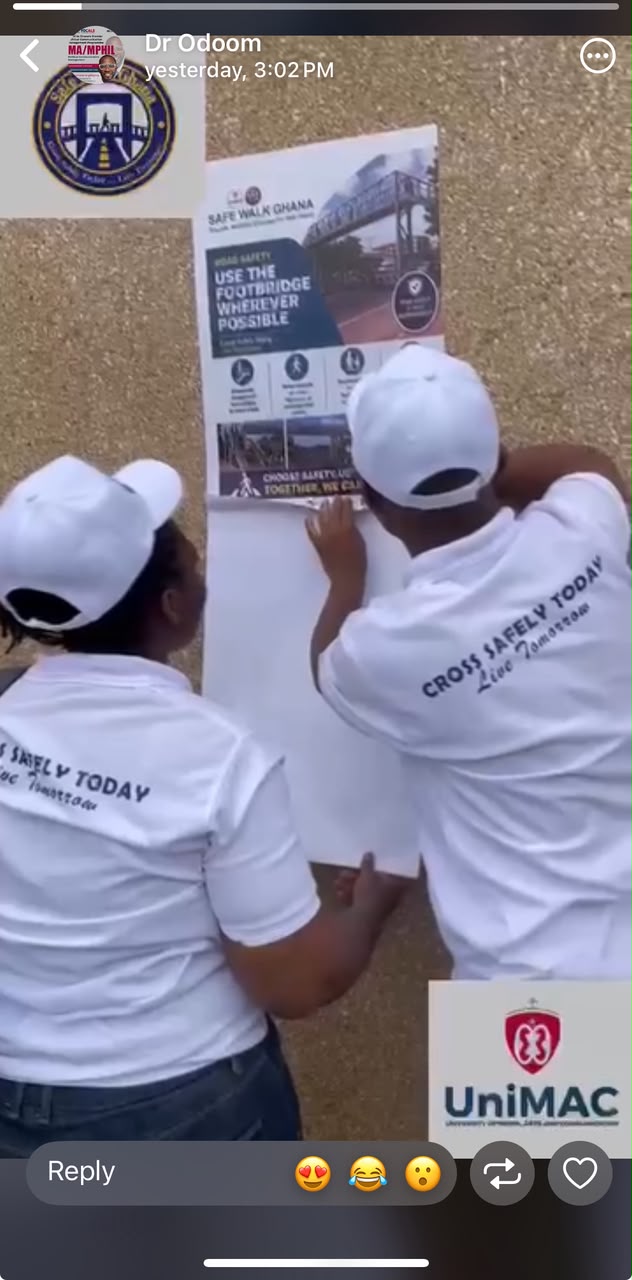
One such initiative is Save Walk Ghana, a campaign developed by students of Master of Arts in Development Communication at the University of Media, Arts and Communication (UniMAC-IJ) Group 8, to encourage pedestrians to consistently use footbridges through education, advocacy and community engagement.
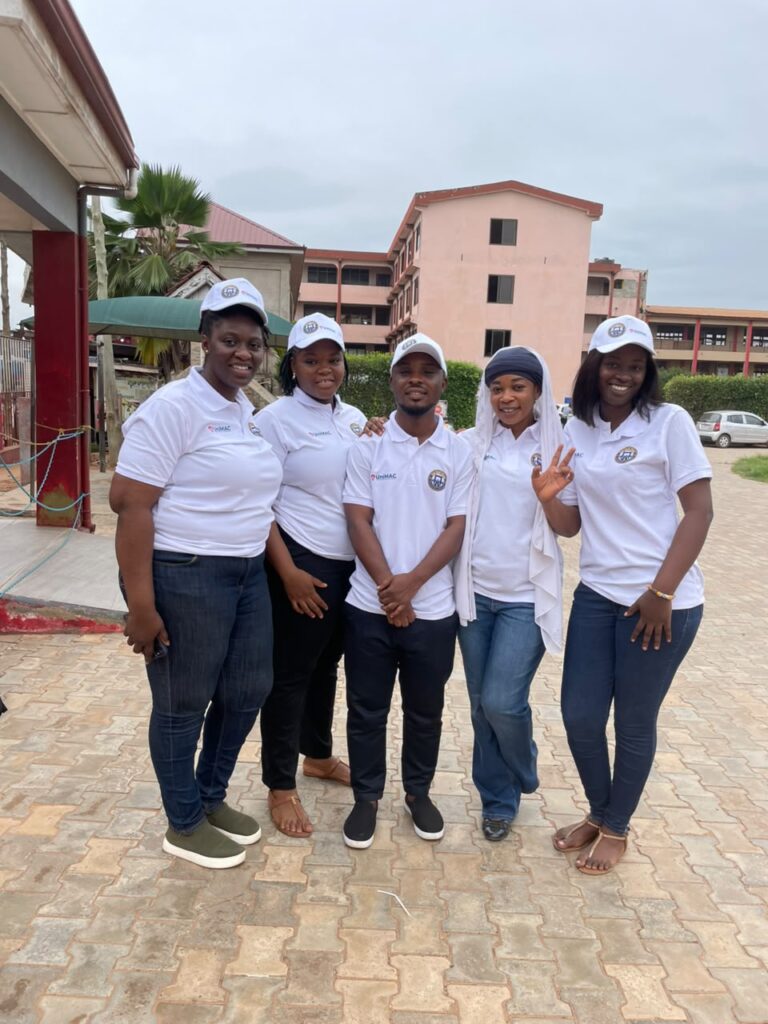
Built around the theme, “Cross Safely Today Live Tomorrow,” the campaign seeks to transform public attitudes by making road safety a shared responsibility rather than merely a legal obligation.
Unlike traditional awareness campaigns that rely solely on information dissemination, Save Walk Ghana adopts a comprehensive communication strategy designed to influence attitudes and behaviours.
The campaign combines advocacy with public institutions, educational outreach, interpersonal communication and social mobilisation to reinforce positive road safety practices.
Its target audience includes pedestrians, students, market women, traders, commuters and commercial drivers, while community leaders, schools, media organisations and road safety agencies serve as important partners in reinforcing the campaign’s message.
The campaign recognises that behaviour change is most successful when people receive consistent messages through multiple communication channels.
Radio discussions, television interviews, newspaper publications and community information centres remain vital tools for reaching diverse audiences.
At the same time, social media platforms such as Facebook, WhatsApp, Instagram, TikTok and X provide opportunities to engage especially younger audiences through interactive content.
Equally important are face-to-face engagements at footbridge locations, school outreach programmes and community forums where people can openly discuss their concerns and experiences.
Such interpersonal communication creates opportunities to address misconceptions and encourage community ownership of safer road-crossing habits.
Communication specialists argue that public education alone cannot solve the problem.
Behavioural change must be supported by consistent enforcement of road safety regulations.
The National Road Safety Authority, the Motor Traffic and Transport Department of the Ghana Police Service, metropolitan assemblies and other stakeholders all have important roles to play in ensuring compliance.
Regular enforcement sends a clear signal that road safety rules are meant to protect lives rather than inconvenience road users.
However, enforcement should be complemented by improvements in infrastructure. Footbridges should be designed and maintained to accommodate elderly users, persons with disabilities and parents carrying children.
Better lighting, regular maintenance and enhanced accessibility would remove some of the barriers that discourage their use.
The campaign also demonstrates the growing importance of partnerships in addressing development challenges.
Schools can integrate road safety education into extracurricular activities, transport unions can educate drivers on pedestrian rights, while civil society organisations can sustain advocacy efforts that keep road safety high on the national agenda.
Social media influencers and youth volunteers can further amplify campaign messages, making safe road-crossing practices more appealing, particularly among young people.
Perhaps the greatest lesson emerging from the campaign is that lasting behavioural change does not happen overnight.
It requires continuous education, community participation, strategic partnerships and repeated reinforcement of positive behaviours.
People are more likely to adopt safer practices when they understand not only the risks involved but also the personal benefits of making responsible choices.
Ultimately, every footbridge represents more than concrete and steel. It symbolises an opportunity to save lives.
Choosing to use a footbridge may take an extra minute, but it could mean the difference between life and death.
As Ghana continues to invest in safer roads and transport infrastructure, the responsibility also rests with every pedestrian to make choices that protect themselves and others.
Road safety begins with individual decisions. Every safe crossing contributes to a safer community.
And every step taken across a footbridge is, indeed, a step towards safeguarding Ghana’s most valuable resource; its people.
By Gordon Wellu