

Ghana has successfully concluded the final review of its current International Monetary Fund bailout programme, marking what the government describes as a major turning point in the country’s economic recovery journey.
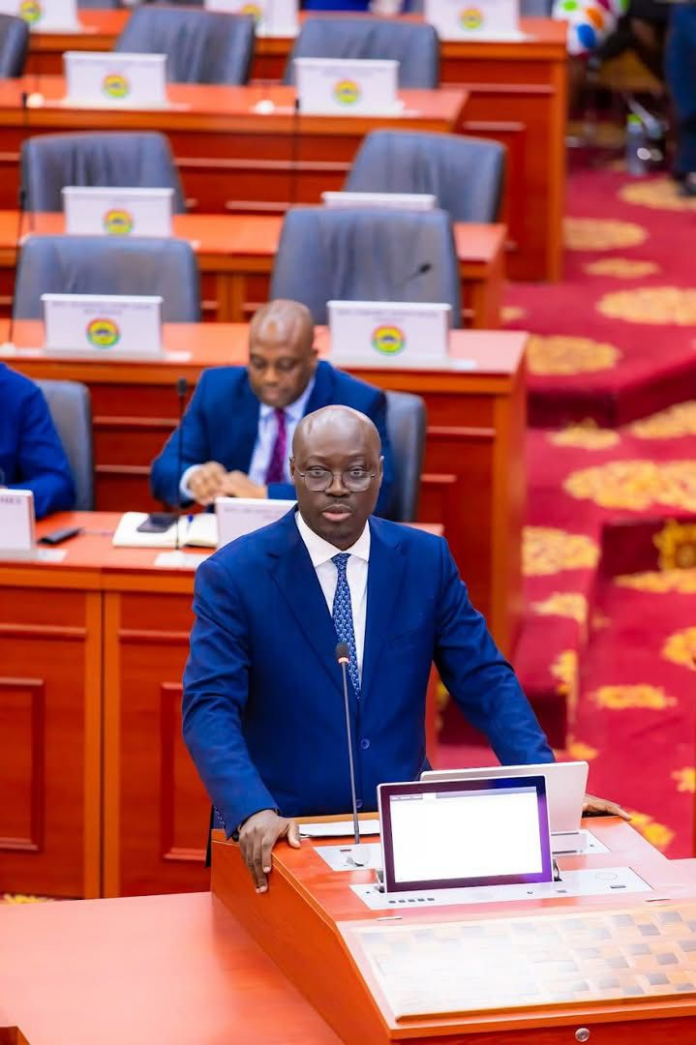
Addressing Parliament on Thursday, Ghana’s Finance Minister, Dr. Cassiel Ato Forson, announced that the country had completed the final review of the IMF-supported Extended Credit Facility programme, pending formal approval by the IMF Executive Board.
The announcement signals the end of Ghana’s period under an IMF financial bailout arrangement and the beginning of a new phase of engagement with the Bretton Woods institution.
“Ghana has successfully concluded the final review of the current IMF financial bailout programme,” Dr. Forson told the House, describing the moment as a significant milestone in the country’s economic recovery and reform efforts.
According to the Finance Minister, Ghana’s relationship with the IMF will now transition from a financing arrangement to a reform-driven Policy Coordination Instrument (PCI), a non-financing programme designed for countries seeking to maintain economic discipline and investor confidence without direct IMF financial support.
Dr. Forson explained that the PCI framework is intended for economies that no longer require IMF bailout funding but still want the credibility, policy guidance, and periodic assessments that come with IMF engagement.
He said the transition represents a profound shift in Ghana’s economic standing.
“For Ghana, this marks an important shift—from seeking financial bailout to engaging as a credible reform partner,” he said.
The Finance Minister stressed that the new arrangement would allow Ghana to continue benefiting from the IMF’s technical expertise, regular policy reviews, and external validation, while also strengthening confidence among investors and development partners.
He noted that the PCI would serve as a powerful signal to global markets that Ghana remains committed to fiscal discipline, macroeconomic stability, and structural reforms.
In one of the most memorable moments of his address, Dr. Forson likened Ghana’s economic recovery to a patient leaving intensive care.
“In other words, Ghana has moved from the intensive-care unit (ICU) to the wellness center,” he declared to applause in Parliament.
The statement captures the government’s broader narrative that the economy has moved beyond crisis management and is now entering a period of consolidation and long-term transformation.
Dr. Forson also revealed that President John Dramani Mahama’s administration is preparing a new economic blueprint known as “The New Economy,” which will be officially unveiled in the 2027 Budget Statement.
According to him, the programme is designed to move Ghana “from stabilization to transformation,” with emphasis on sustainable job creation, productivity growth, resilience, and inclusive prosperity.
“The New Economy will move Ghana from stabilization to transformation, with a clear focus on sustainable jobs, higher productivity, greater resilience, and broad-based prosperity,” he stated.
The Finance Minister used the occasion to acknowledge the sacrifices made by Ghanaians throughout the difficult economic adjustment period, including inflationary pressures, debt restructuring, and fiscal reforms implemented under the IMF programme.
He said President John Dramani Mahama remains deeply grateful to citizens for their patience and resilience during what has been one of the country’s most challenging economic periods in recent history.
“We do not take their support for granted,” Dr. Forson said.
He assured Parliament that the government would not become complacent despite recent gains in macroeconomic stability and improving investor sentiment.
“Our solemn pledge is that we will not be complacent; we will continue the hard work of building the Ghana We Want,” he added.
