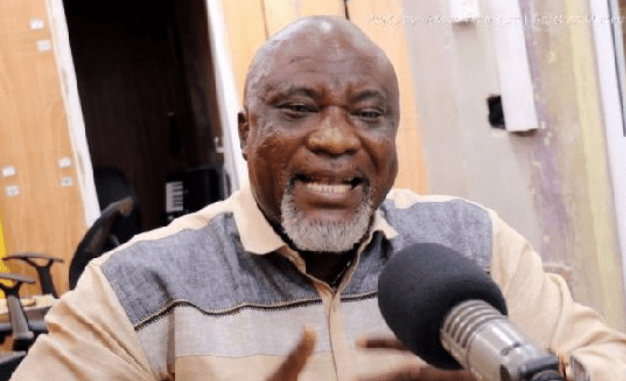

The Director of Field Operations for the United Party, Hopeson Adorye, has called for a complete one-year suspension of small-scale mining in Ghana, arguing that the country’s lands and water bodies need time to recover from the devastating effects of illegal mining, commonly known as galamsey.
Speaking on the JoyNews AM Show on Tuesday, Adorye said Ghana must take more decisive action against the environmental destruction wrought by illegal mining, particularly in the small-scale sector, which he said continues to ravage forest reserves and rivers.
His comments follow a fatal incident in Bibiani-Anhwiaso-Bekwai, where one person died and six others were injured, further stirring up concerns about the human and environmental toll of illegal mining in affected communities.
Adorye said a recent trip to Sunyani, during which a pilot took him on an aerial survey of galamsey-affected areas, brought the scale of the problem into sharp focus. From the air, he observed widespread damage to farmlands and water bodies.
He added that the pilot outlined how coordinates and aerial surveillance could help authorities pinpoint and dismantle illegal mining sites — a suggestion he said highlights the need for stronger technological tools in the anti-galamsey fight.
He also called for the Ghana Armed Forces’ helicopters to be deployed more actively for continuous surveillance of mining zones, rather than being used primarily for official transport.
Hopeson Adorye proposed suspending all small-scale mining for one year while allowing large-scale, legally compliant operations to continue under strict regulation.
“I think we should ban mining for one full year. If we see anyone mining during that period, they are on their own. That will allow us to reclaim our lands and let our water bodies recover,” he said.
Once the suspension ends, he said all small-scale miners — including those with existing licences — should be required to reapply under tougher conditions, giving authorities the opportunity to properly assess concession areas and bar mining near water bodies or environmentally sensitive zones.
He also noted that under Ghanaian law, all minerals are vested in the state, and argued that this gives the government both the authority and the obligation to exercise tighter control over mining activities.
Adorye further linked illegal mining to rising insecurity in some communities, suggesting that the Bibiani-Anhwiaso-Bekwai incident was part of a broader pattern. He argued that profiling individuals involved in illegal mining and holding communities more accountable could help address the growing threat.
While acknowledging the economic pressures driving people toward mining, he was firm that financial need does not justify environmental destruction. “Everybody needs money, but not all money should be pursued,” he said.