
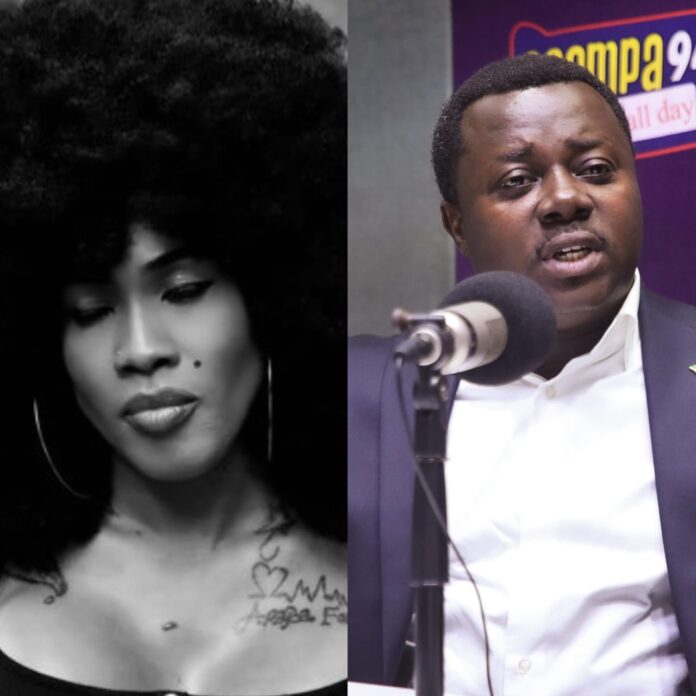

Member of Parliament for Assin South, John Ntim Fordjour, has alleged that elements within government are backing activist Angel Maxine in the ongoing controversy surrounding Ghana’s anti-LGBTQ+ bill.
Speaking in an interview on Star FM Ghana, he claimed that the activist is being represented by Oliver Barker-Vormawor, whom he described as “a known NDC lawyer” with ties to government.
“I don’t want to glorify him because he’s just a tip of the iceberg. The bigger people who are behind him and doing all these things, the government machinery, and I have all, and I have cause to believe so. When my lawyers wrote to him to retract what he wrote back, represented by a known lawyer, a lawyer that is a known NDC member, a lawyer that is visibly a key member of the government’s delegation to the recent United Nations General Assembly that forcefully sponsored the resolution of the passage of the reparation resolution. We saw the more key parts of that delegation, key part of government delegation that represented Ghana, the government, at UN in the full company of the president,” he said.
He further linked the situation to Ghana’s participation at the United Nations General Assembly, suggesting that developments following the trip influenced the government’s stance on LGBTQ+ issues.
“And you remember it was just this UN trip which returned brought about the government’s sudden U-turn on LGBT matters. And so there’s a lot. That is your suspicion. There’s no suspicion. I mean, it is clear. When Angel Maxine started going on his madness on this matter, it was Jubilee House presidential staffers who started promoting this matter. How many sponsors are championing the bill? Ten. So why didn’t they attack everybody championing the bill? Why did they single out one person? Why did they single out the pastor among them? Why did they single out the NPP among them? Because an NDC lawyer is the one defending NDC key member of government delegation and is visibly accompanying President Mahama at the UN General Assembly.”
The lawmaker questioned why only certain individuals backing the bill were targeted, arguing that political motivations may be at play.
“And these are the agencies that support these things. So is it a coincidence that they go for United Nations General Assembly?”
He also criticised what he described as a shift in government priorities after the UN engagement.
“And right from that General Assembly that he was visibly accompanying the president, they come back. The president holds an engagement with CSOs and says that the LGBT matter that has been on the front burner for years now, which became his major campaign message in the run-up to the election, is no longer a priority because of basic needs—basic needs that did not arise yesterday, basic needs which were not absent at the time he promised in opposition that this bill was a priority and was going to pass it, suddenly taking a U-turn from the bill. Is it a coincidence?”
