
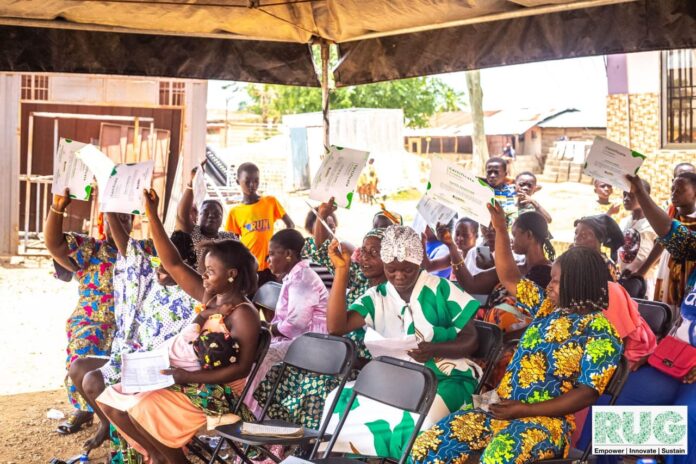

On March 31st, 2026, the quiet community of Boamang-Kyerekrom in Afigya Kwabre North District came alive with celebration as 33 rural women graduated from the Community Green Economy Project (CGEP), a transformative initiative implemented by RUG Hub.
The impact of the program is already significant, as the Head of the District’s Business Advisory Centre announced during the ceremony that the vocational graduates will be selected to represent the community at the Ashanti Region Expo, organised by the Ashanti Regional Minister, Dr Frank Amoakohene.
This recognition highlights that the women are being positioned as regional economic players.

The ceremony marked the culmination of weeks of hands-on circular vocational and entrepreneurial training designed to equip rural women with practical skills to start and grow green micro businesses.
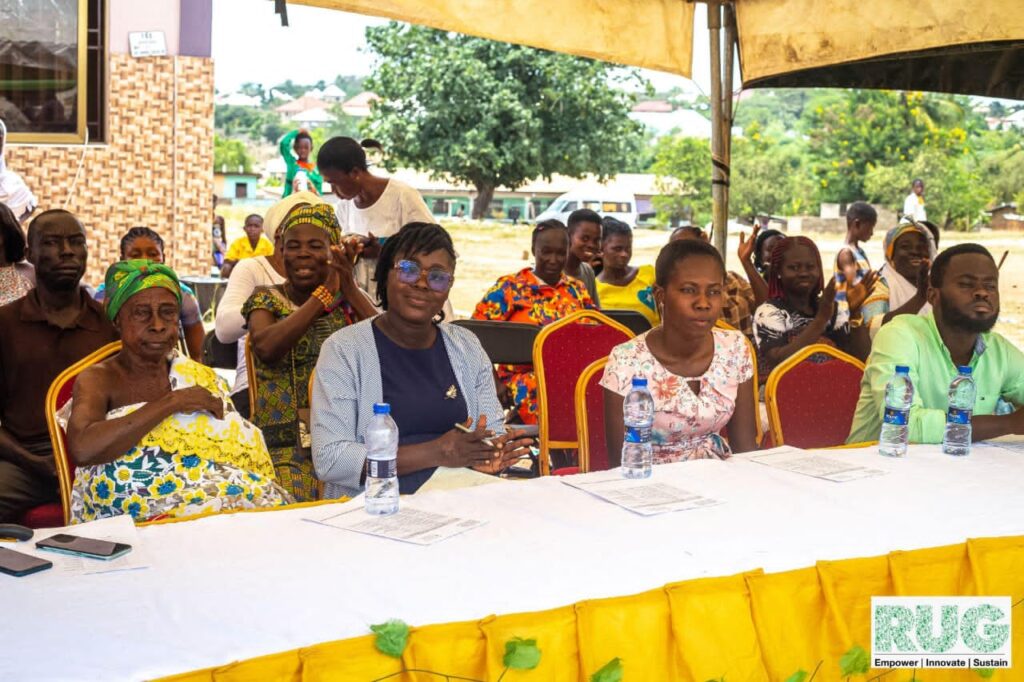
The ceremony vibrantly displayed community support as the community’s Queen Mother, District Assembly Members, the Assemblyman and other local committee members gathered to celebrate the women’s achievements.
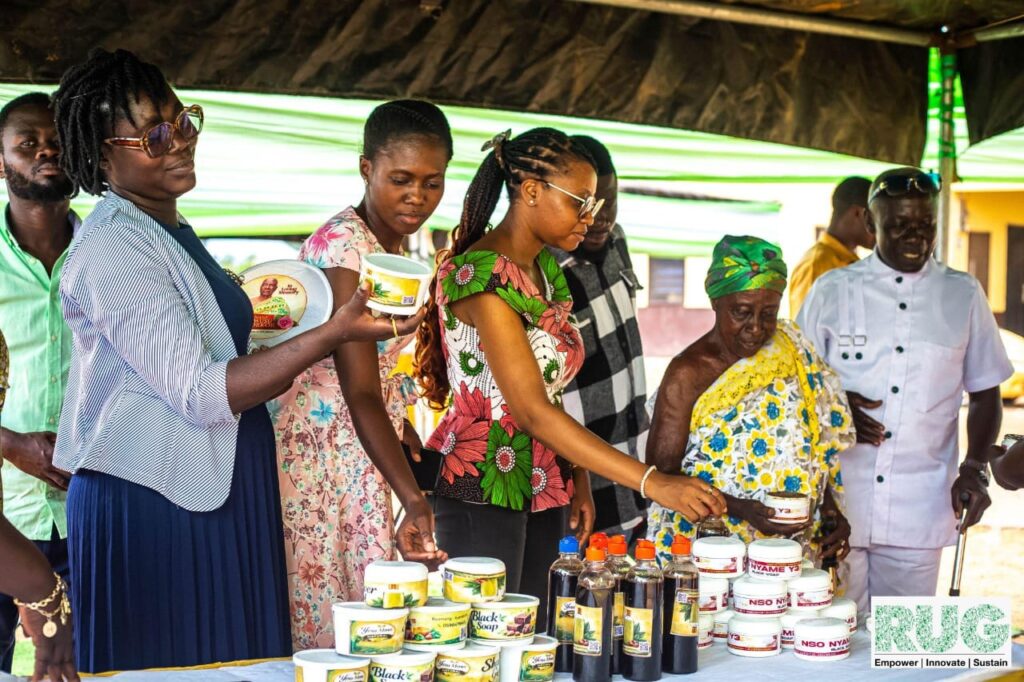
The events featured: special guests’ speeches; past and current beneficiaries’ experiences sharing; awarding of certificates to all 33 beneficiaries; exhibition of green products made by the women; and presentation of asset support to help beneficiaries strengthen their businesses.
Moving from Unemployment and Seasonal Labour to a Green Business Owner
Before joining, the majority of the women were either unemployed or underemployed, relying largely on seasonal farming and petty trading. Today, they leave the program as small business owners and job creators.
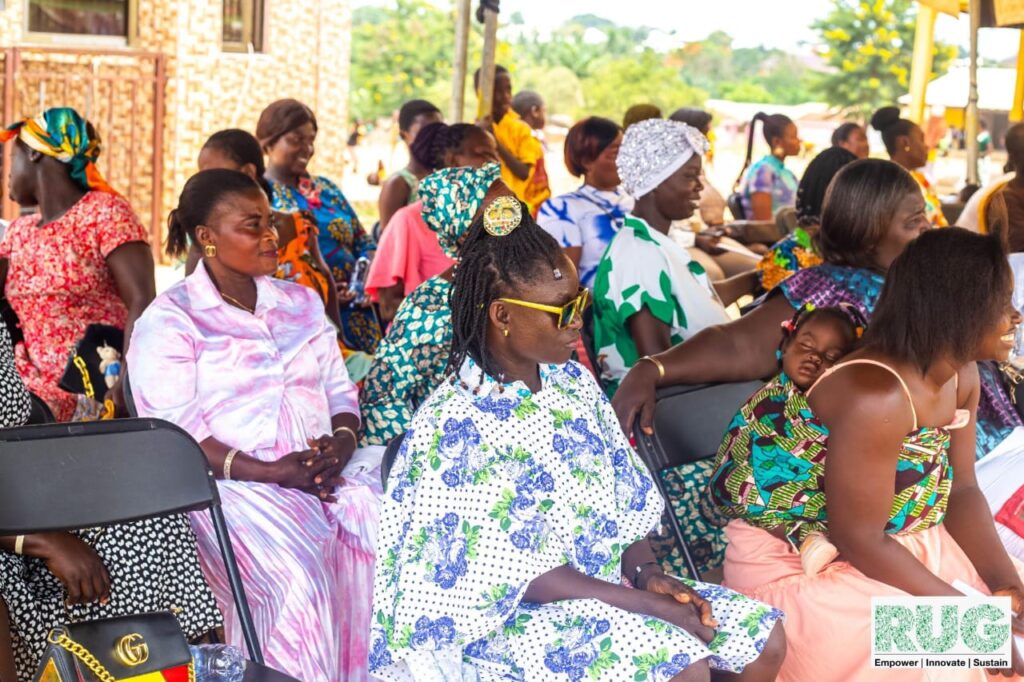
At the heart of the project is the circular vocational training, where the graduates mastered the skills in African black soap production with added value, Snail Farming, and Paper bag packaging.
Followed by complementary soft skill training, women in rural areas have been well equipped with skills, including problem-solving, to help navigate and grow their young businesses.
Implementation Success
Even before the official graduation ceremony, the impact was already visible. 28 out of 33 beneficiaries had begun establishing businesses, with some working in groups.
“We have been able to produce batches of the soap that surpassed our expectations”, says Adwoa Fordjour, a graduate of the project.
Another graduate, Akua Afriyie, emphasised the value of investment made into their lives – “This project provided us valuable training and support without a single pesewa being taken from us.”
These businesses are expected not only to improve household incomes but also to create additional job opportunities and boost local economic development in the Afigya Kwabre North District.
