
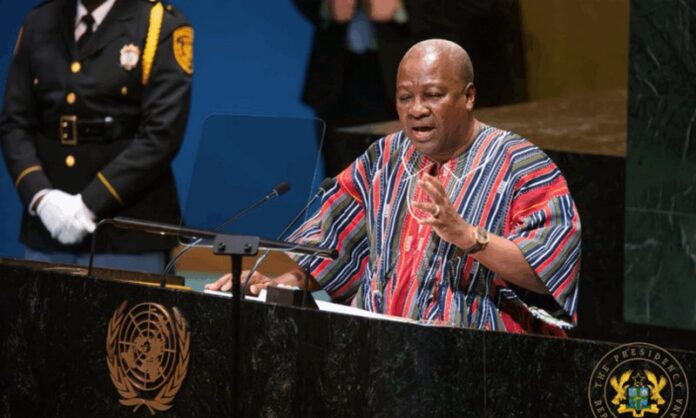

President John Dramani Mahama stood in Arusha and spoke the language of principle. He affirmed Ghana’s commitment to the African Court on Human and Peoples’ Rights and to the broader architecture of continental accountability.
It was an important moment. It reminded Africa that institutions matter, and that justice does not end at national borders.
But human rights do not live in Arusha.
For many Ghanaians, they live — or fail to live — in Accra.
The average Ghanaian will never file a case in Tanzania. The journalist covering a police operation in Kasoa cannot seek urgent protection from a regional bench. The reporter documenting a volatile scene must rely, in that moment, on the discipline of local authority.
And it is here that the question becomes uncomfortable.
The Ghana Journalists Association has repeatedly warned of a sharp rise in attacks and threats against journalists. By mid-2025, the number of reported abuses had already exceeded the previous annual average. By year’s end, RANA recorded more than twenty incidents. In a troubling number of cases, state actors were alleged to be involved.
January 2026 brought further reports.
A journalist shoved aside while covering a public event. Another obstructed while filming. Uniformed personnel allegedly turning force not toward disorder, but toward the camera.
One might say such incidents are isolated. One might say investigations have been launched. One might say tempers flare in difficult circumstances. All true, perhaps.
But the rule of law is not tested in easy circumstances.
It is tested precisely when authority is under strain. It is tested when a camera is raised. It is tested when scrutiny is inconvenient.
Journalists do not possess executive power. They do not command battalions. Their authority lies in observation and publication. When they are intimidated, the damage travels beyond the individual. The public loses sight. Accountability narrows. Silence expands.
Human rights seldom collapse with a crash. They erode by gradual accommodation.
The President, in his State of the Nation Address, acknowledged the rise in attacks against journalists. Recognition matters. It signals awareness. But recognition is not remedy. And remedy is not prevention. Remedy lies in visible consequences: swift, independent investigations; transparent findings; credible sanctions where wrongdoing is established.
Without that, repetition becomes foreseeable.
If journalists, with institutional backing, professional networks, and national platforms, face risk with uncertain protection, what of the citizen without headlines? The market trader? The student? The detainee in a rural station?
The strength of a constitutional democracy is not measured by the eloquence of its speeches abroad, but by the predictability of restraint at home.
Ghana’s Constitution is clear. Media freedom is structural. It exists so that power may be examined without fear. Continental courts are vital guardians of last resort. But they cannot compensate for everyday insecurity in our own streets and institutions.
President Mahama’s words in Arusha were welcome.
But we need results at home.
Are journalists safe in Ghana?
That is the question that must be answered not in Arusha, but in Accra.
Until safety is reliable and accountability routine, speeches — however eloquent — will mean little.
Human rights leadership begins at home.
Kelvin Gyimah
Executive Director
Right Accountability Network – Africa (RANA)
