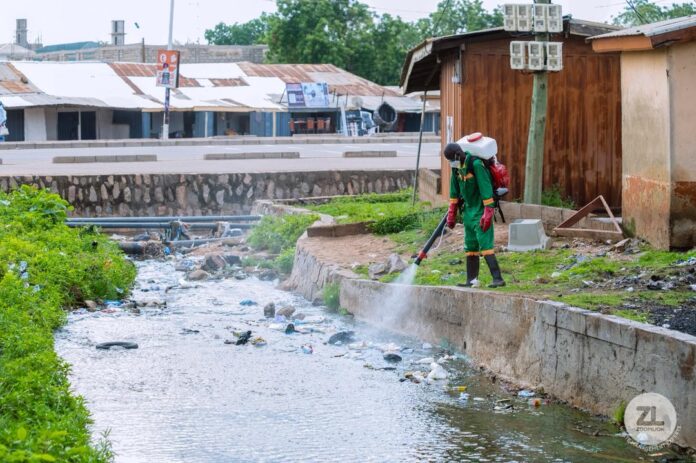

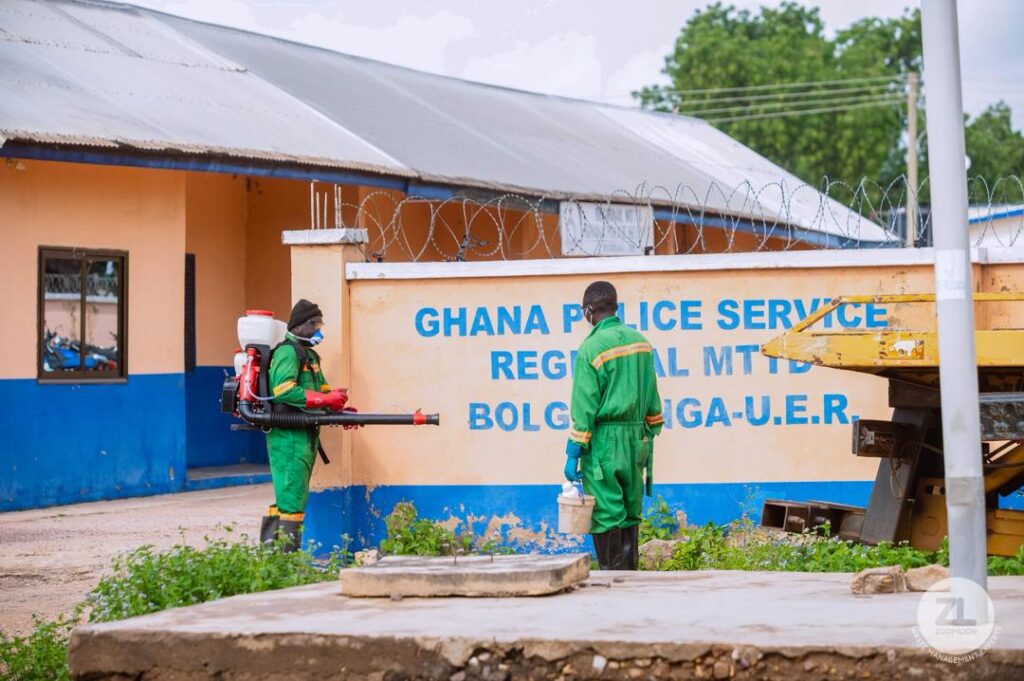
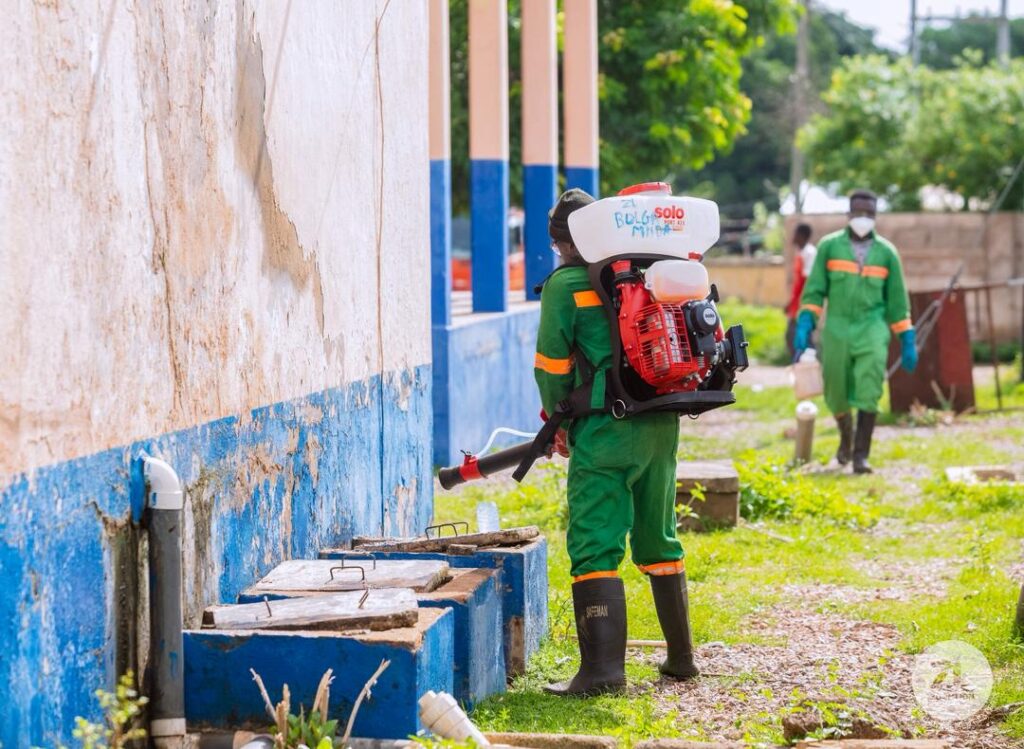
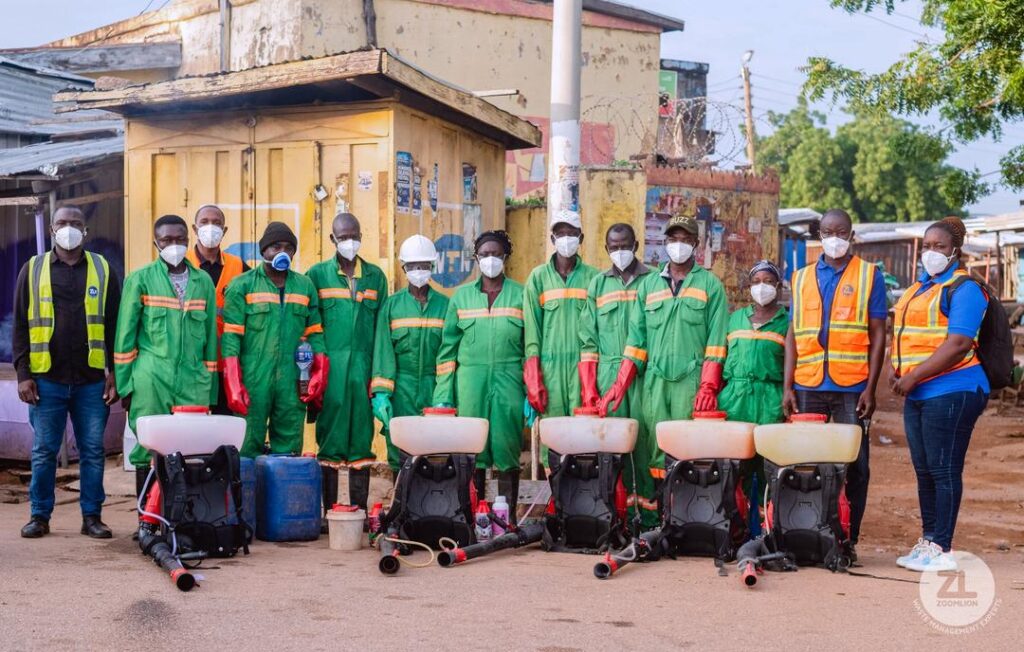
Zoomlion Ghana Limited has commenced a week-long disinfection and disinfestation exercise across all 15 municipalities and districts in the Upper East Region as part of proactive measures to minimise the risk of disease outbreaks during the peak rainy season.
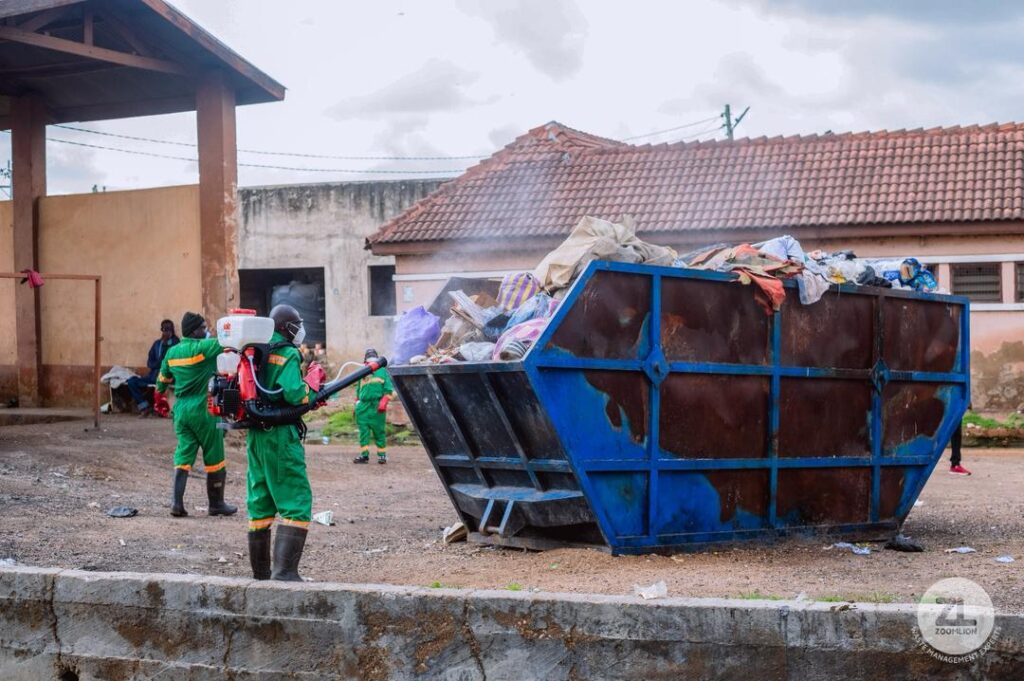
The exercise targets public spaces and sanitation facilities considered potential breeding grounds for disease vectors and disease-causing pathogens.
These include public toilets, markets, schools, health facilities, communal waste container sites, dumping grounds and drainage systems, where accumulated waste, stagnant or contaminated water, and poor sanitary conditions could pose risks to public health.
The intervention forms part of a broader nationwide programme being implemented by Zoomlion in collaboration with Metropolitan, Municipal and District Assemblies (MMDAs).
It follows recent flooding in parts of southern Ghana and is intended to strengthen environmental sanitation and disease-prevention measures during the rainy season.
As part of its corporate social responsibility, Zoomlion is undertaking the disinfection and disinfestation exercise at no cost to beneficiary communities.
Speaking during the exercise, the Upper East Regional Manager of Zoomlion, Mr Kojo Njabore Upon, explained that although the Upper East Region was not directly affected by the recent flooding in southern Ghana, prevailing rainy-season conditions made preventive intervention necessary.
According to him, rainfall and runoff can carry contaminants from areas affected by open defecation, indiscriminate waste disposal and other unsanitary practices into drains, watercourses and public spaces.
Such conditions, he explained, could increase the risk of disease transmission, including cholera, particularly in communities where environmental sanitation standards are poor.
He said the intervention was therefore designed to treat high-risk locations where pathogens and disease vectors could thrive, thereby helping to reduce potential public health risks.
Mr Upon clarified that the ongoing intervention was specifically focused on disinfection and disinfestation and did not constitute a general refuse-collection exercise.
He noted, however, that waste evacuation and clearing could be undertaken in selected communities under separate sanitation programmes where necessary.
He further called on residents to participate actively in the National Sanitation Day and assume greater responsibility for keeping their homes, businesses and communities clean.
“Sanitation is not an event; it is continuous,” Mr Upon stressed, explaining that periodic disinfection and disinfestation alone cannot provide lasting solutions where waste, debris and other insanitary conditions are allowed to persist.
He encouraged households, traders and businesses to store waste properly and engage authorised waste management service providers to ensure regular collection and disposal at designated sites.
Residents, he added, should regard proper waste management as an investment in their own health, since preventable diseases can result in substantial medical expenses, loss of productive time and reduced household income.
The Upper East Regional Environmental and Sanitation Officer, Mr Charles Yinbil Awuni, welcomed the exercise and described it as a timely intervention, particularly during the rainy season.
He appealed to residents to complement the exercise by maintaining clean surroundings, avoiding indiscriminate waste disposal and adopting responsible sanitation practices.
The week-long exercise is expected to improve environmental sanitation conditions and help reduce potential disease risks across the Upper East Region.
Beyond the immediate intervention, Zoomlion is encouraging residents to embrace cleanliness and responsible waste management as continuous responsibilities essential to protecting public health and building cleaner, healthier and more resilient communities.