
Ghana loses an estimated GH¢420 million annually due to poor sanitation, according to the World Bank, as urban flooding linked to choked drains and improper waste disposal continues to displace residents and destroy property during the rainy season.
To address the growing challenge, US-Ghana-based advocacy group Re|Root Collaborative is calling for a shift from reactive disaster response to proactive investment in sanitation infrastructure.
The organisation believes the lack of basic waste management equipment for residents remains a major contributor to poor sanitation practices across the country.
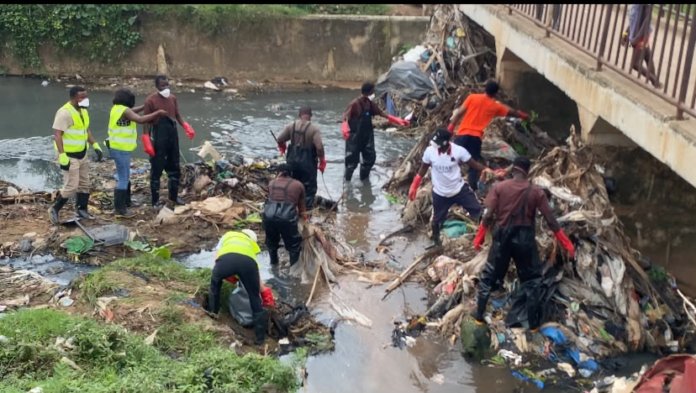
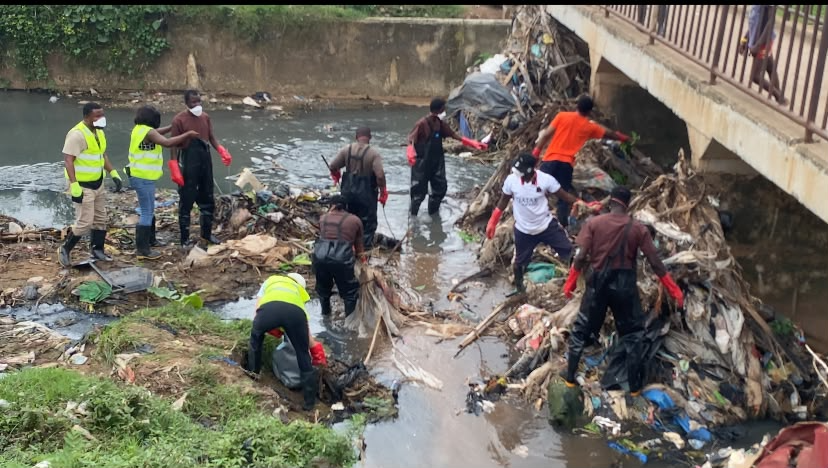
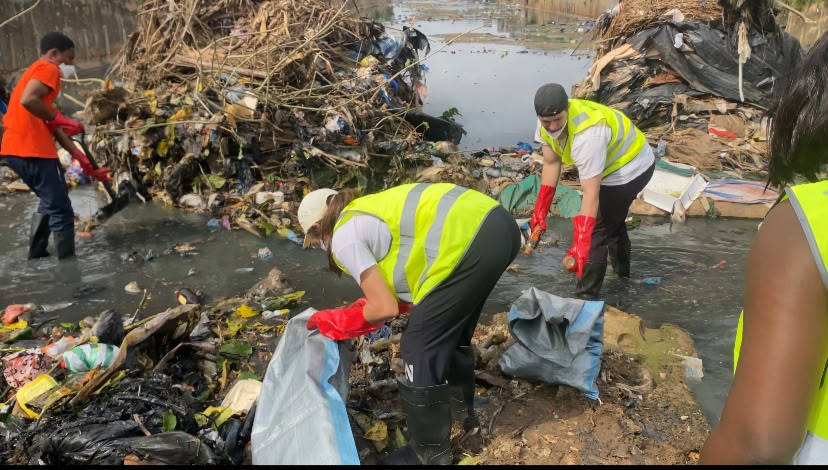
The call was made during a community clean-up exercise organised by Re|Root Collaborative in partnership with the Asokore Mampong Municipal Assembly at communities along the Pelele River in Aboabo.
Speaking to JoyNews, Executive Director and Co-Founder of Re|Root Collaborative, Anysa Santitini, said waste management continues to receive limited attention despite its impact on public health and safety.
She linked recent flooding in parts of Accra to poor waste disposal practices and inadequate drainage systems, stressing the need for investment in waste management infrastructure.
According to her, the absence of basic sanitation logistics is making it difficult for communities to properly manage waste.
“In many communities, there is no regular garbage collection. There are no metal skip containers. There are no dustbins on the streets,” she said.
“Residents in places like Aboabo want to dispose of waste properly, but when there is nowhere to put it, they end up dumping it in drains and rivers.”
Ms Santitini expressed concern that authorities often wait until disasters occur before committing huge financial resources to address the damage.
“I know that waste management is not given much focus. We saw what happened in Accra, where the floods caused a lot of damage and even claimed lives. After the disaster, government released a lot of funding to address the problem, but I think we would be better off if we invested the money in prevention from the start,” she said.
She urged government, Metropolitan, Municipal and District Assemblies (MMDAs), and private sector partners to focus on three key areas: infrastructure, logistics and public education.
“We need more skip containers in communities, scheduled waste collection, and recycling incentives,” she said. “We also need continuous public education so people understand that how they dispose of waste affects their own safety during the rainy season.”
Concerns over Sanitation and Pollution Levy
Despite collecting billions of cedis since 2021, concerns have been raised over the effectiveness of the Sanitation and Pollution Levy (SPL) in delivering the waste treatment and landfill infrastructure it was intended to support.
The levy, introduced as a 10-pesewa charge per litre on petrol and diesel, was designed to help combat pollution and finance waste management facilities across the country.
However, stakeholders have alleged that funds generated under the levy have not been fully dedicated to sanitation, with concerns that resources have been redirected to address broader energy sector debts.
The Programme Support and Monitoring and Evaluation Consultant of Re|Root Collaborative, Spencer Tweneboah Korankye, appealed to government to protect the levy and increase investment in sanitation.
“We have taken notice that the levy on fuel meant for sanitation and waste management is being rechanneled to pay ESLA debt. I therefore plead with government to sustain the Sanitation and Pollution Levy and increase budgetary allocation to the sector,” he said.
“Without dedicated and ring-fenced financing, we cannot build the treatment plants and landfills needed to address the waste disposal crisis.”
Mr Korankye also called for an upward review of waste disposal charges, arguing that current fees are insufficient to cover the cost of trucks, skip containers, fuel and personnel required for effective waste management.
He said waste management companies across the country are struggling with inadequate logistics, a situation that contributes to poor service delivery and the continued dumping of waste into drains and waterways.
Community clean-up exercise
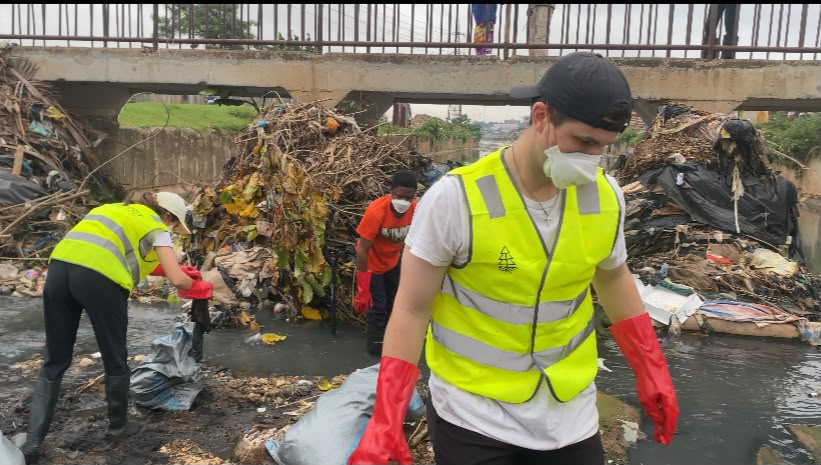
The clean-up exercise attracted hundreds of volunteers, Ghana National Fire Service personnel, assembly officials and residents.
Participants desilted blocked drains, removed plastic waste and cleared solid waste dumped along the banks of the Pelele River, a major waterway that frequently overflows during heavy rains.
Residents praised the initiative, noting that Re|Root Collaborative has adopted the Pelele River stretch as part of its sanitation campaign, which includes public education on illegal dumping and responsible waste disposal.
Re|Root Collaborative is a nonprofit organisation working at the intersection of textile upcycling, waste-dumpsite reclamation and waste-trade advocacy.
Operating in Kumasi with support from a US-based team, the organisation partners with local communities, market groups and district authorities to develop sustainable, community-driven solutions to waste management challenges while creating economic opportunities from reclaimed materials.
‘Service to mankind is service to Allah’ – Alhaji Agongo donates…