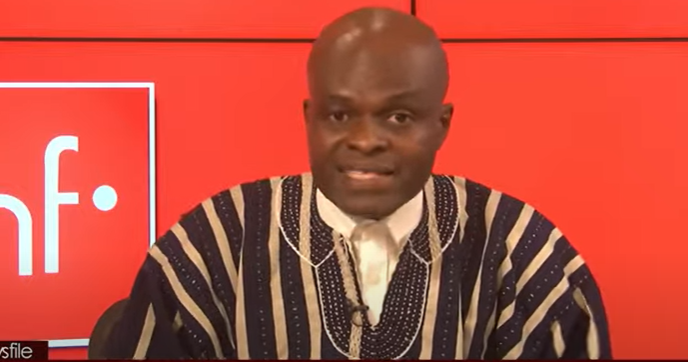

Private legal practitioner Martin Kpebu has welcomed the Supreme Court’s decision affirming the Attorney-General’s constitutional authority to discontinue criminal prosecutions initiated by the Office of the Special Prosecutor (OSP), describing it as a crucial safeguard to ensure accountability within the anti-corruption agency.
Speaking in an interview on Accra-based Citi FM, Mr Kpebu said the ruling provides clarity on the constitutional relationship between the Attorney-General and the OSP.
“It’s a welcome relief, very timely. It will help to at least keep Kissi Agyebeng in check for a bit,” he said.
According to him, although the Office of the Special Prosecutor Act grants the OSP prosecutorial powers, those powers are exercised on behalf of the Attorney-General, who remains the constitutionally mandated authority responsible for criminal prosecutions.
Mr Kpebu explained that under the 1992 Constitution, the Attorney-General has the power not only to initiate criminal prosecutions but also to discontinue them at any stage.
“The Supreme Court has been very clear that the Office of the Special Prosecutor is under the Attorney-General’s office. The decision is that it’s only the Attorney-General who has power to prosecute. Any other person prosecuting a criminal case is doing it on behalf of the Attorney-General,” he stated.
He said the ruling establishes an important constitutional check on the powers of the Special Prosecutor by ensuring oversight where concerns arise over the conduct of prosecutions.
Mr Kpebu added that individuals who believe they have been unfairly targeted by the OSP now have a clear avenue to seek a review of their cases by the Attorney-General.
“The Attorney-General will call for the file and look at it and see if your case has merit. The Attorney-General will stop what the OSP is doing. So that’s very key. It’s a key check,” he said.
The Supreme Court’s decision followed a constitutional challenge filed by private legal practitioner Noah Adamtey, who argued that Parliament could not grant the OSP independent prosecutorial authority because Article 88 of the 1992 Constitution vests that power exclusively in the Attorney-General.
Although the apex court upheld the constitutionality of the Office of the Special Prosecutor Act, 2017 (Act 959), it ruled that the Attorney-General’s constitutional authority to take over and discontinue criminal prosecutions remains intact, including cases initiated by the Special Prosecutor.
Also read: