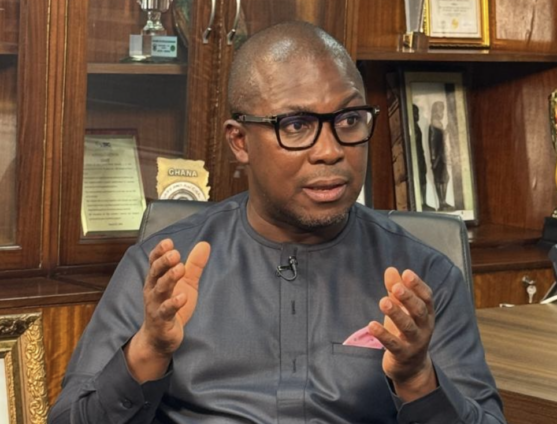

The Director-General of the Social Security and National Insurance Trust (SSNIT), Kwasi Afreh Biney, says the scheme has significantly reduced the time it takes to process pension claims, cutting the average turnaround time to just seven days.
Speaking on Joy News’ PM Express Business Edition on Thursday, he explained that pensioners who submit all required documents can now expect to be placed on the pension payroll within a week.
“So let’s say you’ve gone on pension now, all your documents are right, and you’ve submitted them to us. On average, now it takes us seven days to process your request to be put on the pension payroll,” he said.
According to him, the process still involves several checks before a claim is fully approved.
“Because remember, we need to do some investigations, we need to pick files, do some validations and all that. So that’s what it means,” he explained.
Mr Biney attributed the improvement largely to SSNIT’s ongoing digital transformation, which has streamlined operations and reduced delays in processing claims.
He noted, however, that technology alone is not enough to guarantee efficiency.
“Automation has really helped, but one of the things that I believe we need to work on is the mindset shift as to the use of our digital channels,” he said.
He stressed that investments in technology only deliver full benefits when customers embrace and actively use the available digital platforms.
“If you’ve invested in technology but you haven’t gotten people to accept it and use it, you will not get the benefits that you seek,” he said.
To drive adoption, SSNIT has established a dedicated department focused on improving digital services and encouraging greater usage among members.
“We currently have set up a department whose core job is to look at our digital channels, to get people to use them, to get feedback, and ensure that consistently we are nimble and improving for people to use with ease and convenience,” he said.
The SSNIT Director-General added that the institution has deliberately made digital engagement the preferred option for accessing services.
“We also made a conscious decision that we wanted digital to be the default,” he stated.
He said SSNIT is intensifying public education on the convenience and efficiency of its digital platforms, while maintaining physical interactions as a complementary service.
“Face-to-face becomes complementary to digital use, which is more convenient today,” he added.
Mr Biney further noted that service delivery must align with changing customer behaviour in an era where mobile phones play a central role in daily life.
“You wake up in the morning and probably the first thing you pick up is your phone. You probably will go on WhatsApp,” he said.
“Let’s look at how we live our lives and offer solutions that mimic how we live. Through that, we bring convenience and better service to the people.”
ALSO READ:
Nana Yaa Jantuah calls for full investigation into June 3 flood pattern, including spiritual angle
Stop politicising June 3 floods – Collins Amankwah rejects spiritual claims