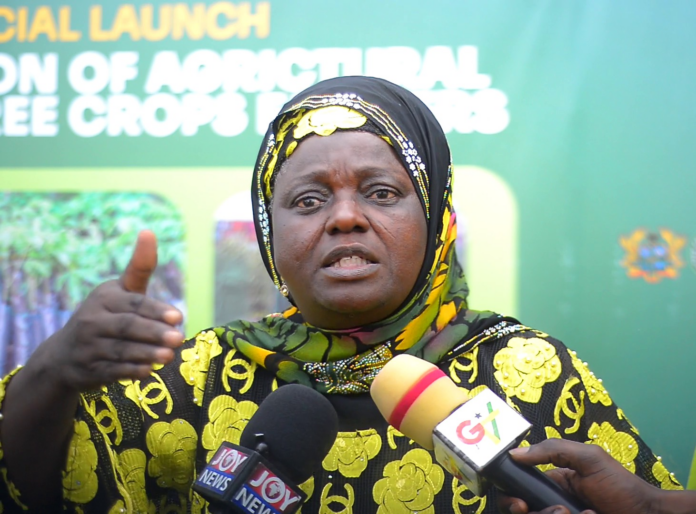

President of the Ghana Shea Butter Employers Association, Rabiatu Abubakari, says Ghana is losing millions of cedis in revenue because a large proportion of raw shea nuts are exported instead of being processed locally.
She is calling for stronger government support to protect the local shea butter industry and create more economic opportunities for farmers and processors.
The shea butter industry is facing serious challenges, with producers complaining about limited access to finance, inadequate storage facilities and the exportation of raw shea nuts.
According to Ms Abubakari, the situation is depriving Ghana of much-needed revenue and jobs.
“We are losing millions of cedis because our shea nuts are being exported in their raw form instead of being processed here in Ghana,” she said.
She said attempts by local producers to secure loans to expand their businesses had often been unsuccessful.
“When we go to the banks for loans, most of the time we are declined, and even when the loans are available, the interest rates are too high for us to sustain the business.”
According to her, exporters are taking a significant proportion of Ghana’s raw shea nuts outside the country, leaving local processors with limited supplies.
“About 70 percent of the shea nuts are taken out of the country, and this affects our local processing and the income of the farmers,” Ms Abubakari said.
She wants the government to use the 24-hour economy initiative to promote local processing while reducing the export of raw shea nuts.
“If government wants to put shea butter into the 24-hour economy, then we need to reduce the export of the raw shea nuts and encourage more processing here.”
She also called for investment in storage facilities, noting that shea is a seasonal crop.
“Shea is seasonal, so we need proper storage facilities to keep enough nuts for processing throughout the year.”
The association has welcomed support from the Tree Crops Development Authority through the provision of farm inputs but said more needs to be done.
Ms Abubakari is therefore appealing for increased government investment in financing, storage and local processing to make the shea industry more sustainable and ensure that more value remains in Ghana.
Jomoro MP trains over 300 young people in skills development
Harvard appoints former BoG Governor Ernest Addison as senior research fellow