
The Minerals Income Investment Fund (MIIF) has, for the first time, surpassed GH¢5 billion in mineral royalty inflows, marking a major milestone in Ghana’s efforts to derive greater value from its mineral resources.
According to the Fund, the achievement is the result of sustained reforms and stronger collaboration with key institutions responsible for collecting and managing mineral revenues.
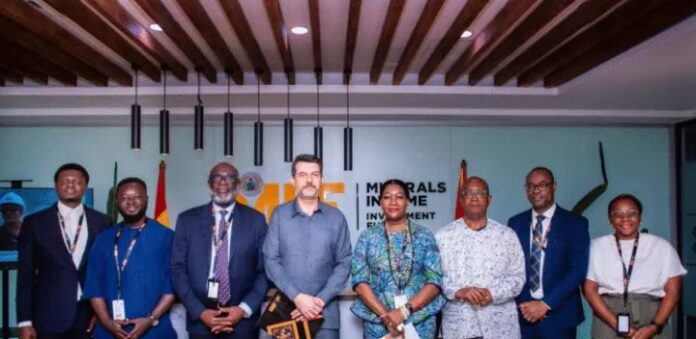
The development came into focus during a meeting between MIIF and the International Monetary Fund (IMF) in Accra, where both sides discussed ways to strengthen revenue mobilisation, improve governance, and formalise Ghana’s small-scale mining sector.
Chief Executive Officer of MIIF, Justina Nelson, said the Fund’s performance demonstrates the impact of enhanced revenue mobilisation efforts despite exchange rate movements and prevailing market conditions.
She credited the gains to closer cooperation with the Ghana Revenue Authority (GRA), the Minerals Commission, the Ghana Gold Board, and the Ghana National Association of Small-Scale Miners, noting that these partnerships have improved governance and boosted royalty collection.
Mrs. Nelson said the small-scale mining sector holds significant potential to drive economic transformation and stressed that ongoing formalisation initiatives would broaden the royalty base and improve compliance.
MIIF’s Head of Investment, Ernest Attiso, reiterated that the Fund’s core mandate is to maximise mineral royalty collections in partnership with the GRA while investing those revenues for the benefit of both present and future generations.
He explained that MIIF’s strategic plan through 2028 is focused on increasing royalty mobilisation, strengthening governance and compliance, enhancing risk management, and investing in mineral processing, exploration, beneficiation projects, and the formalisation of small-scale mining.
The IMF commended MIIF’s efforts, with its Resident Representative in Ghana, Dr. Adrian Alter, highlighting fiscal discipline, debt sustainability, and domestic revenue mobilisation as essential ingredients for maintaining macroeconomic stability and supporting long-term private sector-led growth.
Dr. Alter also underscored the need for greater transparency and stronger reporting standards, observing that although Ghana’s small-scale mining sector contributes significantly to mineral production, formal royalty collections remain relatively low due to informality and environmental concerns.