
There is a raging controversy following the petitions of lawyers Godfred Dame and Atta Akyea to the Chief Justice protesting the continuation of cases against their clients during the legal vacation.
Godfred Dame, the former Attorney-General, is defending the former CEO of the National Bufferskock Company, Hanan Abdul-Wahab Aludiba and his wife, Hajia Faiza Seidu Wuni.
Atta Akyea, on the other hand, is defending the former Director-General of the National Signals Bureau, Kwabena Adu-Boahene, and his wife, Mrs Angela Adjei-Boateng.
The two sets of accused are politically exposed persons, with the men holding offices in the erstwhile New Patriotic Party (NPP) administration. For this reason, the two petitions and the commentary they have occasioned have created the impression that the Chief Justice selected judges to sit on only the cases in which NPP members are the accused.
Following a post I made on Facebook, one of the accused persons sent me a private message expressing his concerns about the selective nature of the cases selected by the Chief Justice for the vacation court.
“The CJ has selected only 7 criminal cases to be heard during the vacation, leaving thousands of cases hanging. My issue is what seems to be selective,” the person said.
As I write this, there’s a story on myjoyonline with the headline, “Why these 2 cases? – Atta Akyea questions Chief Justice’s expedited trial order.” In this story, Atta Akyea creates the false impression that the vacation courts were mandated to sit only on the two high-profile cases involving the NPP administration members.
The fact that the current Chief Justice was appointed by the sitting president gives oxygen to the conspiracies, even if the lawyers and political commentators fall short of plainly saying what they have been insinuating.
The lawyers claim they want to rest, but the rest of us see the vehement opposition to the vacation courts as a delay tactic. They may be employing the tactics of North African football teams that are leading the scoreline in the dying embers of the game.
Put differently, they are trying to “Stephen Opunilise” the cases, praying for a favourable outcome of the 2028 election to enact their own version of Operation Create All Looters (OCAL), which the NDC executed at the dawn of the administration that is now spearheading its campaign promise, Operation Recover All Loots (ORAL).
As an investigative journalist who has uncovered major corruption scandals without seeing them resolved, I lean towards speedy trials. Legal vacations, which the experts have described as being vacations for judges—and not vacations for lawyers or cases—are an impediment to speedy trials.
I have no problem with the Chief Justice’s warrants for judges to sit during the legal vacation.
The reason for this write-up, however, is not to advance arguments superior to what the lawyers have already put out.
Mine is to put out facts to help correct the false and misleading information that has characterised this important discourse. These are the facts and my lay interpretation of those facts.
1. First, the impression is created that only a few cases have been selected for the vacation courts. That is false.
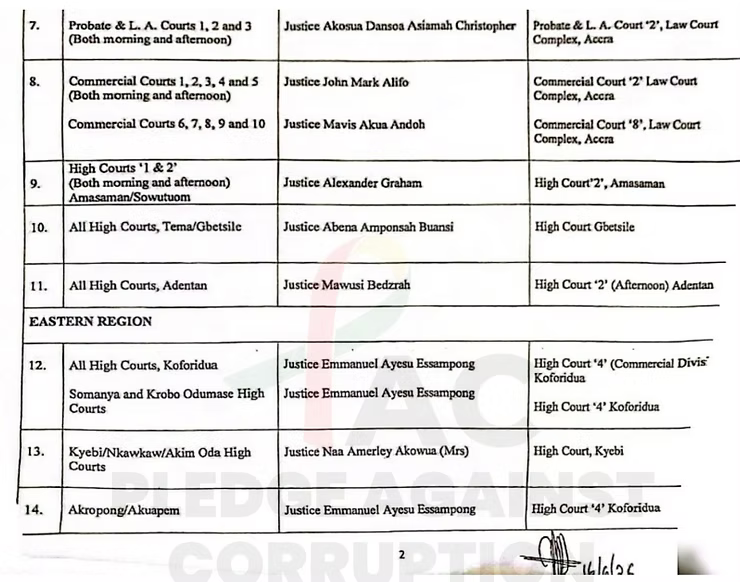
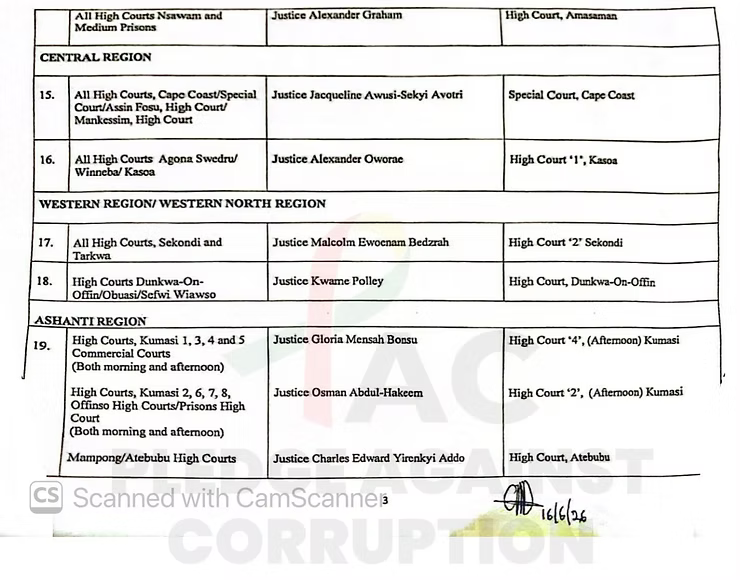
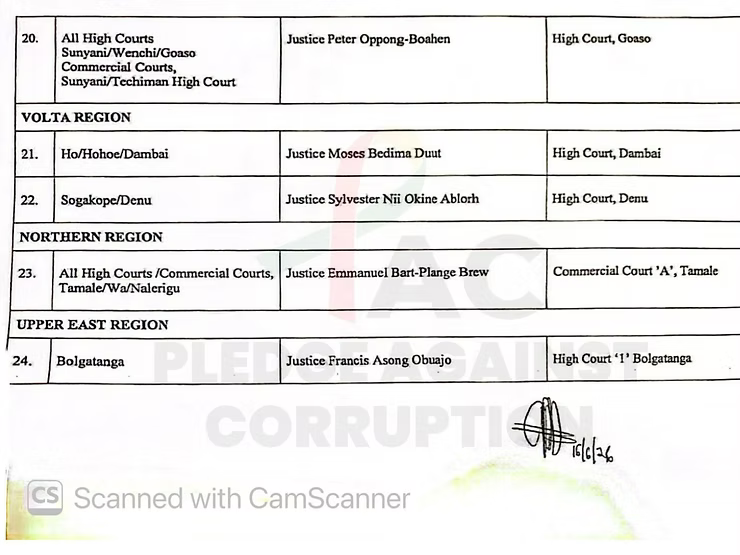
2. There are a total of 26 judges sitting nationwide during the vacation, according to the list available to Pledge Against Corruption. There are hundreds of cases involved, not just two or seven.
They are located in the Greater Accra, Eastern, Central, Northern, Western, Ashanti, Volta, and Upper East regions.
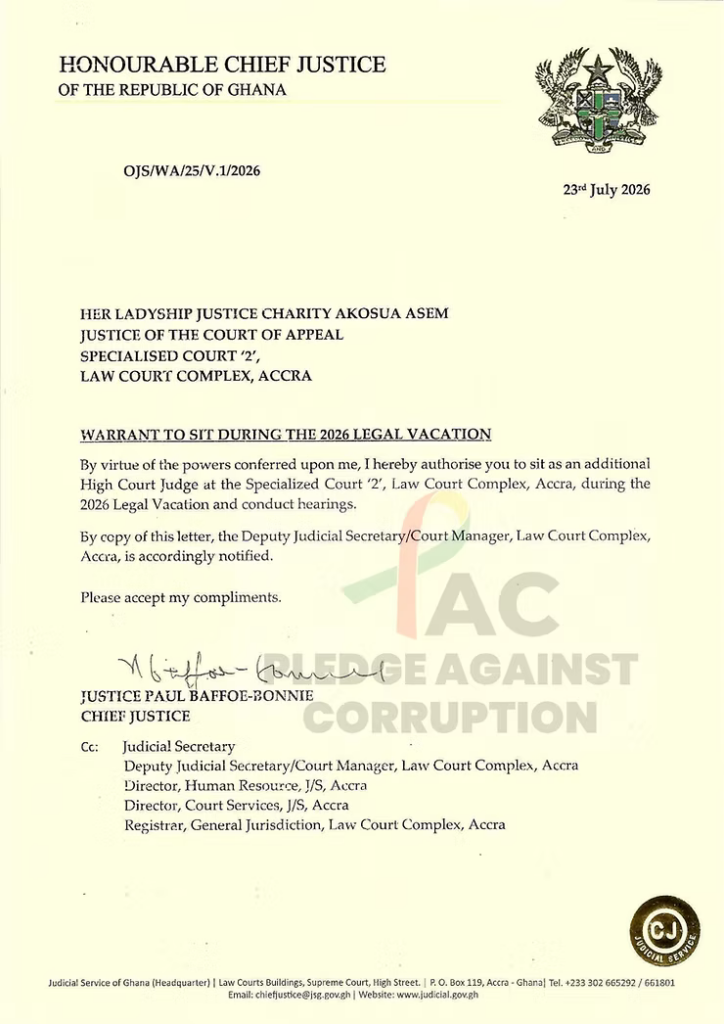
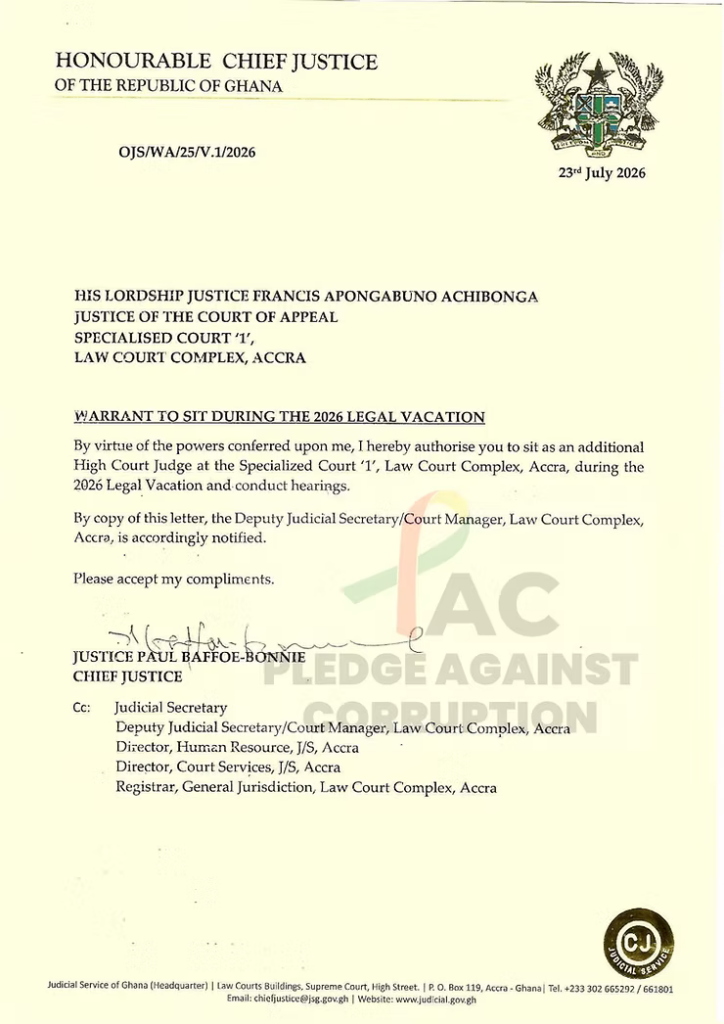
3. The warrants signed by the Chief Justice authorise the judges to sit on all substantive cases before their courts. The warrants are no case specific. So, if there are 20 cases in each court, then we are looking at 520 cases.
4. In addition to the cases pending in the courts of the vacation judges, they have also been assigned additional responsibilities for other courts to hear motions and other emergency processes. The judges of the additional courts whose emergency cases are overseen by the vacation judges are currently on legal vacation. When they return from vacation, and the judges currently sitting also go on vacation, they will assume responsibility for hearing motions and emergency matters from the courts of the judges who sat during the legal vacation.
5. This arrangement, which is not new, defeats the misleading information that vacation courts are only supposed to move motions. The vacation judges are authorised to hear substantive cases before their courts, but they cannot take over substantive cases pending in the courts of judges who have proceeded on legal vacation.
6. In a country where the justice system is extremely slow, we cannot afford to lose so much judicial time to legal vacation.
7. By the second week of October, the judges who are currently on vacation will have returned and settled, while those sitting during the legal vacations go on leave.
8. At the time the judges who will be proceeding for leave in October return, Christmas break and other end-of-year interruptions will be beckoning.
9. This means that if Kwabena Adu Boahene’s and Hanan Abdul-Wahab’s cases are not called during this legal vacation, when the judges hearing their cases are sitting, there won’t be any meaningful progress on the cases for the rest of the year. That will help the “Stephen Opunilisation” agenda but hurt Ghana’s anti-corruption fight.
The political class has a game plan. And it works for them. If these two political cases had been absent, we probably would have heard no controversy over judges sitting during legal vacation.
Some independent lawyers, including the moribund Ghana Bar Association, have weighed heavily into the debate. A suit has reportedly been filed on the matter, and I suppose the litigant wants the case heard during the legal vacation. However it ends, one thing should be clear.
Our already slow justice system must not halt during legal vacations. Traditions must not become the law if it is detrimental to our judicial process. The judiciary must codify its practices and firmly plant its feet on legal grounds to ensure the sitting of vacation judges on substantive cases during legal vacations.
Let me end with facts that dispel the false narrative suggesting that the Chief Justice issued a warrant for the hearing of only two cases during the legal vacation.
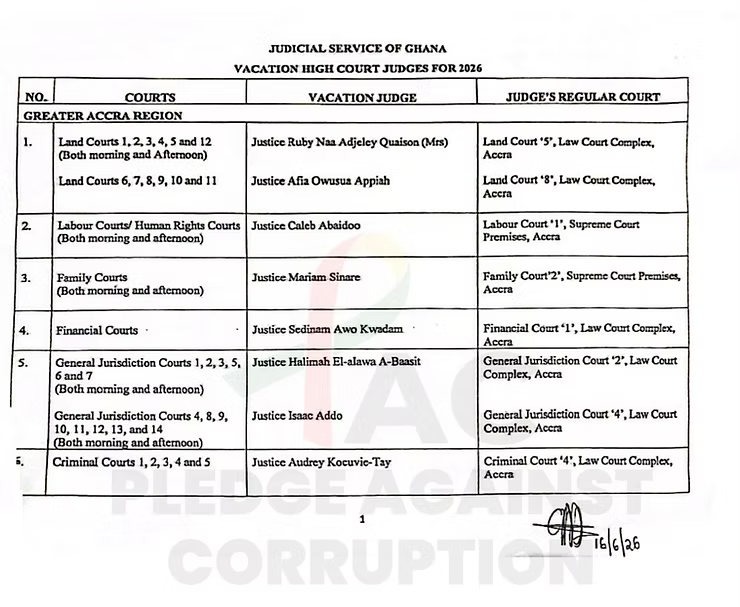
Apart from the two Court of Appeal judges whose warrants are listed above, here is the full list of the other 24 judges sitting across the country during the legal vacation.
The first column is the additional courts they will be overseeing, courts whose motions and emergency processes they will hear. Their own courts are listed in the last column.
Also read: