

Fitch Solutions has stated that Ghana’s inflation will average 12.8% in 2027 from 6.0% in 2026.
According to the UK-based firm, this will weigh on household purchasing power and private consumption.
In its latest report on Ghana, it said a tighter-than-expected monetary policy stance by the US Federal Reserve in response to elevated inflation would weigh on global gold prices and, by extension, Ghana’s export earnings.
“This would put pressure on the cedi, resulting in higher inflation than we currently forecast and a corresponding drag on household consumption and broader economic activity in H2 [second-half] 2026 and 2027”.
The UK-based firm, however, said a key factor underpinning the exceptionally low inflation environment in early 2026 has been the year-on-year strength of the cedi, which has helped contain imported price pressures.
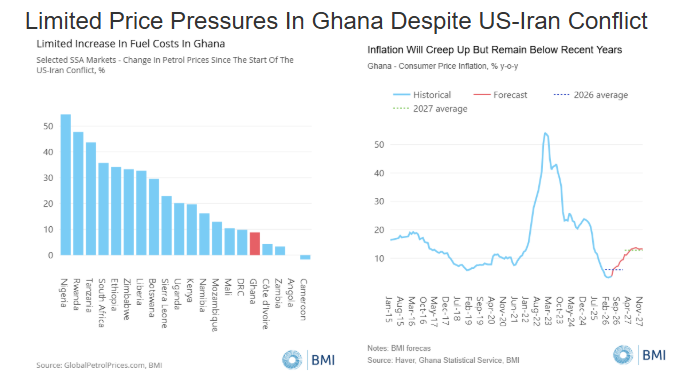
“However, as the favourable base effects stemming from the cedi’s sharp revaluation in early 2025 fade, this will put upside pressure on inflation in H2 half-year 2026]. In addition, the El Niño weather phenomenon likely to emerge in H2 [half-year 2026]is expected to reduce rainfall and raise temperatures, adding to food price pressures as crop yields deteriorate”.
It added that adverse weather conditions could also constrain cocoa production, while lower water levels at the Akosombo Dam could place additional strain on electricity generation.
Ghana’s inflation rose to 3.7% in May 2026 from 3.4% in April 2025.
This was largely by seasonal food supply constraints and unfavorable base.
READ ALSO:
Women’s Development Bank awaiting Bank of Ghana licence – Deputy Finance Minister