
The Institute of Economic Affairs (IEA) has opposed a proposal to extend the tenure of Ghana’s President and Members of Parliament from four to five years.
The institute argues that the current four-year mandate is adequate for elected governments to prepare and implement their policies, provided they are sufficiently prepared before assuming office.
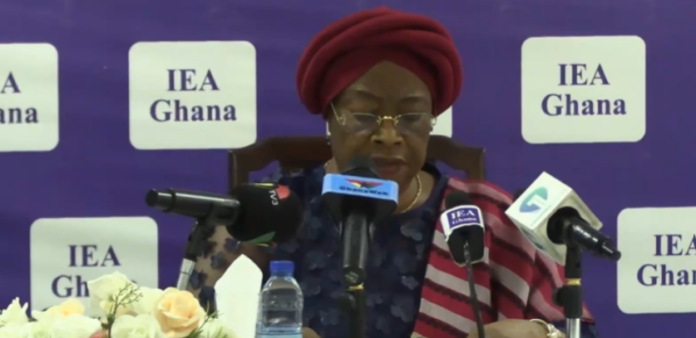
Former Chief Justice and IEA Fellow, Justice Sophia Akuffo, said there was no compelling justification for extending the existing term.
She made the remarks at a press briefing ahead of an IEA “Views and Reflections” seminar, which is examining the recommendations of the Prempeh Committee and the government’s position on proposed constitutional reforms.
The Prempeh Committee has recommended that presidential and parliamentary terms be extended from four to five years.
Government has accepted the recommendation, arguing that an additional year would allow administrations more time to formulate, implement and evaluate policies.
The IEA, however, maintains that political parties and prospective governments should undertake adequate preparations before taking office to ensure that they can begin implementing their programmes immediately.
Justice Akuffo said governments should not spend a significant portion of their tenure setting up their administrations.
“Four years you prepare before you come into office. In fact, you prepare before you even vie for power, so that on the day you come to power, from that day you’re on your feet and running,” she said.
She also raised concerns about delays in appointing ministers and other key officials, arguing that such delays further reduce the time available for governments to deliver on their mandates.
“It shouldn’t take six months to appoint ministers and people into key positions as has been our experience in times past,” she said.
The IEA said the debate over the proposed five-year tenure should consider both the need for effective policy implementation and the importance of democratic accountability.
While proponents of the extension argue that an additional year could provide governments with more time to implement long-term programmes, critics contend that shorter electoral cycles strengthen citizens’ ability to hold elected officials accountable.
The institute said an important question is whether policy discontinuity is actually caused by the four-year electoral cycle or by broader challenges, including weak institutions, inadequate planning and the tendency of successive administrations to abandon or redesign programmes started by previous governments.
It further recommended that any consideration of extending the tenure should be linked to efforts to strengthen the National Development Planning Commission (NDPC).
According to the IEA, a credible long-term national development framework could help successive governments implement major programmes within the existing four-year mandate while ensuring continuity around a shared national development agenda.
READ ALSO:
Manhyia South MP disputes EOCO account over alleged attempted arrest
GES orders SHS heads to stop unauthorised collection of fees and levies