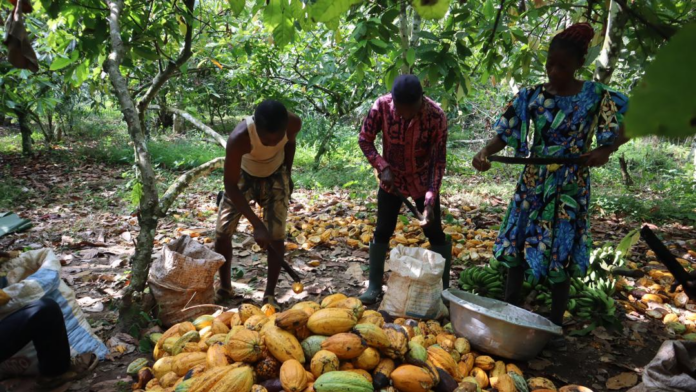

At least 1.68 million children across cocoa-growing communities in West Africa have been protected through Child Labour Monitoring and Remediation Systems (CLMRS) implemented by members of the International Cocoa Initiative (ICI), according to the organisation’s 2025 Annual Report.
The International Cocoa Initiative (ICI) has announced that at least 1.68 million children across cocoa-growing communities in West Africa have been protected and supported through Child Labour Monitoring and Remediation Systems (CLMRS) implemented by its members.
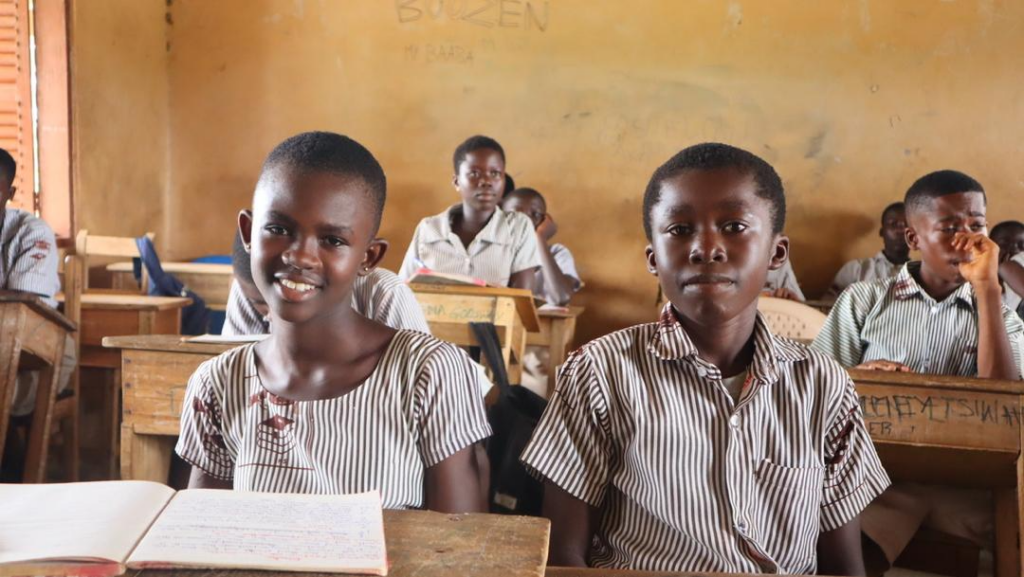
The achievement is detailed in ICI’s 2025 Annual Report, which highlights significant progress in safeguarding children despite a year characterised by market volatility and regulatory uncertainty.
According to the report, as of September 2025, the programme had expanded its reach to 1.33 million cocoa-farming households across Cameroon, Côte d’Ivoire, Ghana and Nigeria, up from 1.17 million households the previous year.
The report noted that ICI is increasingly focused on improving the quality, effectiveness and sustainability of its child protection systems to achieve stronger outcomes for children and cocoa-farming families.
ICI Executive Director, Matthias Lange, said members remained committed to protecting children despite the challenges facing the cocoa sector.
“Despite the uncertainty and challenges, ICI members and partners remained committed to raising the bar on our efforts to protect children from child labour and uphold human rights across cocoa-growing communities,” Mr. Lange said.
The CLMRS are child-centred systems designed to identify children engaged in, or at risk of, child labour, provide ongoing support to improve their welfare and monitor their progress over time.
The systems aim to prevent and reduce child labour, mitigate its harmful effects and help eliminate its long-term consequences.
ICI said the CLMRS Core Criteria set minimum standards for designing and implementing child labour monitoring and remediation systems. These standards are supported by a practical implementation manual and a self-assessment tool to help organisations strengthen their interventions and maximise impact.
The organisation also highlighted its continued collaboration with government institutions in Ghana, Côte d’Ivoire and Cameroon to strengthen social welfare systems, improve data coordination and build institutional capacity for monitoring, referrals and follow-up services.
In addition, cocoa sector stakeholders were provided with practical tools developed from years of research and field experience. These covered preventing children’s exposure to hazardous pesticides, addressing forced labour risks, improving grievance mechanisms and strengthening data management systems.
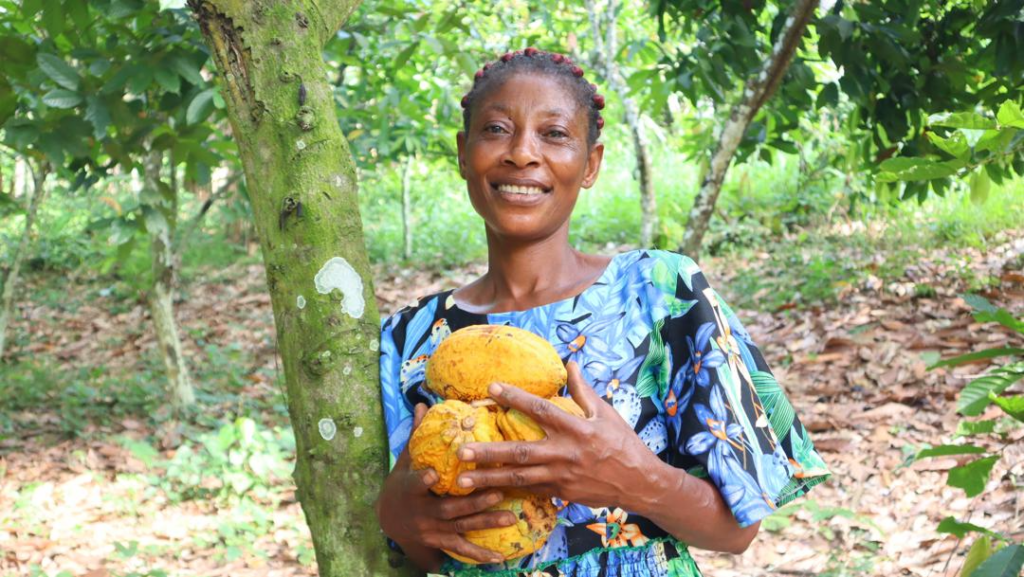
During the reporting period, ICI organised 25 knowledge-sharing sessions across West Africa and beyond to help partners translate research findings into practical action.
With new international regulations reshaping cocoa supply chains, including evolving European Union due diligence requirements and forced labour regulations, ICI said it worked with partners to develop practical recommendations for addressing forced labour risks in the cocoa sector.
For Ghana, the report said these developments underscore the importance of implementing effective child labour prevention systems that meet international standards while delivering meaningful improvements for cocoa-growing communities.
“Our focus remains clear: to drive systemic change that is both scalable and sustainable. Through continued learning, partnership, action and innovation, we are expanding the reach and effectiveness of our work, bringing us closer to a future where every child is protected and able to thrive,” Mr. Lange added.