
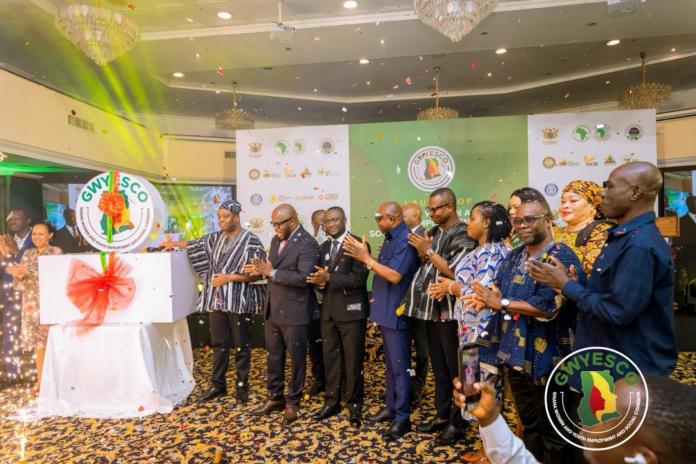

Ghana has officially launched the Ghana Women and Youth Employment and Social Cohesion (GWYESCO) Programme, a major initiative expected to create more than 30,000 jobs and economic opportunities for women and young people across the country.
The programme is funded by the African Development Bank (AfDB), with the Ministry of Finance serving as the executing agency and the Social Investment Fund (SIF) acting as the implementing agency.
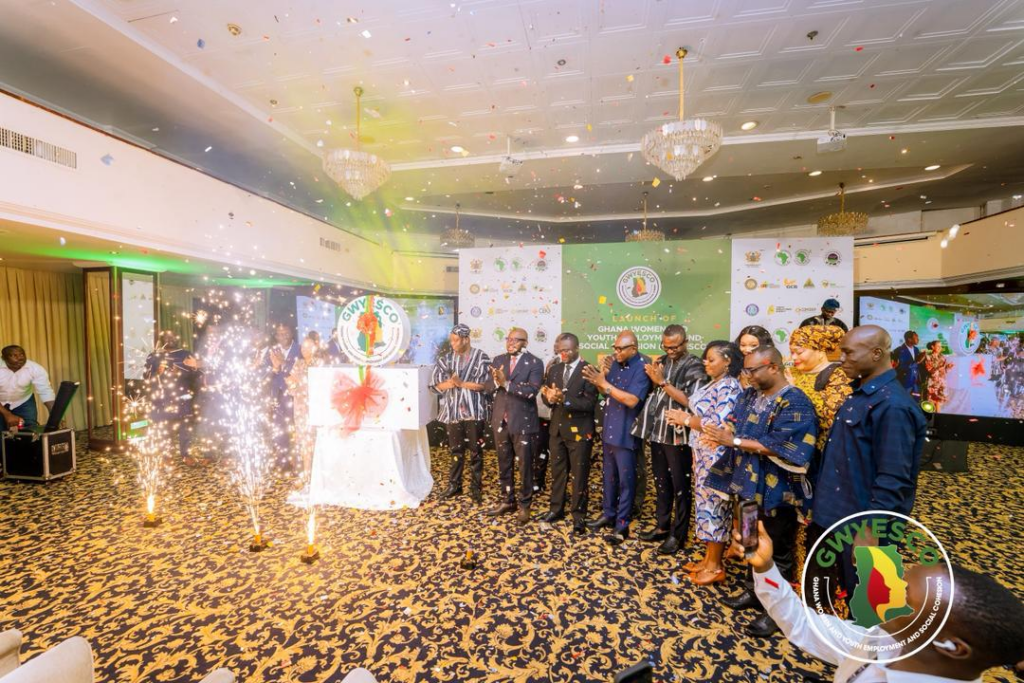
The launch brought together key stakeholders, including Deputy Minister for Finance Thomas Nyarko Ampem, AfDB Country Director Halimah Hashi, and Chief Executive Officer of the Social Investment Fund, Abass Nurudeen.
The initiative seeks to tackle youth unemployment, promote women’s economic empowerment and strengthen social cohesion through sustainable livelihood opportunities, particularly in vulnerable and underserved communities.
Addressing participants at the launch, Mr. Nurudeen said the programme is anchored on the belief that empowering women and young people with skills, financing opportunities and hope is critical to national development.
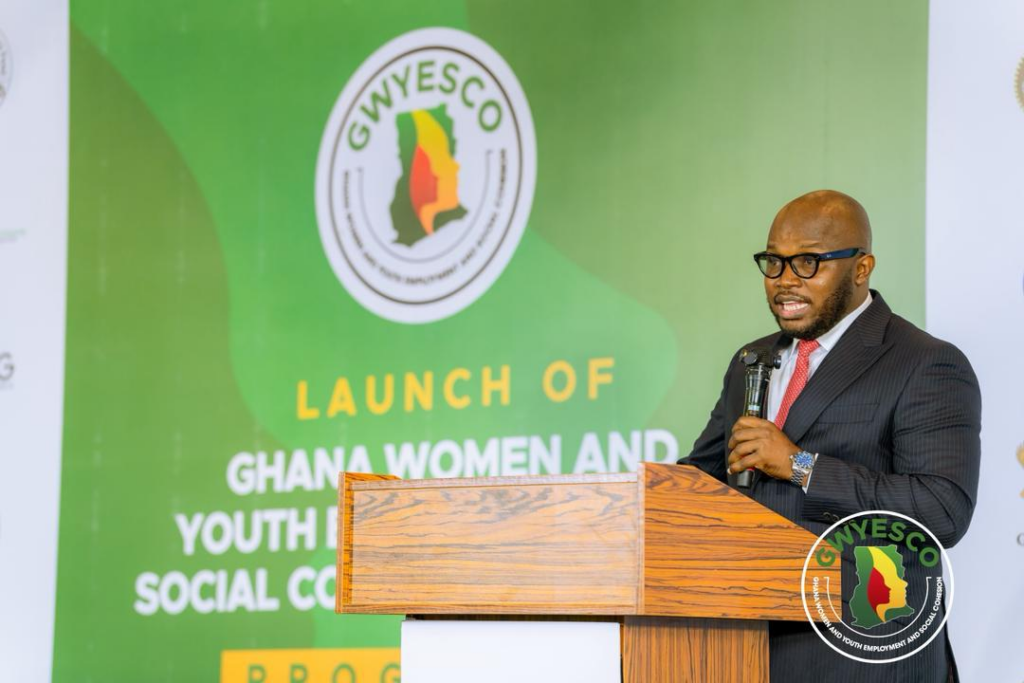
“At the heart of this programme is the idea that when women and young people are empowered with skills, financing opportunities and hope, nations thrive,” he stated.
He noted that youth unemployment and underemployment remain among the greatest threats to economic progress and social stability in Ghana and across Africa. According to him, the growing number of young people who are not in education, employment or training is largely driven by a lack of market-relevant skills, while many women entrepreneurs continue to face barriers in accessing finance, technology and markets.
Mr. Nurudeen explained that the GWYESCO Programme has been designed to address these challenges through three key interventions: promoting market-driven training aligned with industry needs and emerging sectors; expanding access to financial and non-financial services for women- and youth-owned micro, small and medium-sized enterprises (MSMEs); and strengthening institutional capacity and accountability systems to ensure sustainable programme delivery.
Under the programme, beneficiaries will receive training in STEM, digital technology, technical and vocational skills, agribusiness and the creative industries. Additionally, TVET centres across the country will be renovated, constructed and equipped to enhance skills development. Women- and youth-owned businesses will also benefit from entrepreneurship support, business development services and improved access to financing.
By 2029, the programme aims to support more than 22,000 women and young people into wage or self-employment, train over 28,000 beneficiaries in STEM, digital and creative industry skills, assist 10,000 women- and youth-owned MSMEs with entrepreneurship and business development services, provide financing access to 8,000 businesses, and construct, renovate and equip ten TVET centres nationwide.
Mr. Nurudeen highlighted the programme’s Results-Based Financing (RBF) mechanism as one of its distinguishing features. Under this approach, funding is tied directly to measurable and verified outcomes rather than simply activities undertaken.
“This is a shift from financing inputs to financing impact,” he said, explaining that the model places accountability, transparency, performance and measurable results at the centre of programme implementation.
While acknowledging challenges often associated with Results-Based Financing across Africa, including bureaucratic delays, weak institutional coordination, procurement bottlenecks and limited technical capacity, he stressed that such obstacles should serve as motivation for stronger collaboration and innovation among stakeholders.
He called on implementing partners, financial institutions, development partners and government agencies to work collaboratively and effectively to ensure the programme achieves its intended objectives and delivers lasting impact for women and young people across Ghana.
