
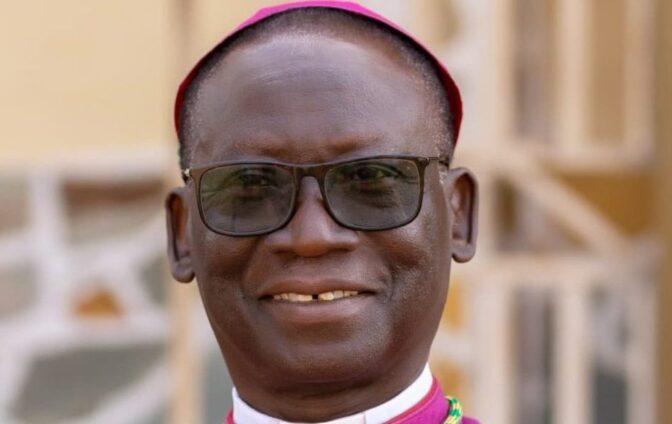

The President of the Ghana Catholic Bishops’ Conference, Most Rev. Matthew Kwasi Gyamfi, has stated that Ghana must be fully prepared to reject foreign aid if such financial assistance comes with tags that conflict with the country’s values and national interests.
The blunt commentary from the highly influential cleric follows the recent passage of the Human Sexual Rights and Family Values Bill, 2025 (anti-LGBTQ+ bill), by Parliament on Friday, May 29.
Western governments and multilateral donors had hinted at severe fiscal consequences, suggesting they may freeze vital budgetary support to the West African nation if the bill is officially signed into law.
The revised anti-LGBTQ+ bill passed by the legislature seeks to heavily criminalise LGBTQ+ activities within the country. However, following intense parliamentary debates and structural amendments, the final text includes strategic legal exemptions.
These legal safeguards protect lawyers providing essential legal services to LGBTQ+ individuals, journalists reporting objectively on LGBTQ+ developments, and medical or mental health professionals offering standard healthcare, psychological support, or specialised counselling services.
Despite these human rights adjustments, the bill has sparked significant, polarising debates both domestically and internationally.
Supporters, including traditional rulers, Islamic clerics, and Christian groups, maintain that the law is absolutely necessary to safeguard Ghanaian family values and cultural heritage. Conversely, critics and international bodies argue that it severely undermines fundamental constitutional rights, warning of toxic implications for Ghana’s international relations and donor-driven development support.
On Citi FM on Friday, May 29, 2026, Most Rev. Gyamfi fiercely questioned the underlying morality and actual value of international financial assistance, challenging the notion that Western donors have Ghana’s best interests at heart.
“There is a whole ethics and philosophy around the aid we receive from so-called donors, and even questions about whether they are truly aid and whether that aid actually benefits us,” the respected Catholic Bishop argued.
The cleric suggested that instead of being viewed as an economic disaster, the potential withdrawal of foreign funding should be leveraged as a golden opportunity for Ghana to break its long-standing cycle of dependency and achieve true, uncompromised sovereignty.
“Probably, if they remove the aid, we will become better. We may not need the aid they give us,” he stated boldly.
The President of the Bishops’ Conference stressed that the preservation of Ghana’s cultural identity and national principles cannot be monetised or bartered for foreign currency.
He challenged the government and citizens to embrace the structural sacrifices required to defend the state’s sovereignty, even if it means losing millions of dollars in external loans and grants.
With unyielding conviction, Most Rev. Gyamfi stated:
“If this is a unique, essential existential interest to Ghana, then if they say, ‘If you don’t do this, we will not give you aid,’ we say, ‘Take your aid, and we can survive.’”
The prominent religious leader concluded his submission by calling on state managers to urgently restructure the economy toward complete self-reliance, arguing that the nation has more than enough natural and human resources to manage its core affairs without relying on conditional foreign charity.
“That means we can be self-sufficient and self-supporting in the main issues,” Most Rev. Gyamfi added.
