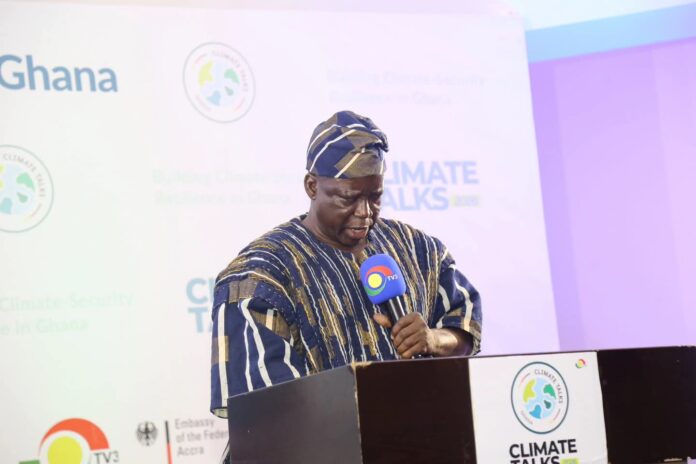

The Upper East Regional Minister, Akamugri Donatus Atanga, has warned that climate-driven migration and displacement could intensify pressure on land, water and other scarce resources, with potential consequences for security in the region.
According to him, the combined effects of climate change, declining agricultural productivity and insecurity in the Sahel are driving increasing movements of migrants and displaced populations into relatively stable neighbouring countries, including Ghana.
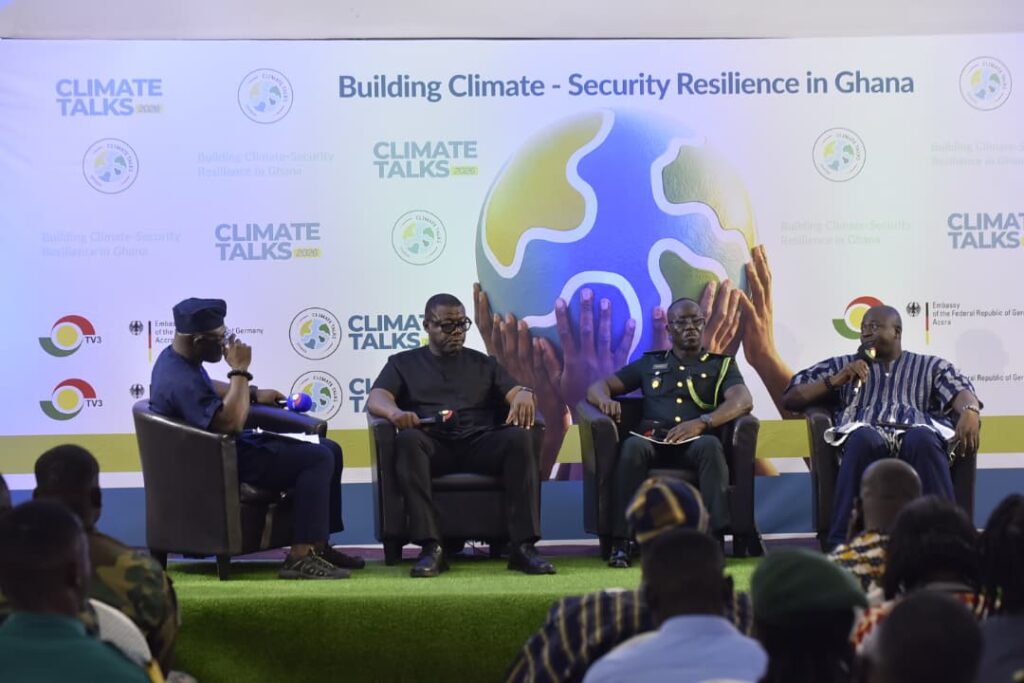
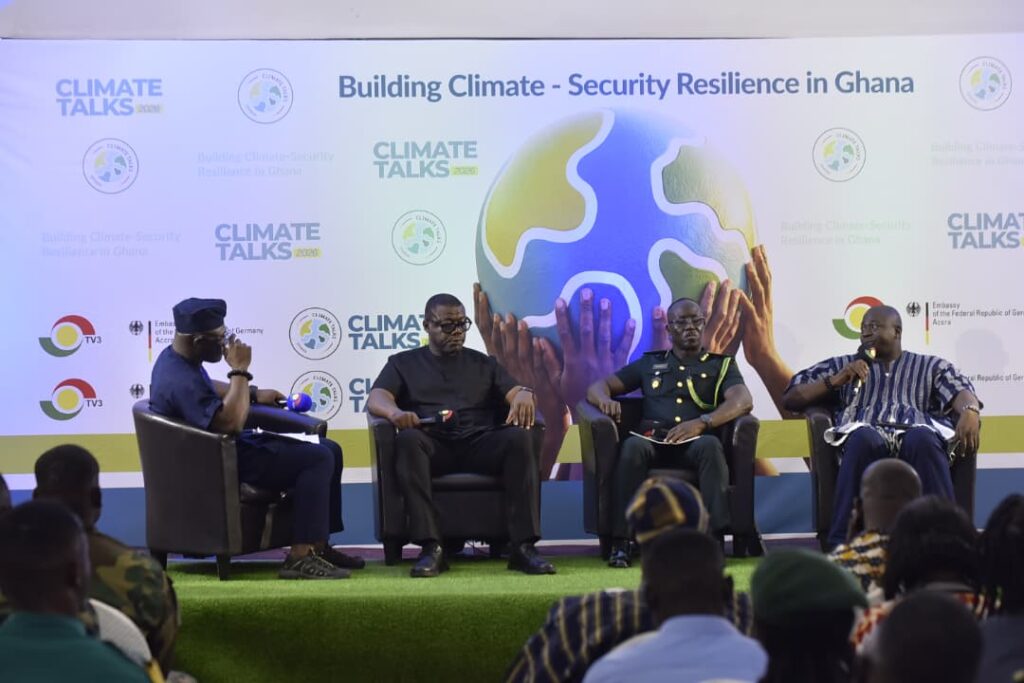
Speaking at the Climate Talks 2026 in Bolgatanga, the Minister said the Upper East Region’s proximity to Burkina Faso and Togo makes it particularly exposed to the effects of these transboundary challenges.
The event was organised by the German Embassy under the theme “Climate-Driven Migration and Its Security Impacts in the Upper East Region.”
He said prolonged drought, erratic rainfall, land degradation and declining agricultural productivity are placing significant pressure on communities whose livelihoods depend largely on agriculture and natural resources.
“These pressures are further compounded by insecurity and violent extremist activities in parts of the Sahel, resulting in increasing displacement towards relatively stable neighbouring countries, including Ghana,” he said.
The Minister noted that the region is already hosting displaced populations, including at the Tarikom refugee camp in the Bawku West District, as well as in communities such as Kugri, Widana, Sapeliga and Widnaba.
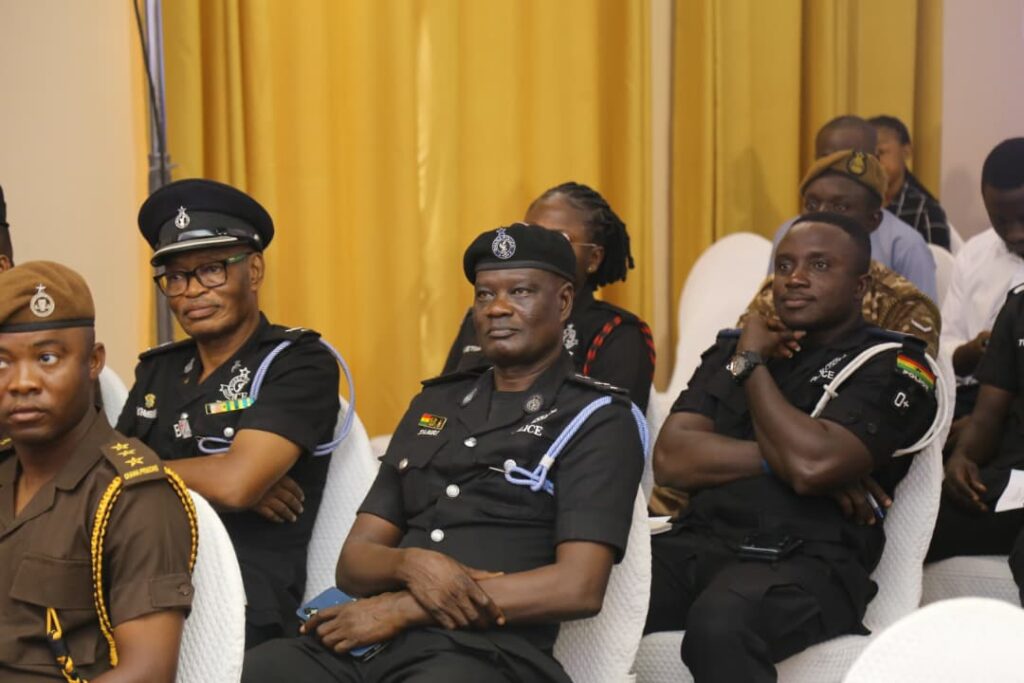
He said the influx was putting additional pressure on already limited resources and essential services, including water and sanitation, healthcare, education, food security and livelihoods.
Akamugri Atanga cautioned that growing competition over land, water, grazing areas, housing and employment could fuel land disputes, farmer-herder tensions and communal conflicts if not properly managed.
He further warned that such vulnerabilities could be exploited by organised criminal networks and violent extremist groups.
“Increased pressure on land, water, grazing areas, housing and employment can intensify competition over scarce resources and, if not carefully managed, contribute to land disputes, farmer-herder tensions and communal conflict,” he stated.
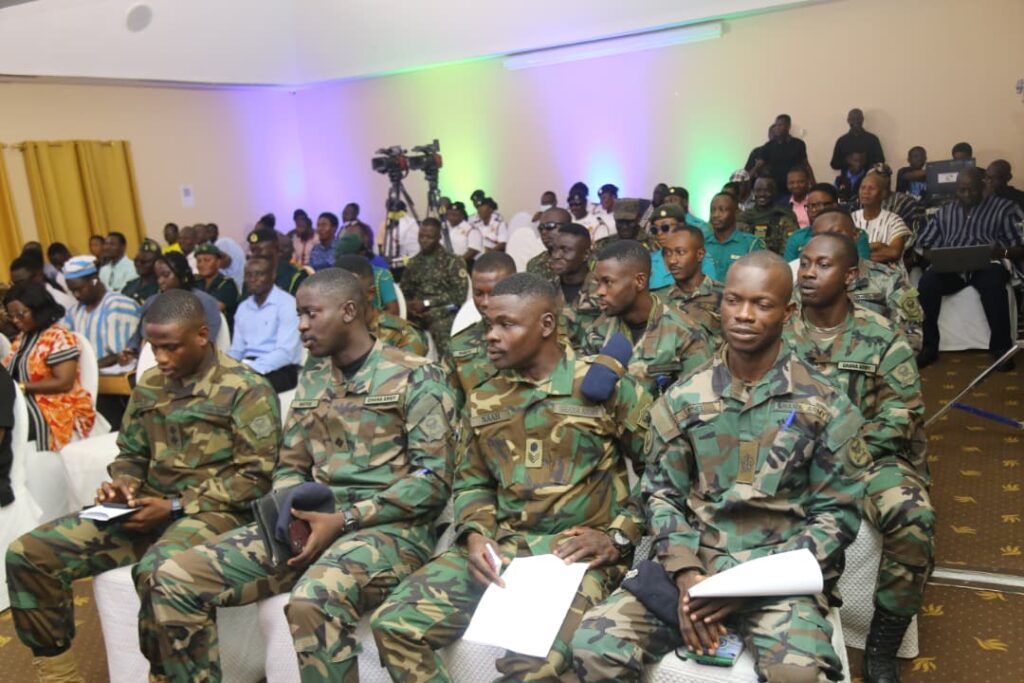
The Minister stressed that Ghana’s response must extend beyond humanitarian assistance to displaced persons to include support for host communities, arguing that local populations should not become “invisible victims” of displacement.
He also called for stronger border security measures, including intelligence sharing, early warning systems, community engagement and resilient institutions.
“Modern border security requires more than physical barriers. It requires effective intelligence sharing, early warning and response systems, community engagement, resilient institutions, and the trust and cooperation of our people,” he added.
On the development response, the Minister said government’s Resetting Ghana Agenda and the Upper East Region’s PEARL Framework (2026–2035) are intended to strengthen livelihoods and build resilience against climate and economic shocks.
He said PEARL, Prosperity through Enterprise, Agriculture, Resilience and Livelihoods, focuses on climate-smart agriculture, irrigation, water-resource management, environmental restoration, sustainable land management, renewable energy and resilient infrastructure.
The framework also seeks to promote enterprise development, livelihood diversification and youth employment.
The Minister argued that stronger livelihoods could reduce the pressures that force people to migrate.
“When livelihoods are resilient, families are less vulnerable to displacement; when young people have meaningful opportunities, migration becomes more a matter of choice than desperation,” he noted.
He called for a coordinated response involving government institutions, security agencies, traditional authorities, communities, development partners, academia, civil society and the private sector.
He also stressed the need for deeper cooperation with neighbouring countries, particularly Burkina Faso, noting that challenges confronting border communities do not end at national boundaries.