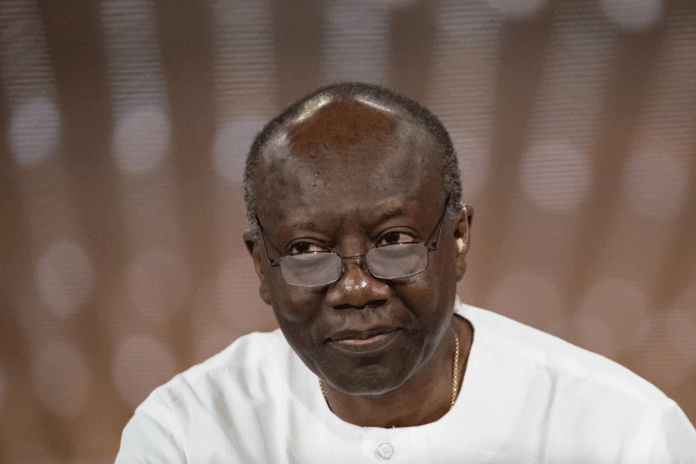

I can understand the confusion surrounding the case involving Kenneth Ofori-Atta, and I hope the following explanation helps to clarify the issues.
To begin with, many people believe or suspect that Mr Ofori-Atta may have been involved in a number of alleged offences, ranging from matters connected to the National Cathedral project, the domestic debt exchange programme (commonly referred to as the “haircut”), ambulance procurement, and other government transactions.
Indeed, the government’s ORAL committee identified several matters that it indicated would be referred to the Attorney-General for further consideration and possible action.
However, as far as the Office of the Special Prosecutor (OSP) is concerned, it has so far completed only one investigation involving Mr Ofori-Atta.
That investigation relates to his dealings with Strategic Mobilisation Ghana Limited (SML) and was triggered by a petition submitted by investigative journalist Manasseh Azure Awuni.
Regarding the other complaints gathered by the ORAL Committee, I am not aware of what investigations, if any, have been completed, as those matters fall within the remit of the Attorney-General.
Many public discussions are driven by strong opinions, allegations and expectations regarding alleged wrongdoing.
This can sometimes create the impression that all the allegations currently form the basis of efforts to bring Mr Ofori-Atta back to Ghana. That is not the case.
While he remains in the United States, Mr Ofori-Atta is dealing with three distinct legal matters.
The first is an immigration matter in the United States. He is reportedly accused of overstaying his permitted period of stay.
Generally, a non-immigrant visitor may remain in the United States for a period authorised by immigration authorities, often up to six months at a time. That matter remains ongoing.
During the course of that immigration process, Mr Ofori-Atta reportedly applied for permanent residency (a Green Card) in the United States.
His lawyers have indicated that a judge granted relief preventing his removal from the country while certain matters are reviewed.
However, the public has not yet seen the relevant court documents.
In communicating this development, his lawyers did not disclose important details, such as the basis of the Green Card application—whether it was through an investment programme, a family-based petition, or another route.
Instead, they issued a brief statement that appeared to suggest that a United States immigration court had determined that the charges facing him in Ghana were not credible.
As far as is publicly known, Ghana is not a party to the immigration proceedings; the matter is strictly between Mr Ofori-Atta and the United States authorities.
The second issue concerns Ghana’s efforts to secure his return to face criminal proceedings arising from the SML investigation. Charges have already been filed before the High Court in Accra against Mr Ofori-Atta and seven others.
Importantly, the trial has already commenced.
However, proceedings have been affected by the absence of Mr Ofori-Atta and his former Chief of Staff, Mr Akore, both of whom remain in the United States and have not appeared before the court to answer the charges.
Mr Akore is a dual citizen of Ghana and the United States.
It is precisely because they have not returned to Ghana to participate in the proceedings that the government of Ghana has initiated processes aimed at securing their return.
The extradition request is therefore not based on allegations that are still under investigation or awaiting charges.
Rather, it is intended to compel their appearance before a court where charges have already been filed and proceedings are already underway.
That trial is on hold pending a determination of OSP’s independent prosecutorial power.
The third issue concerns a summons and charge sheet approved by the High Court for service on Mr Ofori-Atta.
The purpose of this process is not, in itself, to compel his physical return to Ghana.
Rather, it is intended to ensure that he is formally notified of the charges and afforded the opportunity to indicate whether he intends to participate in the proceedings.
Depending on the circumstances and the applicable law, the court may subsequently determine whether the trial should proceed in his absence.
In summary:
- The United States immigration case does not involve Ghana and concerns whether Mr Ofori-Atta has complied with United States immigration laws.
- The extradition proceedings are intended to secure the return of Mr Ofori-Atta and Mr Akore so that they can appear before the High Court in Accra in a criminal case that is already underway.
- The summons and charge sheet are procedural steps aimed at formally notifying Mr Ofori-Atta of the charges and failure to attend will trigger trial in abenstia.
These are separate legal processes, each serving a different purpose. Understanding that distinction is important because public commentary often conflates them, creating the impression that they are all part of a single case. They are not. I hope this explanation helps to clarify the issues.
The author, Sammy Darko, is a lawyer, journalist and an anti-corruption advocate