
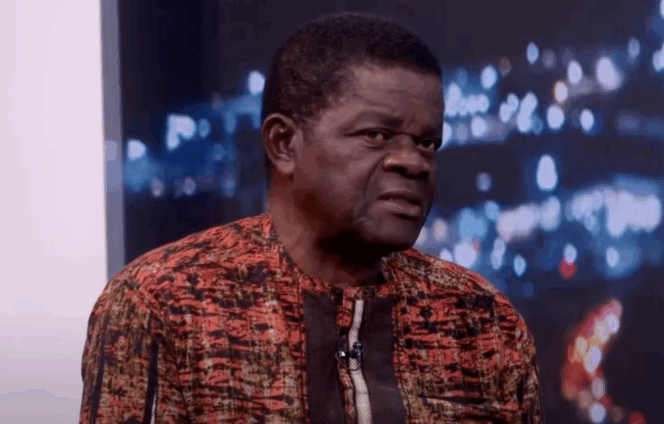

A former Director of the Ghana School of Law, Kwaku Ansa-Asare, has issued a blunt warning to aspiring lawyers intending to challenge the legality of the 2026 entrance examinations in court.
His comments come amid confusion following the signing of the landmark Legal Education Bill into law by President John Dramani Mahama.
The legislation, which seeks to reform colonial-era structures of legal training in Ghana, has sparked debate between students, the General Legal Council (GLC), and policymakers over whether the controversial entrance examination has been immediately scrapped.
Addressing concerns raised by the Member of Parliament for Old Tafo, Vincent Ekow Assafuah, who demanded urgent clarity on the matter, Mr. Ansa-Asare dismissed the idea that students could successfully sue to stop the exams this year.
The seasoned legal luminary challenged anyone considering litigation to identify a constitutional breach that would justify preventing the GLC from conducting the examination.
“My suggestion is that law students should be prepared to write the entrance exam. Any law student who goes to court will lose; I can predict that,” he stated on Monday, May 11 on Joy FM’s Top Story. “Anyone who goes to court to say that you should not be allowed to write the entrance exam, show me which provision of the Constitution will sustain that kind of action.”
Acknowledging tensions between the new law and existing practices, Mr. Ansa-Asare proposed a transitional approach to ease implementation.
He suggested that the entrance examination could be held one final time in 2026 to address budgetary considerations before its full abolition in 2027.
“Entrance exam has not been abolished under the existing dispensation. What is confusing about it? So, I think that both are taking entrenched positions, but there’s a solution midway. And the solution is that the entrance exam should be held this year so that, at least, it will take care of the budget deficit for this year. Next year it will be abolished,” he explained.
The new law signed by President Mahama represents a shift in legal education training in Ghana. Key provisions include decentralising professional legal training beyond the Makola campus, abolishing the entrance examination system, and introducing an independent examination structure under the GLC.
However, Mr. Ansa-Asare stressed that every new law has an implementation timeline, noting that a government white paper is expected to provide further clarity on the transition process.
For law graduates currently awaiting entry into the profession, he urged patience and focus on their studies rather than litigation.
The MP for Old Tafo, Vincent Ekow Assafuah, has meanwhile called for a joint statement from relevant authorities to ease growing anxiety among students ahead of the 2026 academic calendar.
ALSO READ:
